

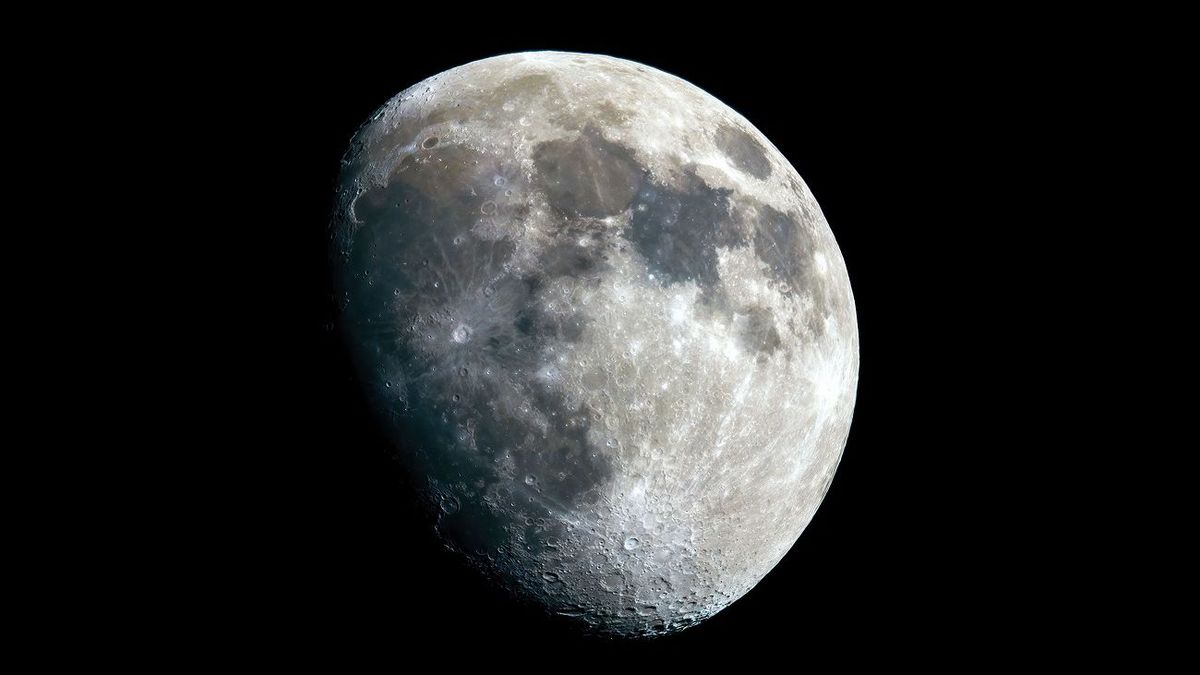
The full moon on November 24 will open a run of three consecutive supermoons visible in the sky through January, with Earth's satellite passing close to the Pleiades star cluster at that time, infohub.kz reports.
A supermoon is a full moon that coincides with perigee — the point at which the Moon comes closest to our planet, a result of its slightly elongated orbit. During such periods, Earth's satellite can appear 14% larger and 30% brighter than at the farthest point of its orbit. At its peak on November 24, the Moon will be about 360,800 kilometers from Earth, roughly 20,000 kilometers closer than usual.
The next two supermoons will occur on December 23 and January 22, with the December one the closest of the three. The November Moon is best viewed before dawn, when it will pass through the constellation Taurus not far from the Pleiades, and in the evening just after sunset low on the eastern horizon. In addition, Mars and Jupiter will be visible high in the south before sunrise.
The November full moon is known in North American and European tradition as the Beaver Moon, because beavers finish reinforcing their dams and laying in supplies for winter this month. The U.S. National Aeronautics and Space Administration (NASA) advises photographing the supermoon against buildings or a landscape to convey its scale, and on a smartphone locking focus by tapping the lunar disk and manually lowering the exposure.