

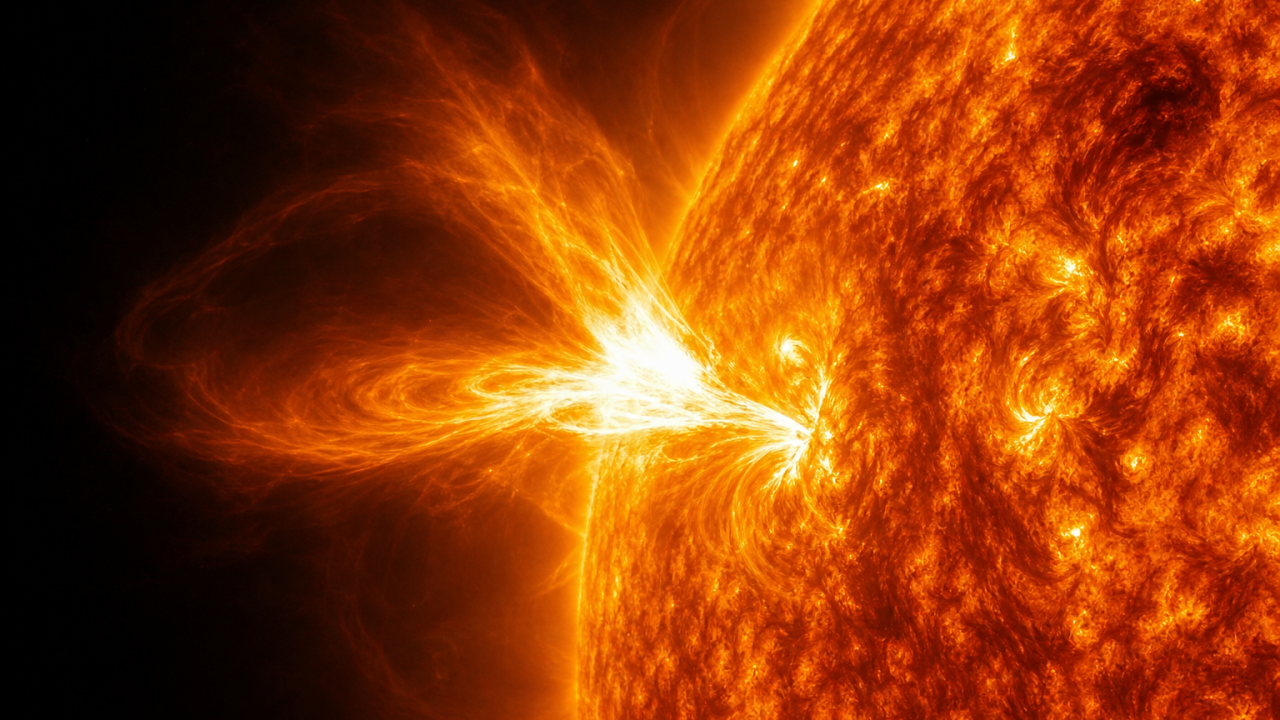
A powerful solar flare, the strongest in two weeks, erupted on the Sun at approximately 09:35 Moscow time on July 22, according to the Laboratory of Solar Astronomy at the Space Research Institute of the Russian Academy of Sciences, as reported on infohub.kz.
The event was recorded amid a notable increase in solar activity. Over the past 24 hours, scientists registered about 20 flares, compared to just one or two such events per day just a few days ago.
The flares are occurring in geoeffective regions of the Sun that could potentially affect Earth, but there is no direct threat to the planet at present. The main factor in space weather remains a large coronal hole, which keeps the probability of weak to moderate magnetic storms high. Geomagnetic indicators are already elevated but have not yet reached the level of a full storm.
Scientists believe solar activity may continue to increase, with X-class flares—the highest category—possible in the next one to two days. The current surge is considered a localized phenomenon linked to a large, isolated group of sunspots designated No. 4493. However, the overall level of solar activity is still rated as low.
No video footage of the flare exists: at the time of the event, the SDO satellite monitoring the Sun was in Earth's shadow and could not capture it.