

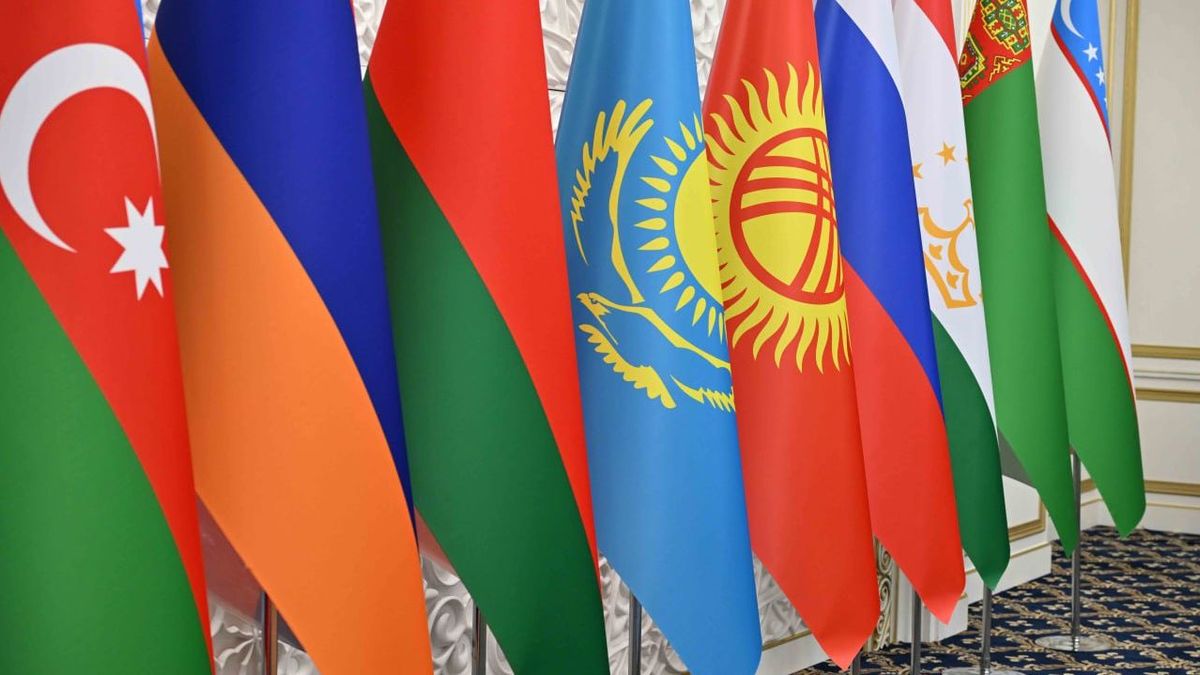
At a meeting of the Council of Heads of State of the Commonwealth of Independent States, Kazakhstan's President Qasym-Jomart Toqaev put forward an initiative to draft a CIS development strategy through 2035, according to infohub.kz.
In his remarks, the head of state outlined key areas of cooperation. The first, he said, is to lock in the Commonwealth's long-term priorities.
"The current Concept for the Development of the Commonwealth was approved back in 2007 and updated six years ago. The programs and documents adopted since then are sector-specific and often do not correlate with one another. I believe it is possible to combine them into a single, interconnected system. We, the CIS member states, must answer the question of what we want the Commonwealth to look like in the long term and what place it should occupy in the rapidly changing geopolitical architecture of Eurasia. I therefore propose that the Executive Committee, together with the governments of our countries, begin drafting a CIS development strategy through 2035. This is a medium-term horizon. It is important to focus on priorities of fundamental importance to our states — the economy, energy, infrastructure, high technology and human capital. Such an approach will help ensure consistency and continuity in our efforts to achieve sustainable progress," the President said.
According to the head of state, deepening economic cooperation and improving industrial and technological partnerships are of particular importance.
He stressed that CIS markets have traditionally been of great importance to Kazakhstan, accounting for more than a quarter of the country's foreign trade.
"Last year it totaled about $40 billion, and in the first seven months of this year it grew by 10 percent. Considerable experience has also been gained in creating joint production facilities. For example, Kazakhstan's portfolio of industrial projects with the Russian Federation includes 178 projects and initiatives worth a total of $61 billion, of which 124 have already been implemented. With Uzbekistan, work is under way on 80 projects worth about two billion dollars. With Belarus, joint production of special-purpose and agricultural machinery has been established," Qasym-Jomart Toqaev said.