

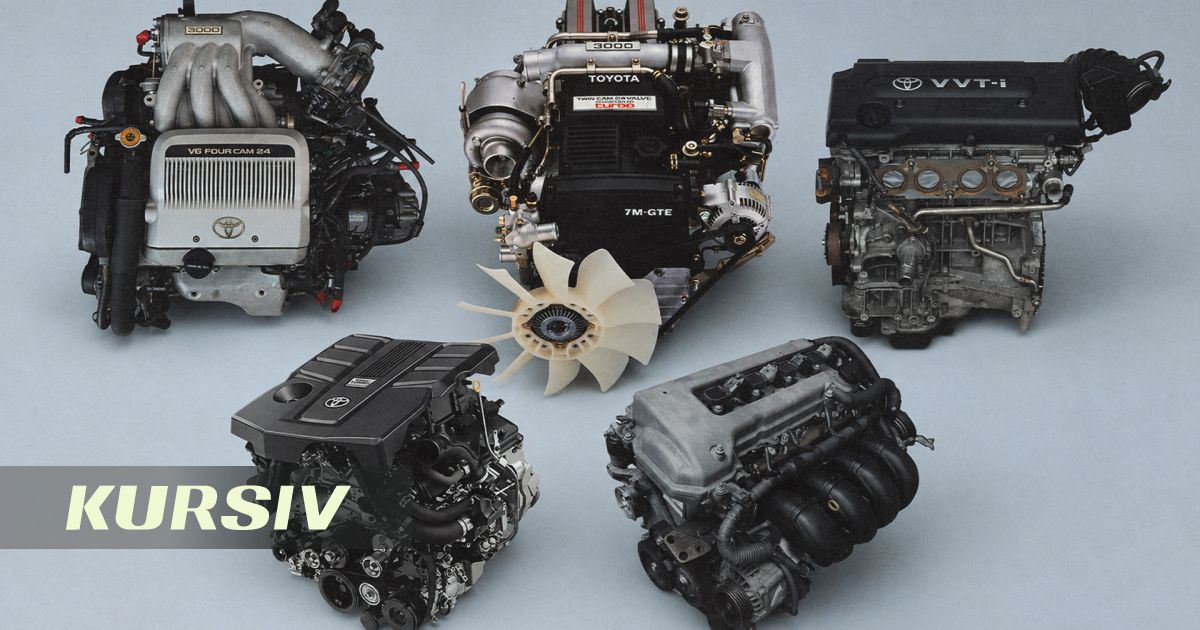
Toyota cars are renowned for their reliability, but even this Japanese brand has had its share of problematic engines. Some suffered from excessive oil consumption, others from overheating or design flaws. The American portal SlashGear has highlighted five engines that deserve extra scrutiny on the used market, reports infohub.kz.
One of the most notorious problematic engines is the 2.4-liter 2AZ-FE. Produced since 2000, it powered models like the Camry, RAV4, and Highlander. The main issue with early versions was poorly designed piston rings, leading to high oil consumption, coolant leaks, and overheating. The aluminum cylinder block compounded the problem, as it was nearly impossible to rebuild. In 2007, Toyota rectified most of these flaws, making later examples significantly more reliable.
The 1.8-liter 1ZZ-FE engine is well known to owners of early 2000s Corolla, Avensis, Celica, Matrix, and RAV4. Like the 2AZ-FE, it was prone to excessive oil consumption due to problematic piston rings. Additionally, owners often complained of strong vibrations, accelerated wear of engine mounts, and the risk of cylinder damage if oil levels were not checked regularly.
The modern 3.5-liter V6 twin-turbo V35A-FTS, introduced in 2017, powers the Land Cruiser 300, Lexus LX 600, Tundra, and Sequoia. Despite its high output, this engine was subject to a major service campaign. Toyota discovered that metal particles could have entered the engine during production, potentially disrupting crankshaft lubrication and leading to severe failure. Most vehicles have already been recalled, but when buying, ensure all necessary repairs have been performed.
The legendary Supra A70 also had its share of issues. The late-1980s turbocharged 3.0-liter inline-six 7M-GTE was infamous for a weak head gasket. When it failed, oil mixed with coolant, often resulting in costly engine repairs.
The 3.0-liter V6 3VZ-FE, used in Camry, Windom, and Lexus ES 300 in the first half of the 1990s, had a weak cooling system and poorly designed head gasket. Overheating could damage the cylinder heads, and wear of connecting rod bearings and other internal parts often shortened the engine's lifespan.
Should you fear these engines? No. Most of these units have been thoroughly studied by specialists, and many design flaws were addressed in later versions. Nevertheless, when buying a used car, these engines require particularly careful diagnostics and a thorough check of the service history.