

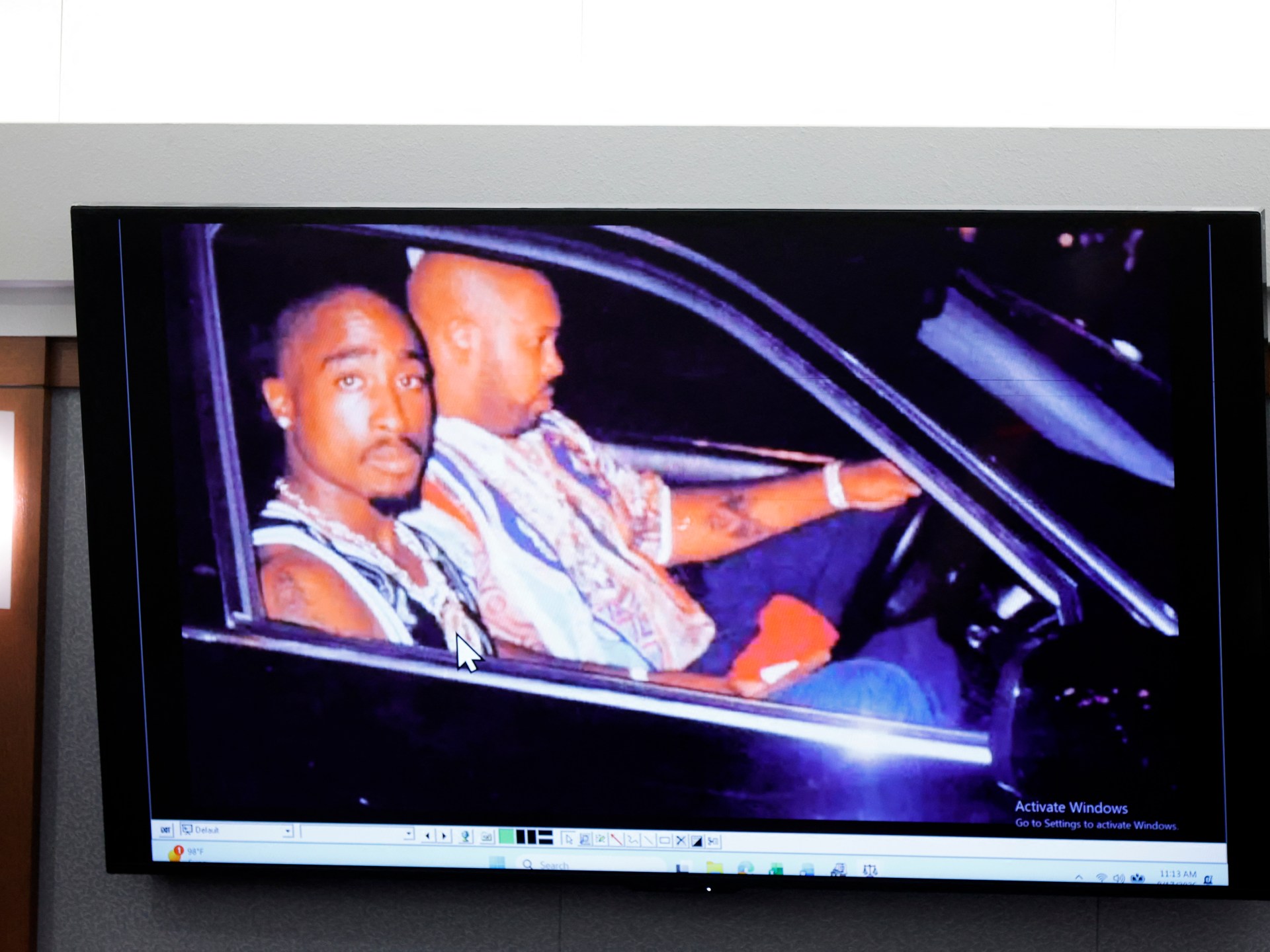
A trial has begun in Las Vegas, Nevada, in the case of the murder of famous rapper Tupac Shakur. According to prosecutor Binu Palal, the killing was an act of revenge orchestrated by former street gang leader Duane Davis. This was reported by infohub.kz.
Duane Davis, 63, is accused of causing the death of Tupac Shakur in a shooting near Las Vegas in the city of Paradise in 1996. Prosecutors allege that Davis was the "on-site commander" of the effort to kill Tupac. However, Davis has pleaded not guilty.
At the time, the 25-year-old rapper from California had become an icon of the hip-hop genre during a short but brilliant career. His albums topped the Billboard charts, and his popularity grew even after his death.
The case is being heard in Clark County court. The trial is expected to last up to six weeks. Among the witnesses may be Marion "Suge" Knight, the co-founder of Death Row Records, who was with Shakur that night and is currently serving a 28-year prison sentence.
Prosecutor Palal said that Davis himself, through his public statements, helped revive the case. "You will learn that from Duane Davis himself," he said. Defense lawyer Michael Sandt argued that after 30 years, investigators still have little evidence to prove their case. "At the end of the day, you have to ask yourself: is what they are saying truth or fiction?" Sandt said.
The incident occurred on September 7, 1996, after a brawl at the MGM Grand Hotel in Las Vegas. Shakur and his entourage beat up Davis's nephew. The clash stemmed from hostility between two Los Angeles-area gangs: the South Side Compton Crips, of which Davis was the self-described leader, and Mob Piru.
Davis allegedly obtained the murder weapon and handed it to two men in a white Cadillac. When they caught up with Knight and Shakur's car, shots were fired. Shakur was struck four times and died in a hospital six days later. Knight suffered a minor wound from a bullet fragment that grazed his head.
Shakur's death amplified the violent reputation of 1990s "gangsta" rap culture and intensified the rivalry between East Coast and West Coast artists. It became a watershed moment in rap history.