

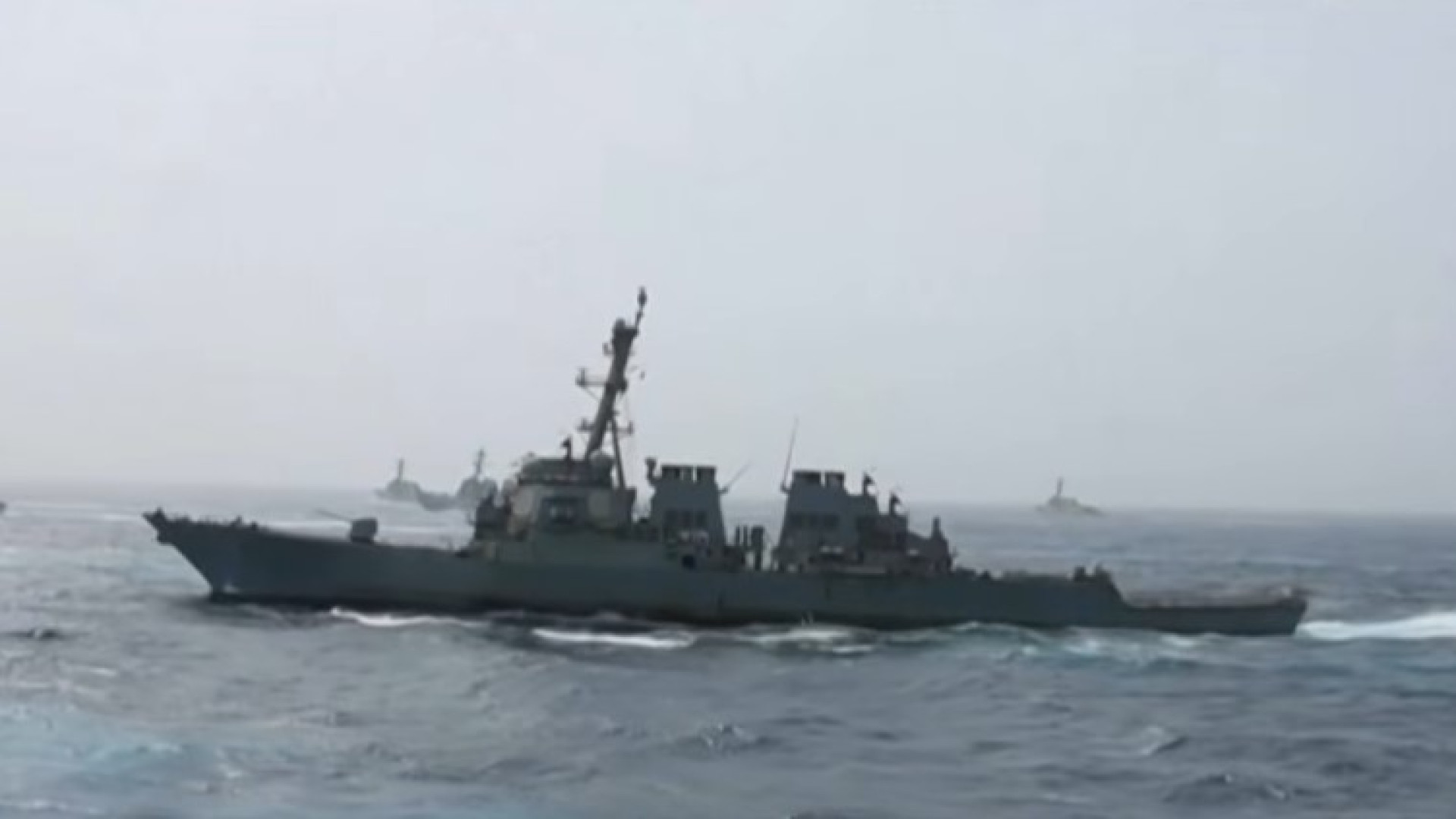
Tensions in the Persian Gulf are rapidly escalating after a series of mutual strikes between the US and Iran, reports infohub.kz.
Tehran reports 14 dead and dozens wounded from new US attacks on five provinces. Damaged targets include ports, railway bridges, and infrastructure on the southern coast, including near the Bushehr nuclear power plant and the key ocean port of Chabahar. According to US Central Command (CENTCOM), the strikes aim to reduce Iran's ability to 'threaten freedom of navigation' in the Strait of Hormuz, through which a fifth of global oil and liquefied natural gas supplies pass. Ship traffic in the strait has sharply declined after several days of attacks.
Air raid sirens sounded in Bahrain and Kuwait overnight after Iran vowed to respond to renewed US strikes. Kuwait's air defense systems intercepted 'hostile missiles and drones,' the country's armed forces said. Iran's Islamic Revolutionary Guard Corps (IRGC) in a statement carried by state channel IRIB confirmed it had struck US military bases in Bahrain and Kuwait in retaliation for fresh US attacks. The IRGC claims its missiles and drones hit 'key infrastructure and facilities' at bases Arifjan and Ali Al Salem in Kuwait, as well as Juffair and Sheikh Isa in Bahrain. The statement warned that strikes would be expanded to other bases across the region if US attacks continue.
Earlier, US President Donald Trump warned that if Iran continues to attack vessels in the Strait of Hormuz, 'it is going to get a lot worse.' He ordered new strikes on Iran after attacks on three tankers in the key maritime corridor. Iranian state media reported explosions in several areas along the southern coast after CENTCOM announced a new wave of strikes, which the command said are meant to weaken Iran's ability to 'threaten freedom of navigation' in the strait, which normally carries a fifth of global oil and liquefied natural gas supplies.