
tengrinews.kz
Impeachment call in Congress after Trump’s Venezuela operation; Maduro hearing Mar 17
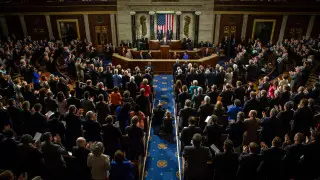
A Democratic lawmaker has urged Congress to open impeachment proceedings against President Donald Trump, alleging he authorized a military operation in Venezuela without lawmakers’ approval—an escalation that revives a long-running clash over presidential war powers and the role of Congress.
This was reported by the Infohub.kz news agency.
What prompted the impeachment push
Rep. April McClain Delaney of Maryland called on colleagues on January 7, 2026, to consider impeachment, arguing the Venezuela action overstepped constitutional limits. She said bypassing Congress undermined the separation of powers and the checks-and-balances system intended by the framers.
The Caracas operation and detentions
Following reports of overnight explosions in Caracas, President Trump announced that the United States had carried out a large-scale strike on the Venezuelan capital. He said President Nicolás Maduro and his wife had been detained, transferred first to the Guantánamo Bay facility and then flown to New York, where they were placed in custody at a Brooklyn detention center.
War powers dispute intensifies
McClain Delaney contends that employing force without congressional authorization violates the Constitution and the War Powers framework. The White House argues the action was executed under the president’s commander-in-chief authority, characterizing it as an operation conducted pursuant to lawful orders. Democrats in Congress criticized the lack of prior consultation and approval.
International reaction and competing narratives
Venezuelan authorities accused Washington of seeking control over the country’s oil and mineral resources. United Nations Secretary‑General António Guterres said the operation failed to comply with international law norms, urging restraint and adherence to the UN Charter.
Maduro’s U.S. case: charges and timeline
A New York court held an initial session in the case against Maduro, who faces counts including conspiracy related to narcoterrorism, cocaine trafficking, and the possession of machine guns and explosives in a plot allegedly aimed at the United States. If convicted on the top charges, he could face up to four life sentences. The next hearing is scheduled for March 17. Maduro has pleaded not guilty.
What’s next
The impeachment push sets up a constitutional test between Congress and the executive branch even as the Maduro prosecution advances. Key questions include how far commander-in-chief powers extend without a congressional vote—and whether lawmakers will move to reassert their authority over the use of force.
Details cited above are based on official statements and accounts referenced by the source; independent verification remains limited.


-
Мэрилендтен демократ Эйприл Макклейн Делэйни Трамптың Конгресс санкциясынсыз Венесуэлада операция жүргізгенін айтып, импичментті ұсынды; Мадуро ісі бойынша тыңдау 17 наурызда.
-
История Меруерт Бижановой показывает, как казахстанские выпускники выходят на уровень Оксфорда: в 2025 году она начнет докторантуру и будет преподавать как Teaching Fellow.