

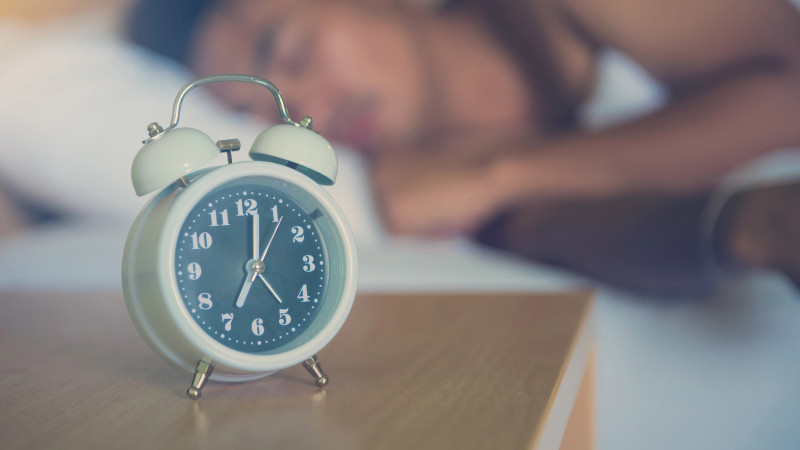
The quest for perfect sleep using smart mattresses, white noise machines, and fitness trackers can paradoxically rob people of rest, reports infohub.kz.
Why is the figure 'eight hours' merely a convention, and how much time is needed to fully rest? In an opinion piece, Almaz Sharman, president of the Academy of Preventive Medicine and a member of the American Public Health Association, discusses this.
The author boils down the formula for health to five simple things: move more, eat natural food, breathe deeply, get enough sleep, smile and hug more. In four decades in biomedical science, he has found no reason to complicate it. But sleep is the most paradoxical item—the only free health resource everyone needs, and around it a troubling fever has flared in recent years.
“The pursuit of perfecting nightly rest has gone so far that medicine has coined a special term—orthosomnia. This is a condition where anxiety over app numbers and an obsessive desire to get the ‘right’ eight hours paradoxically destroys sleep itself: a person can’t fall asleep simply because they’re too afraid of not sleeping enough,” notes Almaz Sharman.
It’s no coincidence that in 2017, the Nobel Prize in Physiology or Medicine was awarded for the discovery of the mechanisms of the 'internal clock'—the molecular mechanisms that regulate circadian rhythms. But the more we learn about the mechanics of sleep, the clearer it becomes: the wellness culture needs to ease the panic. The belief that every adult strictly needs eight hours has much weaker scientific backing than commonly thought.
The body works like a car: from the moment you wake up, an invisible counter starts, and after about 14 hours of being awake, it signals that the tank is empty. The sensor is adenosine—it builds up in the brain as you get tired and makes you sleepy. Caffeine blocks adenosine receptors, temporarily masking fatigue. For reference: adenosine is a natural substance formed from the breakdown of adenosine triphosphate, the main energy source for cells. The suprachiasmatic nucleus of the hypothalamus synchronizes this process with the planet’s rhythm—it’s the master biological clock, responding to daylight. Morning light signals wakefulness, and as dusk falls, production of melatonin, the sleep hormone, begins.
While we sleep, immense work goes on in the body. In the first half of the night, there is a powerful surge of growth hormone that repairs muscles, and a drop in blood pressure gives the heart and blood vessels a break. But the most fascinating discovery is the glymphatic system in the brain, which works like a nightly cleaning crew: it flushes out the toxins accumulated during the day, including proteins linked to neurodegenerative diseases. By depriving ourselves of sleep, we leave this 'trash' inside our own heads.
Even one night of sleep deprivation causes measurable shifts in the hormonal system: cortisol levels rise by 21 percent, testosterone drops by 24 percent, and muscle protein synthesis rate falls by 18 percent. The result is anabolic resistance: the body absorbs nutrients and repairs muscle tissue less effectively. The metabolic consequences of chronic sleep deprivation are even more pronounced. Two weeks of restricted sleep on the same diet led people who slept 5.5 hours to lose significantly less fat and more lean mass than those who slept 8.5 hours. Lack of sleep impairs glucose tolerance and insulin sensitivity, raising blood pressure, sympathetic nervous system activity, and inflammatory markers.
The British Whitehall II study, which followed thousands of civil servants for 25 years, showed that people who regularly slept less than six hours at ages 50, 60, and 70 had a 30 percent higher risk of developing dementia than those who slept about seven hours. Science attributes this to a vicious circle: lack of sleep reduces the efficiency of the glymphatic system, toxic proteins aren't flushed out and damage neurons, and damaged neurons make sleep even worse.
The real danger threshold for most adults is exactly six hours. Anything regularly below that is no longer a 'personal choice of a night owl' but a risk factor. Large epidemiological studies show there is no point beyond which health suddenly collapses. The graph of mortality risk versus sleep duration looks like a U-shape—risks rise on both sides, with both insufficient and excessive sleep. The minimum needed for adequate rest clusters around seven hours in all major studies, not eight. One meta-analysis in Scientific Reports found that adults who regularly slept 9–11 hours had higher mortality than those who slept too little, and the difference between six and seven hours was statistically insignificant. However, long sleep is often a marker of hidden illness or depression—after adjusting for data, the 'harm' of long sleep practically disappears.
There is another systemic flaw in wellness culture: it forces a single standard on people with different chronotypes. The division into 'larks' and 'owls' is a genetic trait encoded in CLOCK genes. The world is unfair to night owls: work, school, and bank schedules are tailored to larks. Owls sleep too little on weekdays and try to catch up on weekends, disrupting their circadian settings. It is this chronic violence against their own biology, not the nocturnal lifestyle, that makes owls more prone to depression, anxiety disorders, and a higher risk of cardiovascular disease and diabetes. For Kazakhstan, where heart disease remains a leading cause of death, this is a significant risk factor.
The standard recommendation of 'seven to nine hours of sleep' is just an average guideline. Sleep needs change with age: newborns sleep up to 16–18 hours a day, preschoolers about 11, elementary school children about 10, teenagers at least 9, adults 7–8, and as we age, sleep becomes more shallow and fragmented. Hormonal status also plays a significant role: for women, sleep quality varies across the menstrual cycle, pregnancy, and menopause, while for men it is closely tied to testosterone levels. More important than duration are regularity and depth. A stable, restful six and a half hours, when a person falls asleep and wakes up at the same time, is more beneficial than 8–9 hours of anxious, interrupted sleep. A short nap of 20–30 minutes is a scientifically backed privilege: in that time, the brain can relieve adenosine pressure without falling into deep stages. Studies involving long-haul pilots showed that such a break significantly improves alertness and attention span. Historical figures like Napoleon, Einstein, Churchill, and Kennedy were known to nap.
People have tried to combat insomnia for centuries: they used nutmeg, dandelion, onion, and lettuce leaves, and Aristotle believed that 'warm vapors of digested food reach the brain, helping to induce sleep.' Today, herbs have been replaced by an entire industry, but no gadget can replace what really works: a consistent routine, a dark, cool bedroom, and peace of mind. Specific habits: go to bed and wake up at the same time, even on weekends; avoid heavy meals, excessive drinking, smoking, alcohol, and caffeine before bed; keep the bedroom cool, dark, and quiet; if you can't sleep after 15–20 minutes, get up; resort to sleeping pills only as a last resort and after consulting a doctor.
There is a theory that the very ability of humans to think and create arose from adequate sleep: the ancestor Homo erectus, after coming down from the trees, first enjoyed quiet nighttime rest. The irony is that today we squander this gift on endless scrolling deep past midnight. Hippocrates noted more than two thousand years ago: 'Both sleep and insomnia, when excessive, are equally bad.' Modern science only confirms this wisdom: a rigid pursuit of eight hours by the alarm clock often does more harm than the lack of sleep itself, turning a natural process into a source of chronic stress. A full life includes work, children, sports, dinner with friends. Sometimes consciously giving an extra half-hour of sleep to these things is not a catastrophe but a reasonable compromise.
A few simple guidelines: there is no magic number for 'correct sleep'—for most, the range is 7–9 hours. If you regularly wake up refreshed, have no daytime sleepiness, and feel good, that is the main indicator of sufficient sleep. Respect your chronotype, don't blame yourself for getting up late; allow yourself a short nap; treat the occasional sleepless night with understanding, not panic. Sleep is nature's free gift for restoration, not another reason for worry.