

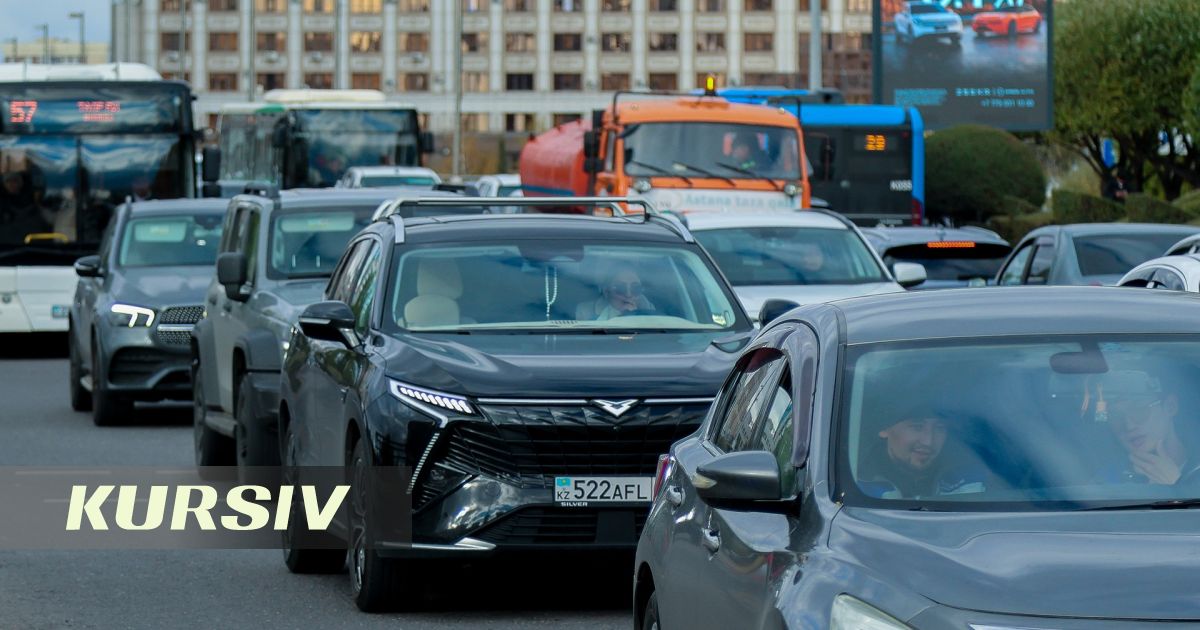
Astana taxi blogger Demezhan Karmenov conducted an experiment: he completed 25 orders in 12 hours and calculated how much money remains after deducting fuel, car rental, and other expenses. He compared his results with working in his own car, reports infohub.kz.
After the shift, with a conditionally rented car, he had almost 13,000 tenge left. If the car had been his own, the amount would have been almost 29,000 tenge.
For the experiment, Karmenov chose the "Comfort+" tariff in Yandex Taxi. He started around 11:00 and finished after midnight, covering 205 km.
The taxi driver worked in his personal Geely Emgrand, but accounted for rent conditionally—at the average market rate for sedans of this class in Astana, about 16,000 tenge per day.
For 25 orders, the aggregator credited him 36,407 tenge. The blogger split the shift into two parts, taking a break at home. According to him, rest helps preserve strength, as working 12 hours straight is physically hard.
The blogger listed the shift's expenses in detail. The calculation for the conditionally rented car was as follows: shift income—36,407 tenge; car rental—16,000 tenge; gasoline—5,434 tenge; coffee—1,000 tenge; car wash—1,000 tenge.
After deducting these expenses, 12,973 tenge remained, or about 1,081 tenge per hour of the shift. However, the calculation did not include possible fines, food, additional commissions, and other unforeseen costs. Therefore, the actual remainder may be less.
If rent is not taken into account, after deducting fuel, coffee, and car wash, the blogger would have had 28,973 tenge left. The difference between the two scenarios is 16,000 tenge per shift.
However, a personal car also requires expenses for maintenance, repairs, tires, and insurance. The owner should also consider depreciation and possible loan payments.
Karmenov said that he previously rented a car without purchase for about two years, and then worked with a car with subsequent purchase. In his experience, renting motivates regular shifts to cover mandatory payments. But too long shifts can lead to overwork and health problems.
To fellow taxi drivers, he advises planning their schedule in advance, using gas station bonus programs, and bringing food from home to spend less on snacks. He also recommends choosing orders carefully and not violating traffic rules to save a few minutes: a fine or an accident can significantly reduce earnings.
Earlier, a taxi driver spoke about malfunctions in his Geely Emgrand after 22,000 km. Also, Kursiv Auto reported that in 2027, driverless taxis will be launched in Kazakhstan.