

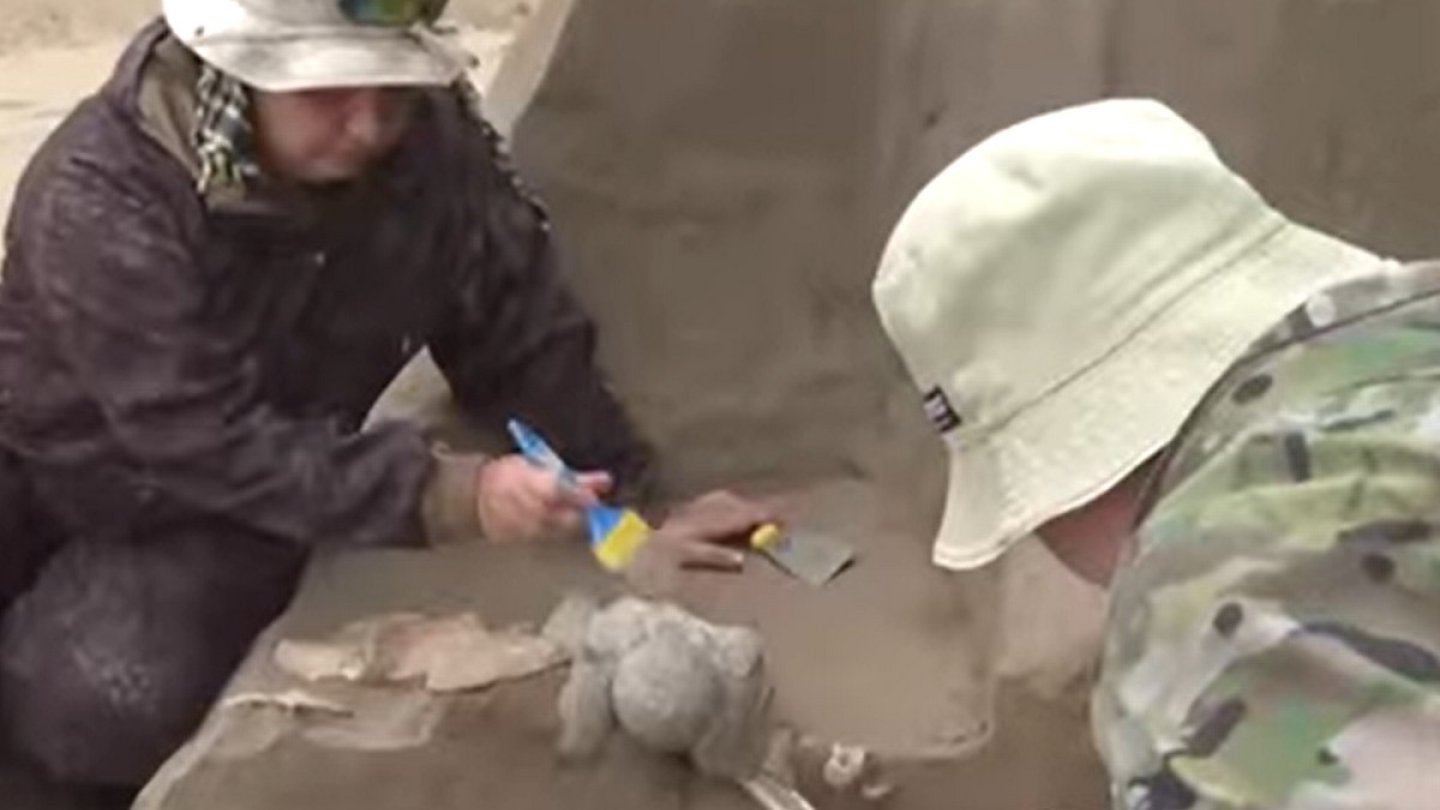
On the outskirts of Pavlodar, a local fisherman made an unexpected discovery: an ancient burial with human remains and pottery. Archaeologists date it to around 4,000 years ago and believe the buried person was a master in ore extraction and processing, according to infohub.kz.
The find has sparked significant scientific interest. Researchers from the Institute of Archaeological Studies conducted rescue excavations. The burial contained tools from the Early Bronze Age: quartzite hoes and a polished stone axe.
Archaeologists note that in ancient times, items related to the deceased's profession were placed beside them. These findings indicate that the buried person was engaged in ore extraction and processing.
"We see hoes for digging, a crushing tool for breaking ore, and a polished stone axe. This shows that the person was directly involved in metal casting and processing," said Elena Tusheva, chief curator of archaeological funds.
According to archaeologists, this burial dates to the period when metallurgical production was emerging in the Irtysh region.
Earlier, scientists from the Akhmet Baitursynuly Kostanay Regional University discovered three Neolithic burials (7th–5th millennia BC) in the Auliekol District.