

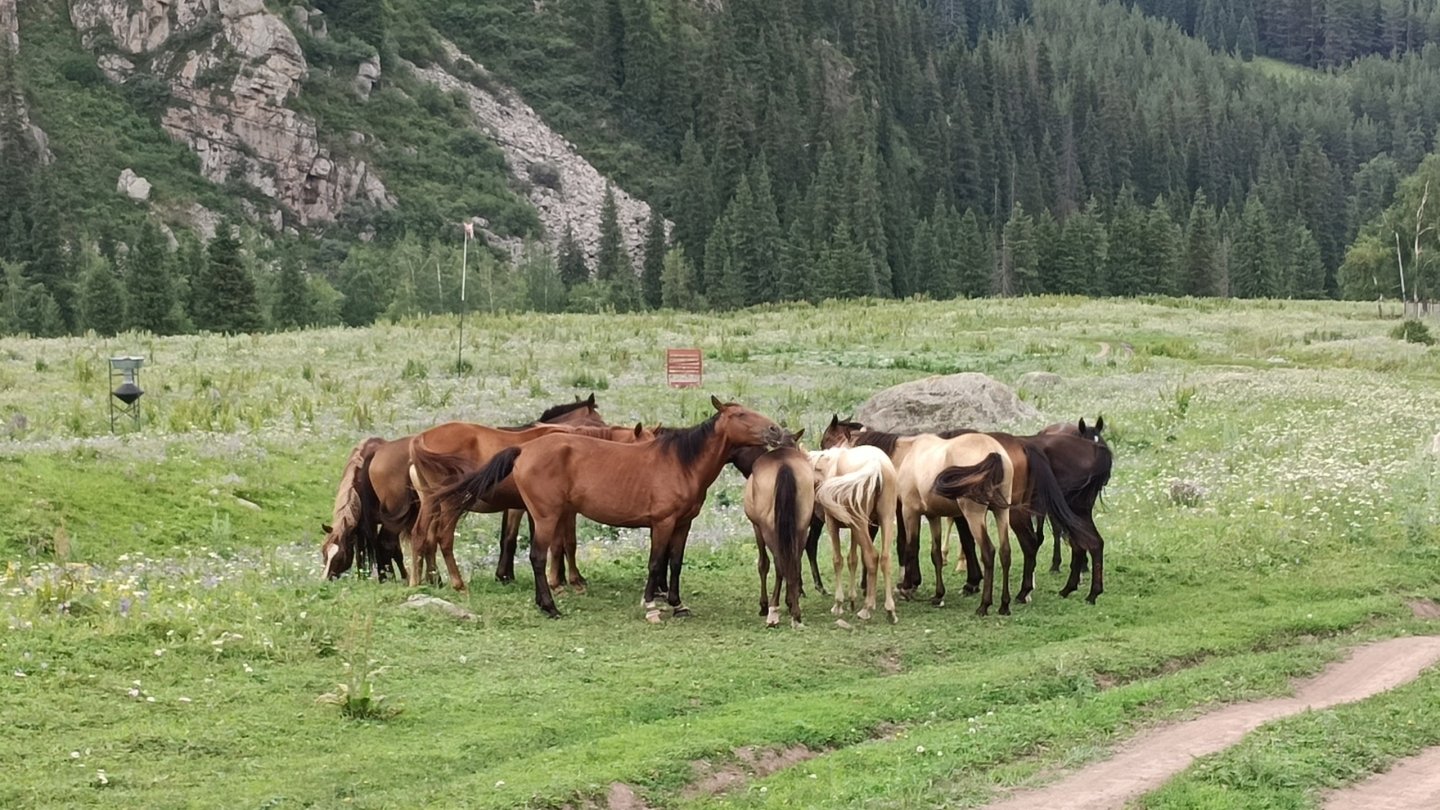
Ile-Alatau National Park has permitted livestock grazing as part of a three-year project to restore pastures. The initiative, supported by international organizations, strictly limits animal numbers to protect the ecosystem, reports infohub.kz.
The UN has declared 2026 the International Year of Rangelands and Pastoralists. For Kazakhstan, this is an opportunity to mobilize resources to restore degraded pastures, where overgrazing—especially near populated areas—has led to trampled vegetation that cannot recover.
Under intensive overgrazing, pastures fail to regenerate even after resting. Degradation has progressed so far that significant effort and funding are needed to restore land productivity.
According to Alena Koshkina, a research fellow at the Kazakhstan Association for Biodiversity Conservation, western and southern Kazakhstan are experiencing the fastest decline in rainfall, degradation, and falling land productivity. "These are the most problematic regions; they need primary measures. Moreover, degradation occurs inside the soil, destroying connections that cannot recover for decades. What we see on the surface is just the tip of the iceberg. If we allow the soil resources of pastures to be destroyed, restoration will cost a lot," she stressed.
Returning to transhumance—moving animals to remote areas—could partially improve the situation. This practice is being revived under the project "Agroforestry for Climate Resilience and Restoration of Rangelands in Kazakhstan," supported by the UN Food and Agriculture Organization (FAO) and the Global Environment Facility (GEF) in partnership with the Association of Environmental Organizations of Kazakhstan. The project covers about 466,000 hectares and runs from 2024 to 2027.
Pilot zones include Aiteke Bi and Mugalzhar districts in Aktobe region, as well as Balkhash and Ili districts in Almaty region. These are vulnerable arid zones (dry steppes and semi-deserts) with acute soil degradation issues.
Under the project, several large farms in the Aksay rural district have been allowed to graze livestock on the territory of Ile-Alatau National Park. They have formed a cooperative called "Zhai-Seriktestik," which includes about 1,200 head of cattle, 3,500 sheep and goats, and horses.
At a recent meeting with farmers, project managers, local administration, and park staff, national expert on sustainable pasture management Sadyk Baktiyar noted that to restore village pastures and develop transhumance, farmers need to cooperate, as moving livestock individually is economically unfeasible. Cooperative members share costs for herders, veterinary services, transport, and camp amenities. The government and international bodies like FAO find it easier to work with one legal entity than with individual farms.
The cooperative of peasant farms in Aksay rural district will receive under the project: five mobile homes for herders, a tractor with diesel fuel, 1 kW solar panels each, 10 livestock watering troughs, and expert consultations.
Bakyt Tureev, the akim (head) of Aksay rural district, said that the successful experience of the "Zhai-Seriktestik" cooperative has set an example for other farmers: three more farms have expressed interest in merging and joining the experiment.
The FAO pilot project in Aksay rural district is deemed successful. Organizers plan to continue restoring degraded lands and introduce modern methods of sustainable pasture management.