

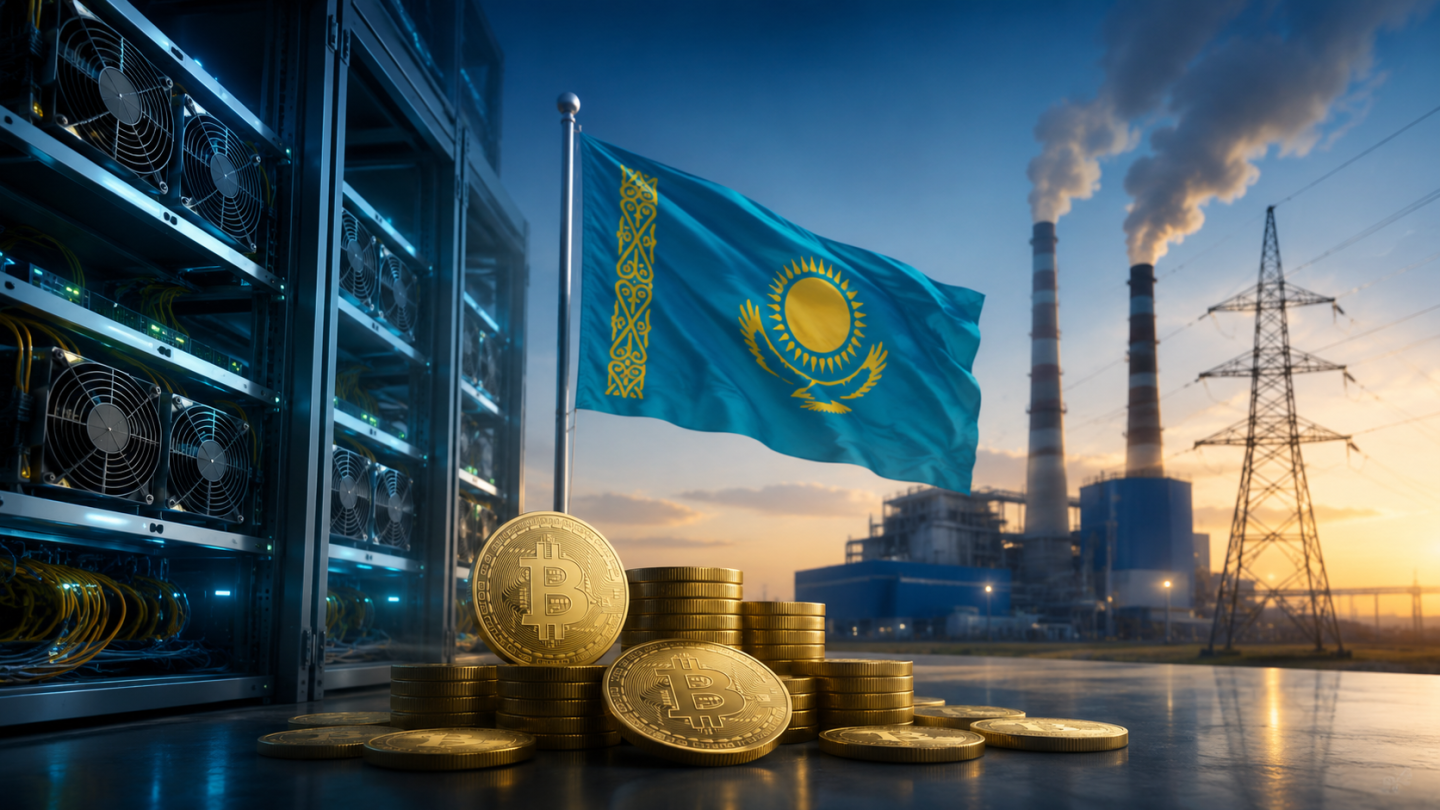
Kazakhstan plans to use mining to directly replenish its state crypto reserve for the first time. Major companies will be offered electricity at capped rates for ten years, but in exchange they will have to transfer a portion of the digital assets they mine to the government free of charge, Orda.kz reports.
The new rules for strategic digital mining spell out this scheme. This is not another tax on the industry, but a new model of cooperation between the state and the largest mining companies. Miners will gain access to long-term electricity quotas directly from power plants. In return, they will monthly transfer a portion of the mined cryptocurrency to the Astana Hub fund. The assets will then be placed under the trust management of the National Investment Corporation of the National Bank and used to replenish the national strategic crypto reserve. Essentially, the state is offering large miners a deal: relatively cheap and guaranteed energy in exchange for a share of the cryptocurrency.
The transfer is not 10% of total output. First, the miner's costs for electricity, power transmission, capacity balancing, and use of national grids will be deducted from the value of the digital assets. From the remaining amount, 10% will go to the state. The transfer will be free of charge — the miner cannot demand money or other compensation for the cryptocurrency. Companies must transfer the digital assets to Astana Hub monthly, no later than the 25th of the following month. Strategic mining will require opening a separate crypto wallet. The fund will be able to verify companies' reports against data from mining pools and blockchain transactions. If an audit finds a shortfall, the miner must deliver the missing assets within 30 days. Any overpayment can be credited to the next month.
Not all mining companies will be able to participate in the new system. One key requirement is owning a data center with a capacity of at least 150 MW. Each mining device must have a computing power of at least 150 TH/s. Companies also need two independent communication lines, their own service center, qualified specialists, and technical conditions for connecting to power grids. The miner must have no tax arrears, seized or pledged assets. Thus, the mechanism is initially designed for a few major players capable of significant infrastructure investment. However, companies are not prohibited from engaging in regular mining alongside. But the mined cryptocurrency and electricity used must be accounted for separately.
In the first phase, only the Ekibastuz GRES-1 power plant named after Bulat Nurzhanov was included in the list of suppliers. The total quota for strategic mining will be 300 MW. Electricity will be sold to miners under direct contracts lasting ten years. The price must not exceed the capped tariff set for the power plant. Quotas will be allocated through a special commission, which will review the company's documents and available capacity. If a miner consumes 5% less than the agreed volume for reasons within their control, the quota may be reduced. The new model resembles production-sharing agreements: businesses gain long-term access to a resource, and the country gets a share of the output. But instead of oil, gas, or metals, digital assets will now flow into the state reserve.