

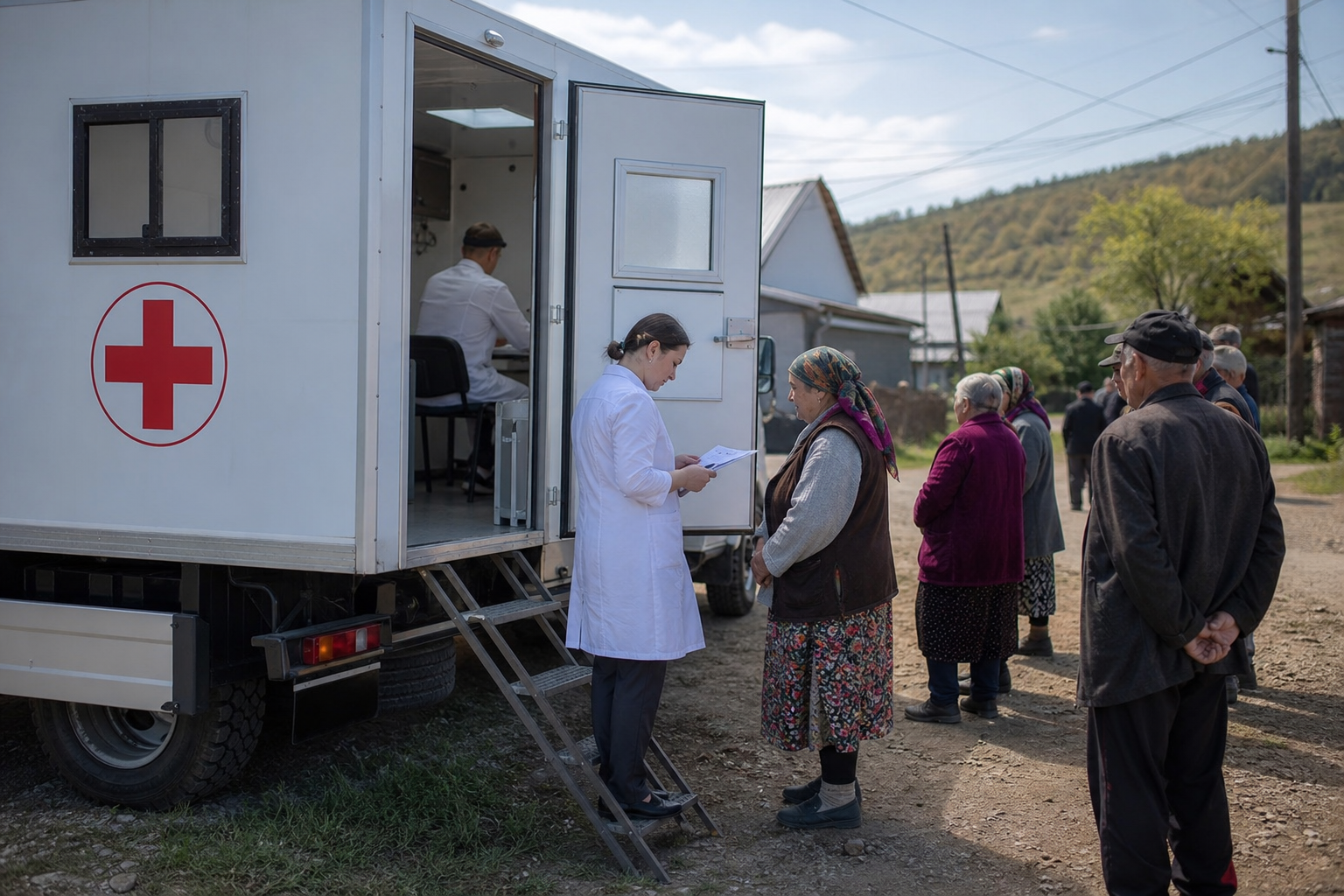
A large-scale healthcare reform in Kazakhstan covers all areas, from building rural medical posts to implementing digital platforms and developing the pharmaceutical industry. The comprehensive approach aims to improve the quality and accessibility of medical care for residents of all regions, reports infohub.kz.
According to the government's press service, as part of President Qasym-Jomart Toqaev's directives to modernize rural medicine, 655 new primary healthcare facilities have been commissioned nationwide, including modern outpatient clinics and paramedic-midwife points. Additionally, 12 medical institutions have been fully modernized and now provide specialized multi-profile care to rural residents, reducing the need to travel to regional centers.
The staffing shortage is also being addressed: the deficit of doctors in rural areas has decreased by 13.8%, and of mid-level medical personnel by 1%. To attract specialists, 529 doctors in the most in-demand specialties received one-time payments of 8.5 million tenge each, conditional on working in the countryside for at least five years. Training is being expanded: six new basic specialties have been opened in internships, and 14 narrow-profile pediatric specialties in residencies.
Special attention is paid to the safety of medical workers. A law has been passed establishing criminal liability for violence and threats against doctors and ambulance staff. Around-the-clock police posts have been set up in 152 hospitals, and ambulance crews in Astana and Almaty are equipped with personal video badges that automatically transmit data to the Ministry of Internal Affairs' Operations Center, reducing conflicts by 90%.
In the area of drug supply, the pricing and procurement system is being improved. The total procurement plan for this year is set at 584.1 billion tenge. As a result of negotiations on 66 domestic drug names, procurement prices were reduced, saving the budget 10.3 billion tenge. Kazakhstan has registered 209 domestic pharmaceutical manufacturers, 43 of which produce finished drugs. In the first quarter of 2026, pharmaceutical production reached 70.8 billion tenge, up 46%.
Cooperation with leading global companies is developing: 83 long-term contracts (up to 10 years) have been signed with 31 Kazakh manufacturers for the production of 2,058 product names worth 125.4 billion tenge. Additionally, three contract manufacturing agreements have been signed with Pfizer (USA), Hoffmann-La Roche (Switzerland), and AstraZeneca AB (UK) for the supply of six original drugs. By 2029, the share of Kazakh drugs in the domestic market should reach 50%. To this end, six major investment agreements worth 391.3 billion tenge have been signed, which will allow the production of 474 new names and reduce import dependence.
Digital transformation of healthcare continues to merge 23 disparate information systems into seven components of a single E-Densaulyq platform. A unified medical data repository with a capacity of 1.5 petabytes is being created, accumulating data from 95% of medical institutions. Starting July 1, service financing is based only on verified data from this repository, eliminating inflated reporting. Doctors access all information through a single window, cutting administrative workload in half.