

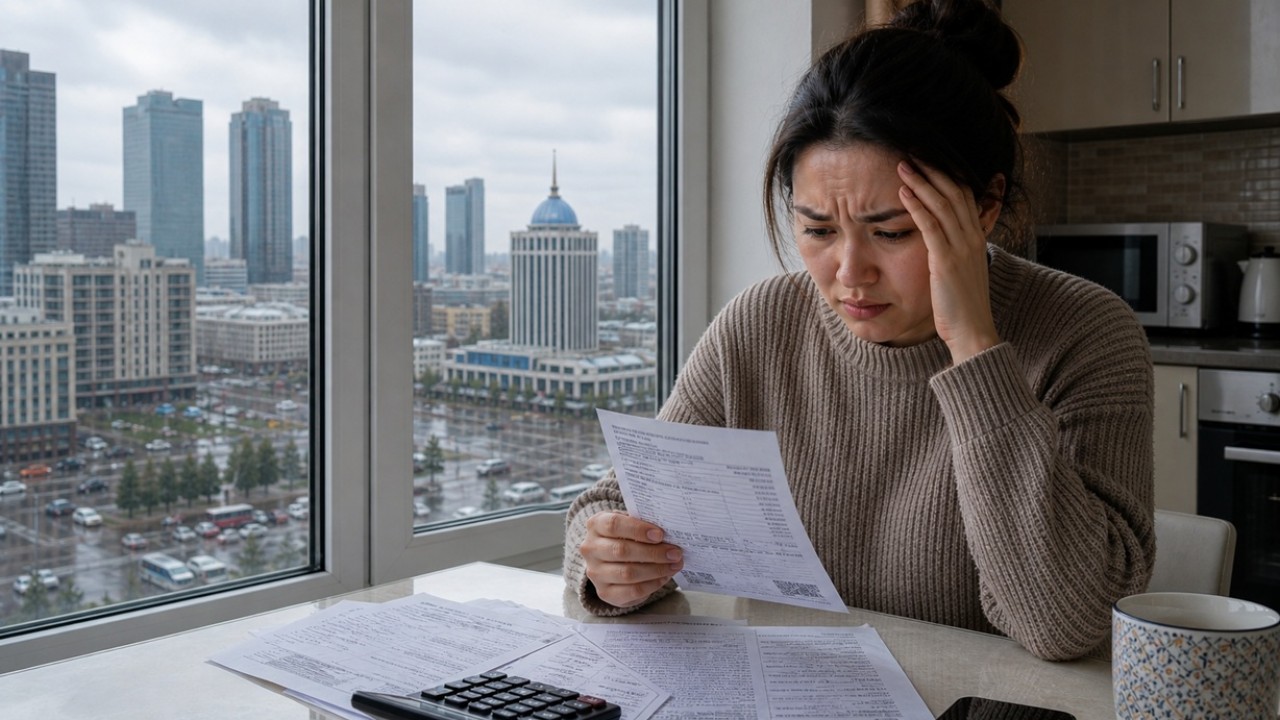
The minimum housing maintenance tariff in Almaty has risen from 40 to 70 tenge per square meter, but experts say it's still insufficient for proper upkeep of apartment buildings. According to Talgat Mukhamedgaliyev, chairman of the National Chamber of Housing and Utilities, the real cost of basic maintenance exceeded 100 tenge per square meter several years ago, reports infohub.kz.
The expert recalled participating in a working group that calculated the tariff in 2023. Even then, the calculations showed a mismatch between existing rates and actual costs.
“Back in 2023, I was part of the working group calculating this tariff, and already then a market-adequate tariff for housing maintenance (without frills, just basic services) exceeded 100 tenge per square meter. But given that the average city tariff at the time was 25–30 tenge, they apparently didn't dare to quadruple it, instead opting for gradual annual increases,” Mukhamedgaliyev said.
He noted that the current 70 tenge remains only a minimum threshold. Contribution amounts should be set individually for each building, considering its age, technical condition, common property area, and required tasks. In some buildings, the new minimum may suffice for basic work, while others may require 120–150 tenge per square meter.
“There's a saying, ‘numbers don't lie.’ So I repeat: interested residents need to calculate whether the 70-tenge tariff is adequate. It's just a minimum; each building's residents must figure out their own needed rate based on their building's condition and their own expectations. That rate could be 120 or 150 — to each their own,” he explained.
Maintenance costs for each apartment building are calculated using a methodology approved by the Ministry of Industry and Construction. A uniform tariff for all buildings is impossible, since the needs of modern residential complexes and buildings built decades ago differ significantly.
Mukhamedgaliyev recommended that owners familiarize themselves with the methodology and assess their building's actual maintenance costs.
“I recommend every owner read this document, sit down and calculate the real cost of maintaining their property today. I think then no one will have questions. Everything has become more expensive! Don't forget that behind every service there are people, and behind those people are families that need to be fed. It's all connected,” he said.
According to the expert, low tariffs force management companies to perform only minimal work: preparing the building for the heating season, cleaning entrances, disinfection, and fixing minor issues. There's no money left for systematic improvement of common property. Raising the minimum tariff from 40 to 70 tenge does not mean roof replacements or engineering network upgrades; the extra funds will allow expanding routine maintenance.
One of the main problems in work of condominium associations (OSI), the expert believes, is residents' own attitudes: “Residents always want to pay less but expect five-star hotel service — that doesn't happen. Active educational work, results, and transparency of spending are needed. Then people will have no questions about their financial contribution to building maintenance.”
After the tariff increase, residents should see a transparent cost estimate, a list of planned work, and a completion report. Mukhamedgaliyev urged owners to take a more active role in building management rather than shifting responsibility to KSK or OSI chairs: “There's a golden rule: accounting and control. The OSI system was introduced precisely to involve owners in their building's affairs. Don't trust the KSK? Then create an OSI, join its bodies, and control processes from within. Set plans, calculate the budget, and monitor every tenge. It's a working mechanism! Just sitting on the couch and speculating is a destructive position.”
At the same time, the expert believes that even raising the minimum tariff won't solve the problem of old housing stock. The average age of many buildings in Kazakhstan reaches 60 years, and they need not just routine repairs but large-scale modernization and replacement of engineering systems. Carrying out such work solely from monthly contributions is impossible. Owners should set up savings accounts for capital repairs, as provided by the Law on Housing Relations since 2011. Additional funding may come from the state housing modernization program.
“As I've said before, a comprehensive approach is needed. Besides monthly contributions, people must actively save money in a savings account and, after, say, five years, withdraw those funds to carry out major work — for example, replacing a roof or renovating an entrance. Some funds can be raised through the state housing modernization program. It requires an owner's approach and resident involvement. The rest is solvable,” the expert concluded.