

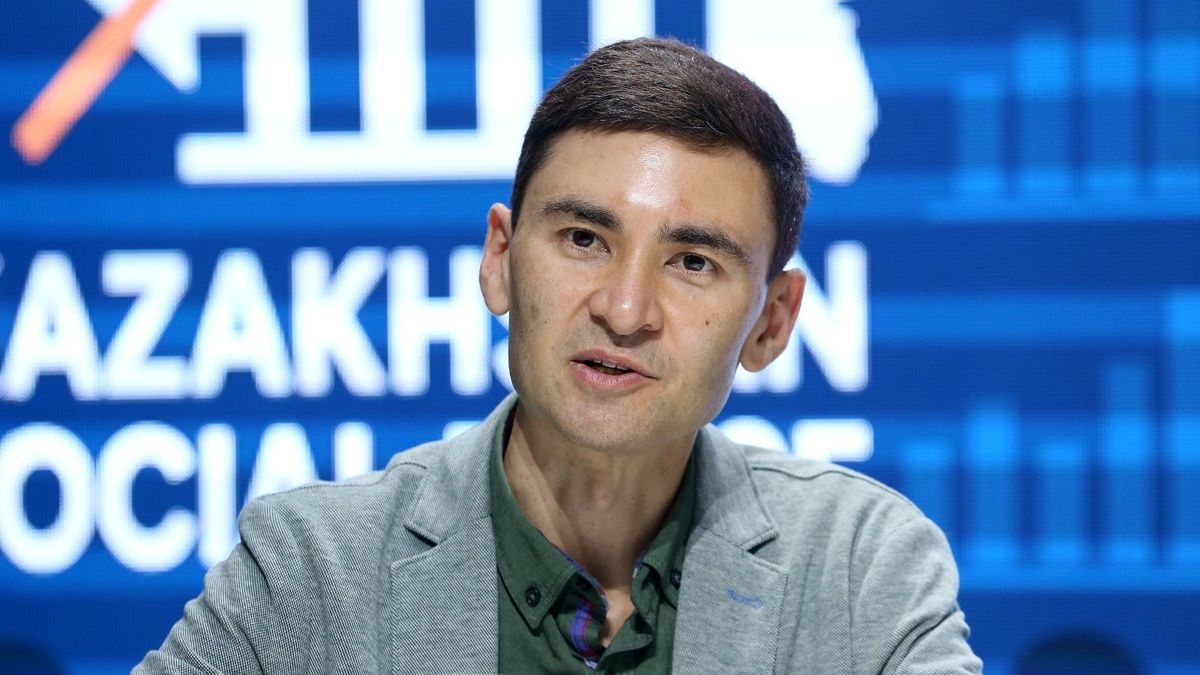
The practical effectiveness of legal reforms is measured by how far citizens are able to engage with the authorities on equal terms. It was through this lens that political expert Vitaly Koltochnik, vice-president of Kazakhstan's Center for People's Diplomacy, analyzed the sweeping changes to the country's legislation, according to infohub.kz.
In the expert's assessment, a qualitatively new human rights logic took shape in Kazakhstan during the presidency of Qasym-Jomart Toqaev. The transformation touched the fundamental foundations of interaction between the authorities and society: while maintaining governability, state institutions are binding their own activities ever more strictly to legislative frameworks and to the obligation to justify the decisions they take. This approach reflects the practical implementation of the concepts of a "Listening State" and a "Just Kazakhstan," in which strong government is combined with legal guarantees for every citizen.
The clearest indicator of the changes was the shift to a notification procedure for organizing peaceful assemblies, introduced in 2020. To hold rallies and pickets, organizers need only send a notification five working days in advance, while local executive bodies are given three days to review it. The approval procedure has been retained exclusively for marches and demonstrations.
A further boost to law enforcement practice came from a Constitutional Court ruling on January 20, 2025. The body of constitutional review established that if an event cannot be held at the chosen venue because of repairs or other activities, the akimat must offer organizers alternative options for place or time, taking into account the purpose and scale of the event.
The revision of approaches also affected institutional interaction with the civic sector. Since 2022, a special working group on protecting the rights of human rights defenders has operated under the Commissioner for Human Rights, bringing together representatives of law enforcement agencies, the Ministry of Justice of Kazakhstan, the Ministry of Culture and Information of Kazakhstan, as well as the bar association and NGOs. This structure has helped move the human rights community from the status of systemic opponents to that of partners in public oversight. During 2025 and the first eight months of 2026, the National Center for Human Rights received not a single complaint about violations of the rights of human rights defenders, indicating a decline in tension in this area.
A fundamental step in strengthening the human rights framework was the re-establishment of the Constitutional Court. Citizens gained the ability to directly challenge normative legal acts that infringe on their constitutional rights. A new stage in the institution's development was cemented by the Constitution that took effect on July 1, 2026, which enshrined the independence of the Commissioner for Human Rights.
A fundamental shift in judicial practice came with the introduction of the Administrative Procedural and Processual Code. In public-law disputes, the presumption of guilt of the state body was enshrined in law: the burden of proving the lawfulness and legality of a burdensome act in court now rests entirely with the official who issued it.
Assessing the package of reforms carried out, Vitaly Koltochnik points to the key factor in their success. At the current stage, that factor is the quality of law enforcement practice on the ground — specifically, the readiness of the judicial system, akimats and officials to follow established procedural rules to the letter and to respond to society's demands with reasoned arguments.