

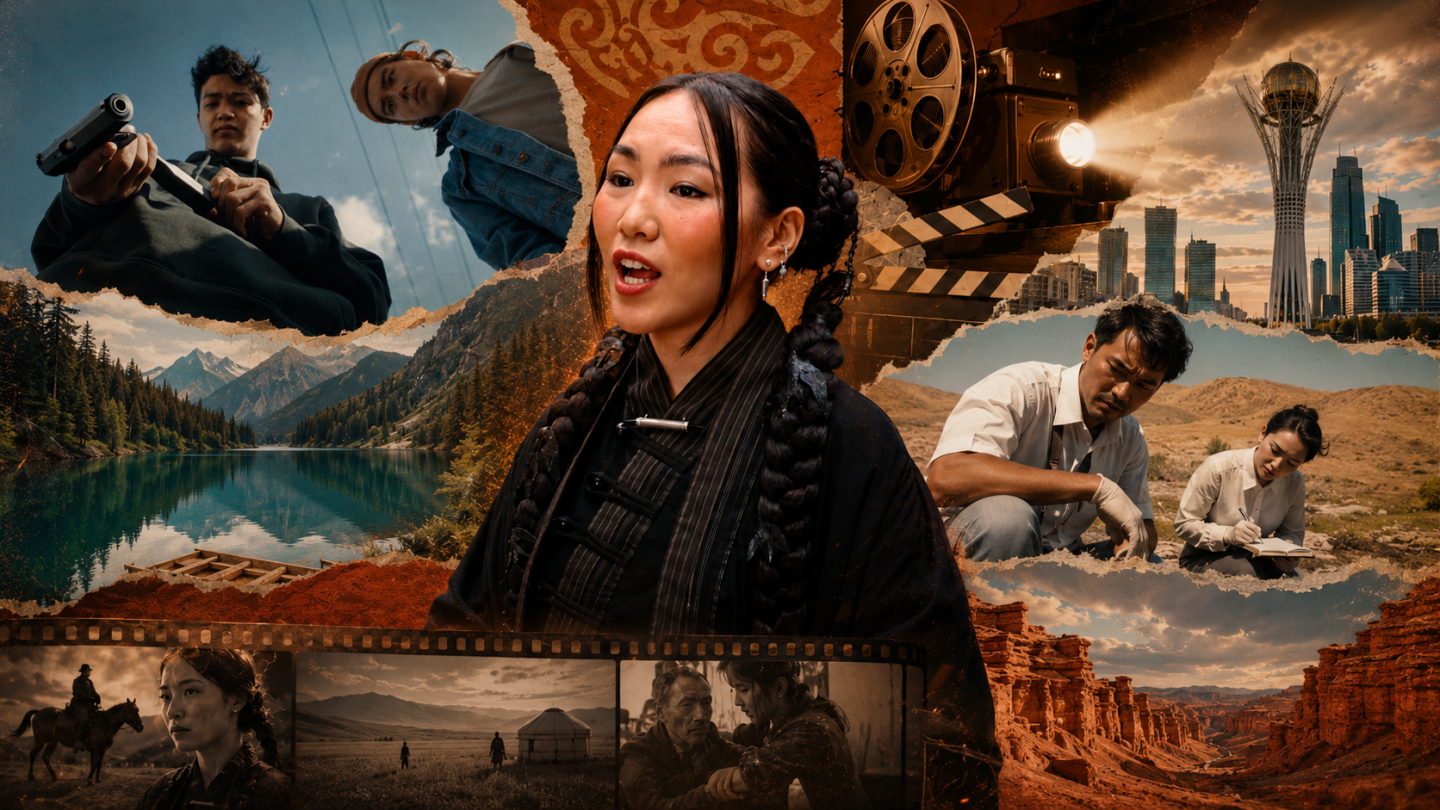
When people talk about 'soft power,' they often think of strategy, image, and national branding. But in reality, it's simpler: it's when someone in Mexico buys a ticket to a Dimash concert in New York, or someone in London tries kazy for the first time and realizes Kazakhstan is more than oil, steppes, and Borat stereotypes, reports the website infohub.kz.
American political scientist Joseph Nye described soft power as the ability to influence through attraction of culture, values, and lifestyle rather than coercion or money. This is especially relevant for Kazakhstan, which has long been perceived through external templates: post-Soviet space, raw materials appendage, land between Russia and China, home of Borat memes. Now Kazakhstan is learning to tell its own story differently — through music, film, food, tourism, sports, traditions, and its people.
According to the Global Soft Power Index 2026, Kazakhstan ranked 82nd out of 193 countries, rising five spots from the previous year. It's not yet South Korea or Japan, but there is upward momentum.
Music that needs no translation
Music has become the fastest channel for Kazakhstan's soft power. It needs no visas or translation. Dimash Kudaibergen is the most obvious example. After participating in the Chinese show Singer in 2017, he became an international phenomenon: an immense vocal range, songs in multiple languages, fans worldwide. He often uses the Kazakh language, dombra, and national motifs, making millions feel an emotional connection first, then become interested in the country.
Yenlik (Yenlik Kurarbek) deserves special mention. She promotes national music through modern genres — R&B, hip-hop, and alternative pop — without folkloric clichés. In 2026, Yenlik became the first artist from Kazakhstan to perform on the international platform COLORSxSTUDIOS. Her live session appeared on the project's official page, opening Kazakh music to a global audience.
The influence of K-pop also boosts the country's recognition. The group Ninety One became a symbol of this trend: Kazakh language, pop aesthetics, themes of youth and self-expression. Domestically, they initially sparked controversy, but such conflicts show that culture is alive.
Tourism: Kazakhstan starts to appear on the map
According to government data, in 2024 the number of domestic tourists reached 10.5 million, while foreign visitors exceeded 15 million. The Bureau of National Statistics recorded a 14.6% increase in domestic tourism consumption, to 3.16 trillion tenge, and the gross value added of tourism industries reached 4.06 trillion tenge. The New York Times included Almaty in its list of 52 places to visit in 2024, while Lonely Planet featured Kazakhstan in its Best in Travel 2025. El País recommended the country as a Silk Road destination, and The Times in 2025 wrote about yurts, canyons, and Kazakh cuisine.
Kazakhstan has simplified entry for citizens of many countries with visa-free stays of up to 30 days. However, weak points remain: airport services, navigation, and a shortage of English-speaking guides.
Gritty cinema
Kazakh cinema contributes to the country's image through human stories, often harsh ones. Sergei Dvortsevoy's film 'Tulpan' won a Cannes prize in 2008, and 'Mongol' was nominated for an Oscar. In 2018, Samal Yeslyamova won the Cannes Best Actress award for the film 'Ayka'. The film 'Bauyrina salu' was submitted as Kazakhstan's Oscar entry in 2024.
In the last 10 years, Kazakh TV series from Salem Entertainment have gained popularity: 'SHEKER', '5:32', 'Serzhan Bratan', 'Cherny Dvor'. They depict real life, not tourist brochures. The series 'SHEKER' won the Grand Prix at the Busan International Film Festival. Salem's CEO Alexander Aksyutits noted that Kazakh culture is gaining momentum: "Our series are being released and receiving great feedback. Previously, audiences in the post-Soviet space didn't know about our content, but the situation is changing. I hope this is just the beginning." He added that the state has established a Creative Industries Fund and a Film Fund to invest in promising content.
Kazakhstan's main strength is not in trying to become a 'second Korea,' but in its ability to remain itself: steppe and urban, multilingual, musical, open to different cultures. The world is getting to know the country through music, films, travel, and its people — that is the most convincing result of soft power.