

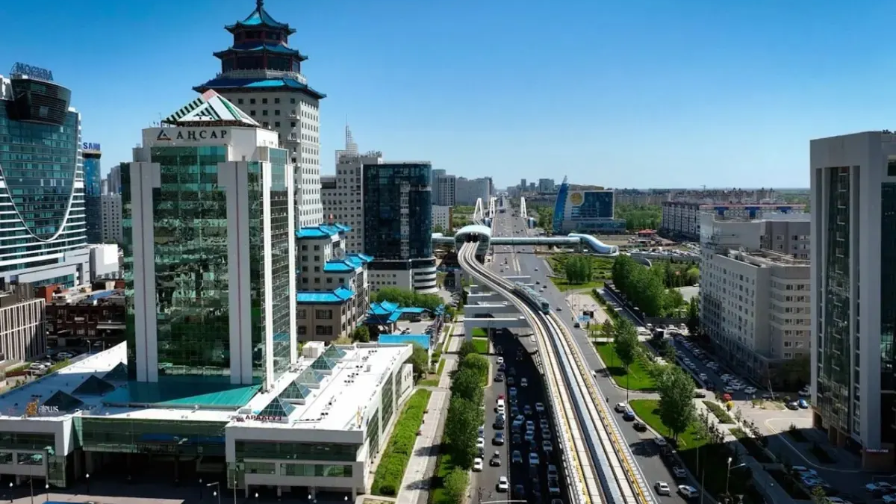
Astana's Light Rail Transit (LRT) system is under scrutiny, with calls to revise its fare policy. Financial expert Olzhas Baidildinov argues that the current flat rate of 200 Tenge per ride is insufficient to cover the project's operational costs and is economically unsound.
Rethinking the Fare Structure
Baidildinov criticized the uniform 200 Tenge fare, stating it's unfair for passengers traveling short distances to pay the same as those crossing half the city. He proposed adopting a fare system similar to those in Dubai or Istanbul, where the cost is determined by the distance traveled and the number of stations passed.
"The current uniform tariff for Astana's LRT is unfair. A passenger traveling one or two stops should not pay the same as someone crossing half the city by LRT," the expert stated.
The Burden of State Subsidies
Public transport systems, especially in Astana, require significant state funding. The operating company, CTS, has acknowledged that the current 200 Tenge fare does not even cover operational expenses with the existing passenger volume. Annually, public transport in Astana receives approximately 70 billion Tenge in subsidies, with the national figure reaching 350-400 billion Tenge.
Delays, Congestion, and Future Solutions
Baidildinov also touched upon the LRT project's significant delays. Originally slated for completion before the 2017 EXPO, the project faced a nearly decade-long postponement. This delay has exacerbated Astana's traffic congestion issues. He suggested that simply widening roads and building new interchanges are not long-term solutions. Baidildinov predicts that the city may eventually need to implement "difficult decisions" such as paid entry into the city center and increased parking fees.
The expert recommended studying Dubai's "20-minute city" concept, where residents can reach essential destinations like schools or shopping centers within 20 minutes using public transport. He noted the current lack of a clear multimodal transport scheme connecting the LRT with other city transport options in Kazakhstan.
"Tarlan Astana" and Initial Challenges
The LRT, popularly known as "Tarlan Astana," launched in May 2026 and initially generated considerable public interest. It transported nearly 100,000 passengers on its first day and reached one million within two weeks. However, early riders experienced issues such as overcrowding, heat, and crying children inside the carriages. There were also incidents like a train stopping for over 30 minutes in mid-May.
Social media buzzed with peculiar events, including water leaks from station roofs and a woman racing a horse alongside an LRT train. Criticisms were also raised regarding the incorrect spelling of some station names in Kazakh. Despite these initial challenges, "Tarlan Astana" has become an integral part of the city's transport network. Expansion plans are underway, aiming to connect Astana with the Kosshy settlement by the end of next year and reach the old railway station within three years.
Olzhas Baidildinov's proposal to change the fare structure has sparked a new debate about the LRT project's viability and convenience.
Бұл туралы Infohub.kz ақпарат агенттігі хабарлайды.