
tengrinews.kz
Almaty's Dormitory Boom: New Housing Trend Competes with Apartments
Almaty's rental housing market is witnessing a significant shift, driven by two key factors: an increase in investment apartments in newly built complexes and the emergence of dormitories as a distinct market segment. Experts note that individuals previously investing in apartments for rental income are now pivoting towards these new dormitory-style accommodations.
The Rise of Modern Dormitories
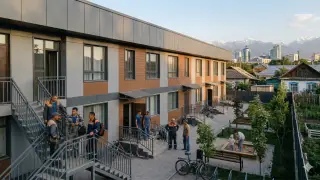
These aren't the dormitories of the Soviet era. Today's offerings are modern, income-generating properties, often featuring multiple rooms or compact apartments with private entrances. While such housing has existed in Almaty, typically near markets and built by private landowners, their numbers have surged dramatically in recent years. They are now appearing in various city districts, often renovated and equipped with private kitchens and bathrooms.
Affordability Drives Demand
Dormitories are now considered the most budget-friendly segment of the rental market in Almaty. The cost of renting a standard one-room apartment in Kazakhstan's largest city is often prohibitive for many seeking work. According to realtor Alexander Bicketov, a typical one-room apartment, excluding utilities, can cost at least 180,000 tenge per month.
A New Business Model
Dmitry Maltsev, a rental housing specialist, highlights that these dormitories are transforming Almaty's housing landscape. This segment is becoming a significant business model, attracting not only individual investors but also "corporate clients" – employers seeking to house their foreign workforce and avoid migration-related complexities.
Investor Perspective
Alexander Bicketov suggests that building a modern, two-story dormitory with 20-30 studio apartments on a small plot is now more profitable than purchasing a two- or three-room apartment in a residential area. The rental income from such a facility can be higher and more consistent.
What to Expect from New Dormitories
These properties are typically one to three stories high, built from modular, monolithic, or gas-block materials. Each resident usually has a private entrance, with apartments averaging around 20 square meters. Businessman Alexander Revin envisions his project as a modern dormitory with 20 apartments, each 28 square meters, featuring private bathrooms, showers, and compact kitchen areas, ready for immediate occupancy.
Target Audience and Location
New dormitories are designed for specific renter profiles, often located in the lower parts of the city or near metro stations for student-oriented facilities. Alexander Revin's project, for instance, targets industrial zones where many migrant workers are employed, offering them a convenient commute.
Rental Costs
While a standard 35-square-meter apartment in Almaty might rent for around 210,000 tenge monthly, Bicketov estimates that a comfortable dormitory-style apartment should be about 20% cheaper. Revin projects his own units could rent for 90,000-100,000 tenge per month, significantly less than the 200,000 tenge advertised for nearby one-room apartments.
Future Outlook and Regulatory Challenges
The demand for affordable housing is expected to fuel further growth in this segment. However, regulatory oversight remains a concern. Following a tragic hostel fire in Almaty that claimed 13 lives, authorities have increased scrutiny. Legal experts emphasize that constructing such multi-unit facilities requires adherence to urban planning and construction laws, with specific land-use designations necessary for legality.
Tenant Considerations
Prospective tenants are advised to ensure these accommodations are built safely, with proper fire alarms, emergency exits, and reliable utilities. While the market is adapting to demand, potential renters should verify the safety and legality of their chosen housing.
The influx of new residential complexes and a large number of investment apartments entering the rental market have created a situation where traditional rental income is less attractive. This has paved the way for the development of smaller, more affordable housing units, a trend likely to continue as long as migration to Almaty persists.
Бұл туралы Infohub.kz ақпарат агенттігі хабарлайды.

-
Танымал әнші Жазира Байырбекованың отбасында қуанышты жаңалық: тұңғыш ұлы Жанболат үйленіп, жас келіншек шаңыраққа келін болып түсті.
-
Узнайте, какие категории пенсионеров в Казахстане имеют право на бесплатные или льготные путевки в санатории и какие условия необходимо соблюсти.