

depositphotos.com
IMF Lowers Global Growth Forecast Amid Middle East Conflict and Energy Crisis
The International Monetary Fund (IMF) has significantly lowered its global Gross Domestic Product (GDP) growth forecast for 2026 to 3.1 percent. This adjustment comes in response to the escalating conflict in the Middle East, which has triggered a sharp rise in energy prices and introduced considerable uncertainty into the global economic outlook.
IMF's Global Economic Scenarios
During its spring meetings in Washington, the IMF outlined three potential scenarios for the global economy: a baseline, an adverse, and a worst-case scenario. The current geopolitical tensions have pushed the world towards a "significantly worse" trajectory, with potential disruptions to shipping through the Strait of Hormuz leading to a notable slowdown in growth.
In the most severe scenario, the global economy teeters on the brink of recession. The IMF projects that the average oil price could reach $110 per barrel in 2026 and $125 per barrel in 2027 under these conditions.
Baseline Forecast and Adverse Outcomes
The IMF's baseline forecast assumes the current conflict will be short-lived, with oil prices stabilizing in the latter half of 2026. This projection anticipates an average annual oil price of $82 per barrel, which is lower than current futures for Brent crude (around $96 per barrel at the time of reporting).
However, Pierre-Olivier Gourinchas, the IMF's Chief Economist, cautioned that the baseline scenario could quickly become outdated due to the ongoing uncertainty surrounding energy supply disruptions and the conflict's resolution. He warned, "The more the energy supply disruptions increase, the closer we get to the adverse scenario."
The adverse scenario anticipates a prolonged conflict, with oil prices averaging around $100 per barrel in 2026 and $75 per barrel in 2027. Under this outlook, global growth is expected to decelerate to 2.5 percent in 2026 before recovering to 3.4 percent in 2027.
Potential for Upward Revision
The IMF noted that without the Middle East conflict, global growth forecasts would have been revised upwards by 0.1 percentage points to 3.4 percent. This potential growth would be driven by increased investments in the technology sector, a decrease in interest rates, easing U.S. tariffs, and fiscal support in several countries.
Impact on Kazakhstan's Economy
This global economic uncertainty comes as Kazakhstan's government recently reported a sharp decline in oil production. Energy Minister Yerlan Akkenzhenov attributed the slowdown in the oil and gas sector's performance to issues related to the Caspian Pipeline Consortium (CPC) and the situation at the Tengiz field.
This is reported by the Infohub.kz information agency.


-
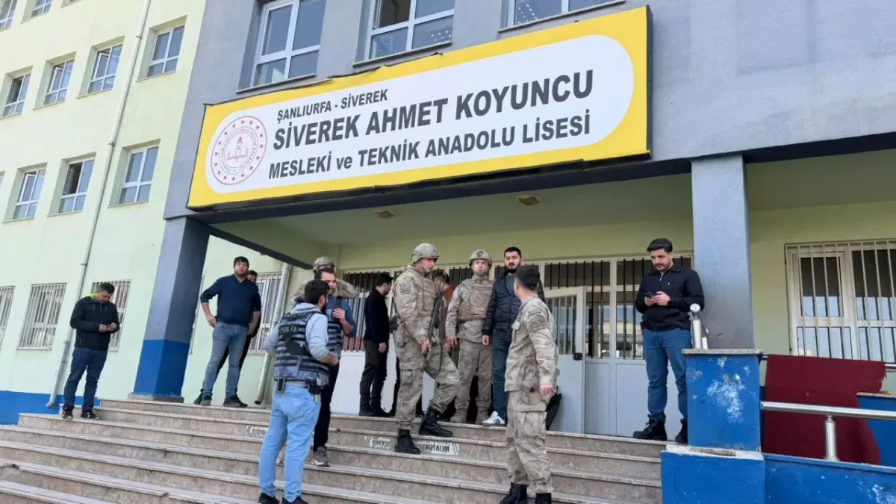
A former student opened fire at a vocational lyceum in Turkey, injuring at least 16 people before taking his own life.
-
Almaty Zoo celebrates the birth of two rare Tian Shan brown bear cubs, a significant event for conservation efforts of this endangered species.