
time.kz
Kazakhstan's Almaty Region: A New Hub for Filmmaking and Tourism
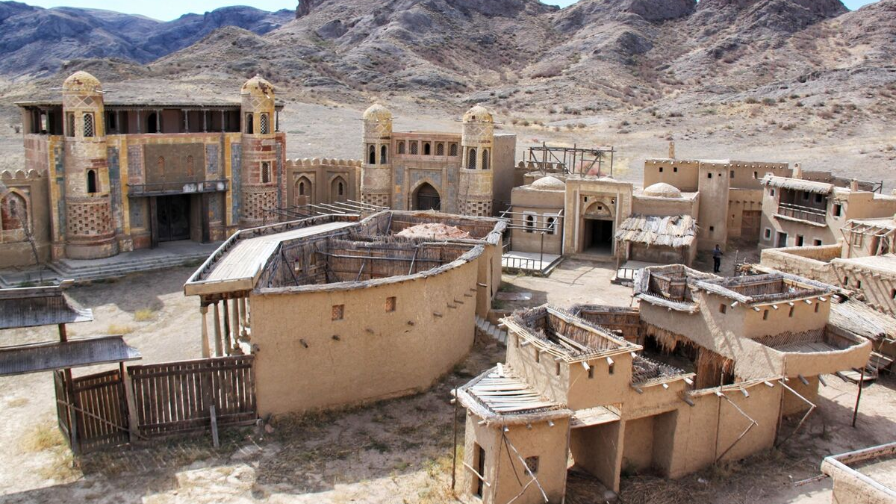
The Almaty region, particularly the Uigur district, is rapidly transforming into a prime location for high-budget series and action films. The choice of this area by South Korean stars and Jackie Chan's team underscores its growing appeal.
Nature and Event Tourism Flourish
Kapshagay Reservoir, which welcomed 1.8 million visitors last summer, continues to be a leading tourist destination. Efforts are underway to develop its northern shore, revitalizing former recreation centers. Private entrepreneurs are now offering a range of accommodations, from luxury resorts to budget-friendly options, catering to diverse visitor needs.
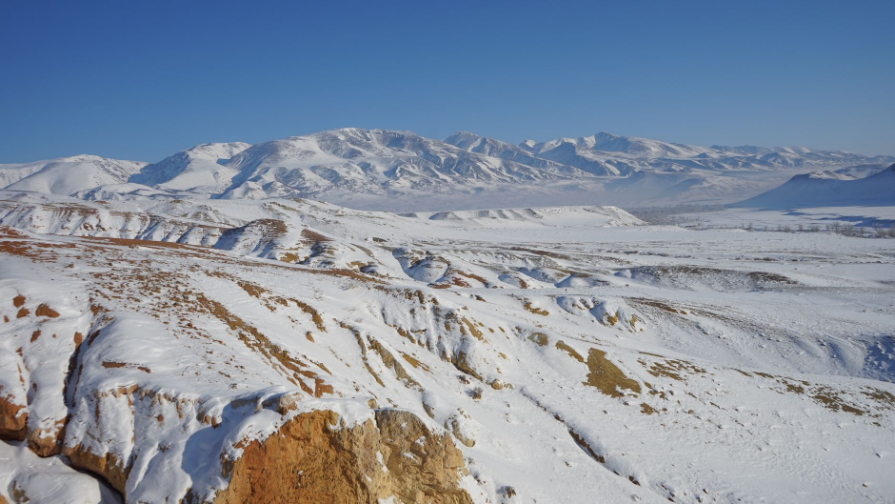
Ten of the region's tourist sites have been recognized on a national level. Among the most popular are the Ile-Alatau National Park, Kolsai Lakes, and Charyn Canyon, which collectively attracted over 700,000 visitors. To manage the influx of tourists at Kolsai Lakes and enhance accessibility, a 10-kilometer asphalt road has been constructed, with plans for electricity installation next year. "Infrastructure is needed to reduce the tourist flow to Kolsai Lakes," stated Kuanyshbek Myrzambekuly, head of the regional tourism department.
Charyn Canyon has seen a twofold increase in interest, drawing 250,000 tourists. Even renowned singer Dimash Kudaibergen chose this stunning location for a music video shoot.
International attention is also growing. "Journalists from Euronews visited in May and are currently filming. We recently met with Chinese blogger Taotao, who has over 3 million subscribers. This was not his first visit to Kazakhstan; this time, he explored Kolsai, Kaindy, Charyn, Kонаев, Talgar, and Karasai districts," Myrzambekuly added.
Legendary actor Jackie Chan also selected locations in the region for the sequel to his film "Armour of God 4." Last autumn, Kaskelen and Charyn Canyon were identified as potential filming sites during his visit to Almaty.
Exclusive Event Tourism
Beyond its natural beauty, the region is prioritizing exclusive event tourism. Major sporting events such as air shows at the Baiserke airfield, summer and winter drift shows, the opening of the motorcycle season attracting nearly 2,000 bikers, and the Tengri Ultra marathon are held here.
Officially, the region ranks third in Kazakhstan for hosting foreign visitors, following Almaty and Astana. However, the actual number is higher, as approximately 90 percent of foreign tourists visiting the southern capital take excursions into the Almaty region.
Unique Trekking Opportunities
Recognizing the crowds at popular national parks, some travelers seek less-traveled paths. "I tend to choose less crowded places," shared Alexander Gabchenko, a well-known mountain guide and blogger. "I have high hopes for the new 'Alatau Amanat Trail' project."
This initiative aims to create Kazakhstan's first major, marked trekking route with infrastructure stretching from east to west along the Ile-Alatau mountain range. The direct route spans over 400 kilometers, exceeding 1,000 kilometers with additional spurs. This focus on wild nature hiking aligns with a global trend, with similar long-distance trails in the US and Europe reaching up to 5,000 kilometers.
An exploratory expedition was conducted last year in the Sarytau mountains and the Shelek river valley. While essential equipment like anchors, ladders, and bridges still need to be installed in challenging sections, the goal is to enable prepared tourists to complete the entire route with just a tent and trekking poles, without requiring specialized climbing gear.
"I believe this trail will primarily appeal to foreigners. Kazakhstan still possesses a scarcity of pristine nature, which is rare globally. Our advantage lies in having wild landscapes located close to a major metropolis," Gabchenko believes.
In addition to trekking, other forms of autonomous tourism like cycling, river rafting, and backcountry skiing in remote mountain areas are gaining popularity among travelers.
Uncovering Hidden History
Historian and local lore researcher, Yevgenia Morozova, highlights the growing demand for nature, tranquility, and authenticity, especially among Almaty residents seeking an escape from urban bustle. "There are many unexplored places here. Through the 'Historical Weekends' project, I demonstrate that history lies right under our feet," she explained.
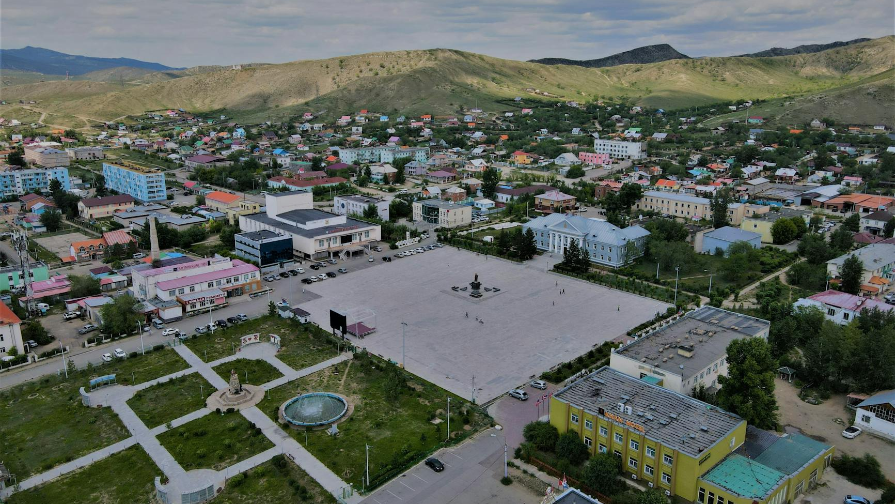
Morozova guides tourists through adjacent towns like Talgar, Kaskelen, Esik, and Uzynagash, revealing them through local cuisine, crafts, and culture. Interest in Kонаев surged after it became the regional center, but her groups visited much earlier. "The city has its own history, and the lack of a local history museum means we have to piece together information. I show tourists the traces of industrialization and tell stories of people relocated from the old Ile-Alatau settlement submerged by the Kapshagay Reservoir. Sadly, the historic wooden houses of the relocated are now being demolished. It would have been important to preserve at least one structure for history's sake. On the other hand, Kонаев's urban renewal is pleasing; drab panel facades are being transformed into stylish murals," she noted.
The region also boasts significant archaeological sites. Morozova points to the Talhiz settlement in Talgar, a crucial part of the Silk Road on the territory of Kazakhstan, as an example of accessible ancient sites. "Talhiz's advantage for tourism is its vehicular accessibility as a unique medieval monument," the guide explained.
Gastronomy and Cultural Immersion
Oksana Tanskaya, an art historian and tour guide, observes a shift in tourist preferences towards meaningful experiences, history, and quality storytelling. Classic nature tours are evolving into in-depth historical and cultural journeys.
"Travelers are interested in the details, from the daily life of Semirechye Cossacks at the turn of the 19th-20th centuries to local architecture. A prime example of this transformation is the revamped route from Charyn Canyon to the memorial house of St. Vasily of Zherkent in Kyrgyzstan-sai village. Initially a pilgrimage tour, it has been adapted for a wider audience. The project authors restored the unique memorial house, recreating the era's atmosphere with antique household items, and arranged comfortable overnight stays in cells for weary travelers," Tanskaya elaborated.
For remote destinations like the Dzungarian Gate, the journey itself is now part of the adventure, not a logistical hurdle. Within just two hours, tourists witness a landscape kaleidoscope, transitioning from the sun-baked steppes of Charyn to the cool foothills of the mountains.
Gastronomy plays a vital role in the success of these routes. "The village of Baiseyit on the way to the canyon has become an ethno-gastronomic center. Here, tourists can purchase seasonal produce from Semirechye, such as tomatoes and pumpkins. Local cafes offer succulent kebabs and over 40 varieties of laghman, while roadside tandoor centers provide a real show for groups," Tanskaya shared. "This is a perfect formula for modern tourism: combining nature, living history, comfort, and vibrant gastronomic experiences."
The Challenge of Sustainable Tourism
Despite the surge in popularity, the Almaty region faces a critical challenge: its infrastructure is struggling to keep pace with the growing number of visitors. The region urgently needs quality roads, modern visitor centers, and adequate sanitation facilities.
However, building roads and toilets is only part of the solution. Changing visitor behavior is a more complex task. Experience shows that internal tourists are often responsible for the heaps of garbage left behind after weekends.
"We observe the experience of foreign countries: when the number of tourists increases, things are never perfect; continuous work is always required," noted Kuanyshbek Myrzambekuly. "There is much criticism regarding the lack of roadside services on the way to Kolsai Lakes; people passing through Shelek could not find proper sanitary facilities. We are gradually resolving this issue through business and investment – a modern gas station will open next year."
The waste problem is also significant. "Due to high recreational load, communal services are unable to cope with waste removal," admitted the head of the regional tourism department. "There have been suggestions to limit visitor numbers to national parks, but legally, we cannot do that. Therefore, we are focusing on working with tourists and tour companies, emphasizing that the best tourist is one who leaves no trace."
Бұл туралы Infohub.kz ақпарат агенттігі хабарлайды.

-
Алматы облысы шетелдік киногерлер мен туристерді тартуда. Бұл аймаққа қандай жаңалықтар мен мүмкіндіктер әкеледі?
-
С 1 июня 2024 года получить технический и кадастровый паспорта на недвижимость можно будет только онлайн через портал eGov.kz.