
© Tengrinews.kz / Александр Григорянц_
Kazakhstan's Unclaimed Dead: Who Buries Them and How Much Does It Cost?
In Kazakhstan, the state steps in to provide a final resting place for individuals who pass away without any known relatives or designated individuals to arrange their burial. This solemn responsibility falls to the government, funded by the state budget, and is carried out by local authorities and contracted funeral service providers.
The process for interring those deemed "without kin" or "without citizens responsible for burial" follows a specific protocol. These burials are conducted without religious rites, using simple coffins and adhering to standardized technical procedures.
Who Qualifies as "Without Kin"?
The category of "without kin" extends beyond the homeless or unidentified bodies. It also includes elderly individuals living alone, orphans, and even those with relatives who lack the financial means to organize a funeral. In such circumstances, the state assumes the duty of arranging the burial.
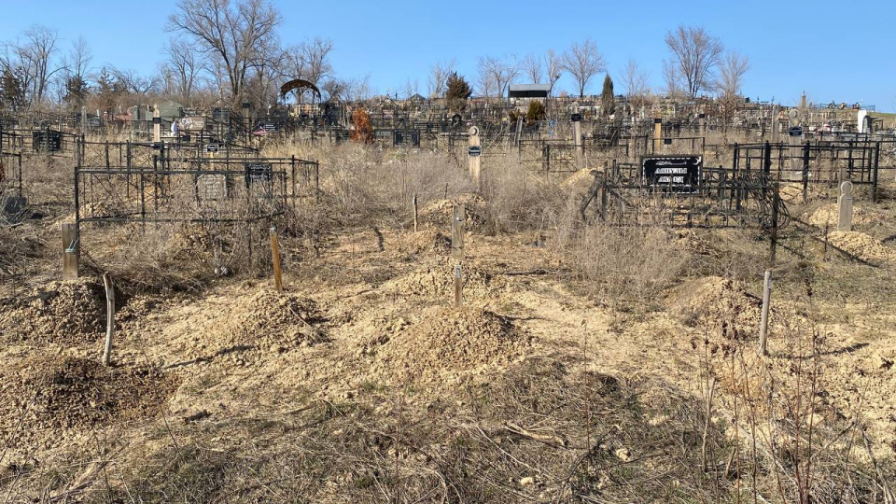
In Almaty, a dedicated section at the "Zapadny" cemetery is reserved for these individuals. Graves are marked with simple mounds, posts, and numbered plaques. However, a persistent issue is the durability of these markers; wood decays, metal rusts, making it increasingly difficult to locate specific graves over time. This poses a challenge, especially for families who may later be found and wish to arrange a proper reburial or erect a memorial.
The Cost and Scale of State Burials
State procurement data reveals that hundreds of people are buried this way annually in Almaty alone. The estimated cost per burial ranges from 45,000 to 50,000 tenge. These figures can vary significantly across different regions, depending on local budgets and the volume of burials.
Tragically, the "without kin" category often includes children and even infants who have passed away under difficult and sorrowful circumstances. While the state fulfills its obligation to provide a final send-off for the unclaimed, the system's limitations mean that the memory of these individuals can easily fade.
The Official Burial Process
The procedure begins when a body is brought to the morgue for a forensic examination to determine the cause of death. Information about the deceased is then registered. If the individual has no identification, the police become involved to establish their identity and search for relatives.
If relatives cannot be found or refuse to take responsibility for the burial, the district administration officially takes over after the death is registered. The duration for storing a body in the morgue can vary by region. If no one claims the body within a specified period, it is interred in the "without kin" cemetery.
These cemeteries can house individuals who were unidentified, homeless, died away from home, or sustained injuries from incidents like shootings. The primary criteria for inclusion are the inability to identify the person and confirm the existence of relatives. If neither can be established, the person is buried as "without kin."
Even individuals with relatives who lack the financial means for a funeral may be classified this way. In such cases, relatives might "disown" the body, leading to it being officially declared unclaimed and buried under a number in the "without kin" section.
How "Without Kin" Burials Are Conducted
In Almaty, these burials are typically conducted in batches rather than individually to optimize transportation and personnel efforts. A special zone within the "Zapadny" cemetery is designated for these interments, with the state providing the land free of charge. A contracted organization handles the preparation and arrangement of these graves.
The burial process includes preparing and digging graves, transporting bodies, and meticulous record-keeping. Each burial is logged in a special journal, noting known details about the deceased, the date of burial, and the grave number. If the identity remains unknown, the records state "unknown."
Technical requirements are strictly regulated: each burial plot is allocated six square meters, and graves must be at least 1.5 meters deep. For bodies deceased from highly infectious diseases, the depth must be at least two meters, with mandatory disinfection. Standardized spacing is maintained between graves, and a mound of approximately 0.5 meters is formed after burial.
Simple transport caskets, often made of fiberboard, are typically used. Each burial is marked with a numbered plaque to allow for later identification, even if the person's identity was unknown at the time of burial. Religious rites, such as shrouding or prayers by clergy, are not performed, as per standard regulations and the inability to ascertain the deceased's religious affiliation or wishes.
Contrary to rumors of mass graves, all "without kin" individuals are buried in individual coffins and separate graves. However, significant regional variations exist in budgets and the number of burials conducted.
The Financial Aspect of "Without Kin" Burials
In contrast to the few burials in rural areas like the Enbekshikazakh district of Almaty region, Almaty city sees hundreds of such burials annually, with dozens occurring monthly. Specialized tenders are held for these burials.
For instance, in 2025, the Almaty city administration contracted a company for 26.7 million tenge, covering the burial of biological waste and "without kin" individuals. Contracts in Astana for cemetery maintenance and "without kin" burials over three years exceed 173 million tenge, with a technical specification for 24 such burials during that period.
In Shymkent in 2023, a contract for cemetery maintenance was worth 28 million tenge, with approximately 1.9 million tenge spent on burying 53 "without kin" individuals, costing about 35,700 tenge per burial.
The fixed amount allocated for one "without kin" burial is currently around 55,000 tenge. This amount can vary, allowing for better coffins, fencing, or even monuments in some regions where fewer burials occur, compared to the hundreds in Almaty.
Finding a Grave and Exhumation
If relatives locate a deceased person in a "without kin" cemetery, reburial is possible. After confirming identity and kinship, one must contact the morgue and then the organization responsible for burials (in Almaty, the "Specialized Combine of Ritual Services"). Staff will check databases to identify the grave number.
Once the grave is found, relatives must reimburse the state's expenses (55,000 tenge) before they can exhume the body for reburial elsewhere or formalize the existing site. However, time makes this increasingly difficult, as numbered wooden stakes decay and iron markers rust, potentially leaving no trace of graves from the 1990s.
While identification is sometimes possible through numerical markers or even metal monuments, factors like seasonal burial conditions, cemetery fires, and the general decay of markers can hinder searches. Requests to locate "without kin" graves are infrequent, with most people seeking general burial sites.
A Poignant Reality: Many Buried Are Children
The "without kin" cemetery in Almaty often features children's toys and flowers, likely placed at graves later identified and formalized by relatives. A closer look at memorialized plots reveals a significant number of children among the unclaimed dead. Some bear inscriptions like "To our baby - from mother and father," with some children having lived only a day.
Investigations in 2021 by Kazakh journalists identified that infants under one year old were among those buried as "without kin." In 2019 alone, five unknown children under one year old died from various causes, including birth complications, hypothermia, neglect, poisoning, and accidents.
Ritual service workers suggest these could be premature babies, abandoned infants who died from exposure, orphans without guardianship, or children whose parents lacked the funds for burial. These are the graves that later receive memorials and flowers.
Identification Challenges and Cremation as a Solution
After identifying a relative's grave, families may choose reburial, erect fencing, or leave the site as is. However, positive identification of bodies is not always possible due to decomposition, police workload, and the inability to retrieve fingerprints, making the process challenging.
Despite the difficult nature of their work, ritual service providers express empathy for the unclaimed deceased, acknowledging the sadness of individuals who lived and died alone, with no one to remember them. The state's provision for these burials is crucial, but the current system, with its impermanent markers, fails to preserve the memory of the deceased effectively.
The long-awaited crematorium in Almaty, expected to open soon, could offer a more dignified solution for burying the unclaimed. The regulations do permit cremation for this category, but a paradox arises: parental consent is typically required, which is precisely what is missing for many of these individuals.
Бұл туралы Infohub.kz ақпарат агенттігі хабарлайды.
-
Елімізде туыстары жоқ немесе жерлеуге жақындары табылмаған жандарды мемлекет есебінен жерлейді. Бұл процесс қалай жүзеге асады және қанша қаражат жұмсалады?
-
Статистика 2025 года показывает снижение числа браков и рост числа разводов в Казахстане. Эксперты объясняют причины и говорят о новых моделях семьи.