

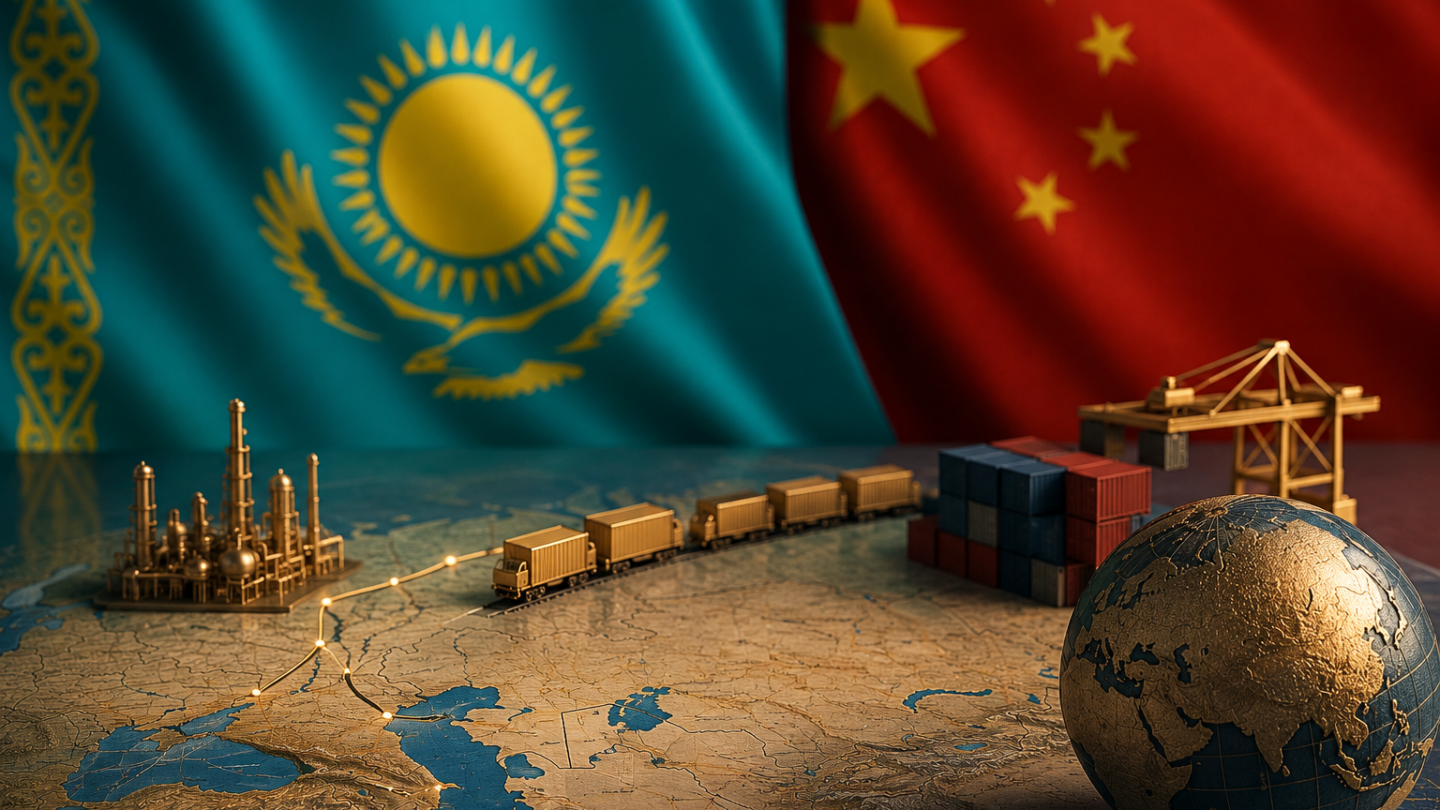
Experts note that the main purpose of Kazakh President Kassym-Jomart Tokayev's visit to China is not so much participation in an artificial intelligence conference as strengthening economic cooperation, reports infohub.kz.
On July 16, 2026, the President of Kazakhstan arrived in China on a working visit, where he will hold talks with Chinese President Xi Jinping, meet with heads of leading Chinese companies, and also take part in the World Artificial Intelligence Conference (WAIC). Orda.kz correspondent spoke with political scientists about the significance of this visit.
Political scientist Talgat Kaliyev emphasized that any communication with China, as a key geopolitical center and the world's second-largest economy, is of great importance for Kazakhstan. "Formally, this is a working visit in connection with the AI conference. But any communication with China, as a key geopolitical center and the world's second-largest economy, is of great importance for Kazakhstan. It is unlikely that any major documents will be signed now, but a roundtable with Chinese companies is planned. And this opens up serious prospects for attracting investment, implementing infrastructure projects, developing the Middle International Transport Corridor, and creating new technology manufacturing in Kazakhstan. Today we have a great demand for the development of drone technology and artificial intelligence, so this visit could give a serious boost to several areas at once," said Kaliyev.
Political scientist Tair Nigmanov also considers the visit significant despite the lack of state status. "Visits to China can always be called some of the most important for Kazakhstan. Our president does not go there as often as to some other countries, so the value of each such visit is very high. Of course, participation in the AI conference sets a certain agenda, and that topic will definitely be discussed. But this does not overshadow other areas of cooperation — transport, logistics, investment, and infrastructure projects," Nigmanov noted.
According to Kaliyev, the agenda of the talks with the Chinese president will be very substantive and will go beyond bilateral relations. "Since there will be direct negotiations with Chinese President Xi Jinping, the agenda will be very rich. I think the sides will touch upon issues that go far beyond Kazakhstan-China relations. This includes the development of the Belt and Road Initiative, transport routes, the situation around the Russia-Ukraine conflict, events in the Middle East, and Central Asia's interaction with major global centers of power. Moreover, the visit takes place on the eve of the SCO foreign ministers' meeting, so it is likely that the leaders will also discuss its future agenda," the expert said.
Nigmanov added that special attention should be paid to artificial intelligence, as Kazakhstan is actively developing this field. "China is today one of the world leaders in artificial intelligence. Therefore, the president's participation in the conference is an opportunity not only to exchange experience but also to discuss joint projects. However, AI is just one of the topics. The basis of cooperation remains transport, logistics, and investment."
Experts agree that the importance of China for Kazakhstan continues to grow. Nigmanov noted that over the past five years, relations have deepened: "If earlier they were built mainly on pragmatism, today we can already talk about true neighborliness. China publicly supported Kazakhstan's sovereignty, which is a rather rare practice for Beijing. This indicates a special attitude towards our country." Kaliyev added that Kazakhstan plays a priority role in the implementation of the Middle International Transport Corridor: "The route starts from our country, and the longest part passes through Kazakhstan. The attention that Xi Jinping pays to relations with Kazakhstan, constant contacts and visits, show that China views our country as one of its key partners."
Political scientists do not expect the signing of many new agreements but see potential for investment projects. Kaliyev emphasized the importance of the president's meeting with heads of Chinese companies: "Today Kazakhstan is actively diversifying its economy, developing processing industries and high-tech manufacturing. China, in turn, is interested in locating such projects due to our geographical position and reserves of critical materials. Therefore, it is the talks with business that could become one of the most practical results of this visit." Nigmanov recalled that China is one of the world's largest investors, and its investments usually do not come with political conditions, which is important for Kazakhstan.
According to experts, the main outcome of the visit is not the signing of individual documents, but the strengthening of strategic partnership. Kaliyev believes that such meetings allow leaders to align their positions on key issues and accelerate the implementation of agreements. Nigmanov stressed the need to maintain trust-based relations with major global players in times of instability: "The world is becoming increasingly unstable, so it is important for Kazakhstan to maintain good relations with all key partners. This is why constant high-level contacts are necessary. Such visits allow not only to maintain the already achieved level of cooperation but also to create a basis for its further development."
Thus, the current visit of Kassym-Jomart Tokayev to China, according to experts, is important not so much for signing new agreements as for aligning positions on key bilateral and international issues. The talks could give additional impetus to cooperation in investment, transport, logistics, high technology, and artificial intelligence, as well as strengthen the strategic partnership between Astana and Beijing.