

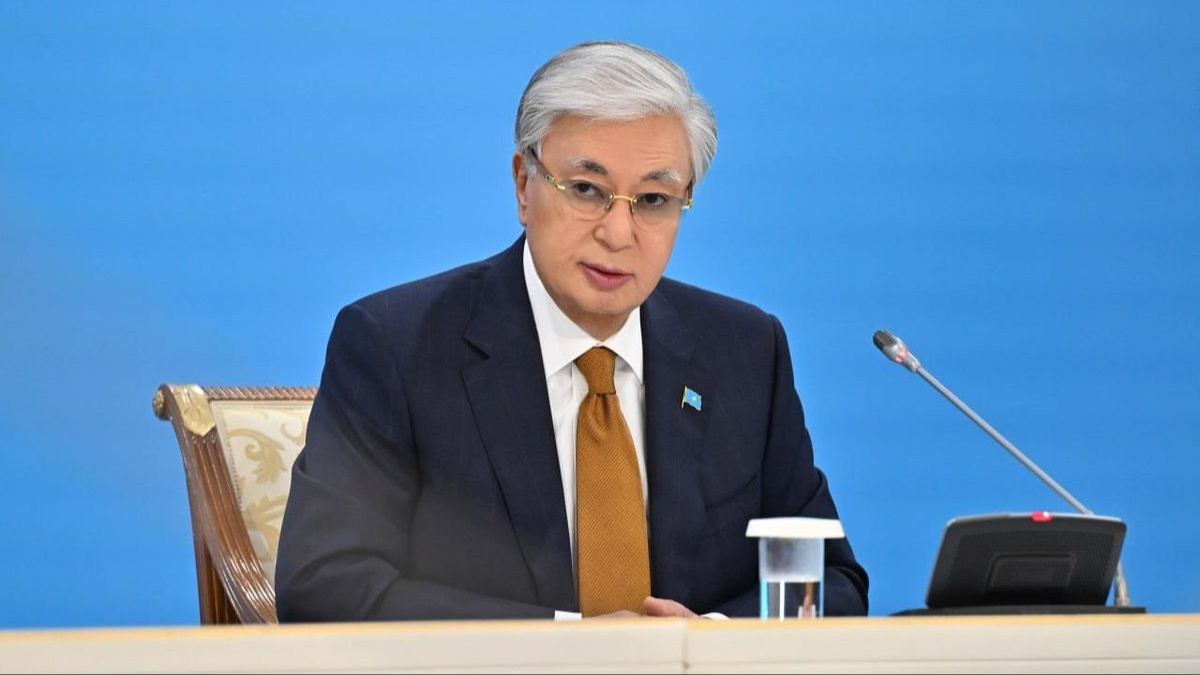
President of Kazakhstan Qasym-Jomart Toqaev has signed into law a bill that overhauls the management of pension savings, allowing contributors to select their own investment strategy and decide what portion of their assets to entrust to private management companies, according to infohub.kz.
The head of state signed the law on July 7, 2026, titled "On Amendments and Additions to Certain Legislative Acts of the Republic of Kazakhstan on Improving Social Legislation." In addition to the pension system, the document introduces changes in migration, education, healthcare, and employment.
Pension savings management rules change
The Social Code has been updated with a new article, "Investment Portfolios of Pension Assets," under which citizens can transfer part of their pension savings to a licensed investment portfolio management company of their choice.
The new option is available to:
- contributors making mandatory pension contributions;
- individuals for whom mandatory professional pension contributions are made;
- those making voluntary pension contributions;
- individuals receiving payments from the Unified Accumulative Pension Fund (UAPF).
To participate, a contributor must submit an application to the UAPF, select an investment portfolio management company, and choose a strategy for asset allocation.
Contributors offered three investment strategies
Under the law, investment portfolio management companies may offer several options for deploying pension assets:
- a conservative portfolio – a low-risk strategy focused on stability;
- a balanced portfolio – an approach balancing risk and potential returns;
- a high-risk portfolio – a strategy that could yield higher returns but carries greater financial risk.
Kazakhstanis can choose one or more portfolios and set the amount of pension savings to be transferred to the management company. The procedure for forming and operating investment portfolios will be approved by the financial market regulator.
Savings not immediately accessible
The new rules do not mean direct cash payouts to contributors. Funds remain within the pension system – contributors only decide how a portion of their savings is invested. They cannot withdraw pension money in cash. Instead, they choose which management company and strategy will invest those funds. Returns will depend on market conditions: a high-risk portfolio may generate significant profits, but carries the risk of reduced savings.
Requirements for oralmans and migrants revised
The law also updates rules for including oralmans (ethnic Kazakh repatriates) and migrants in regional quotas. Local executive bodies may reject an application if:
- false or erroneous information is found in the documents;
- the chosen region has no available quotas;
- the applicant has previously been included in a regional quota multiple times;
- consent for personal data processing is not given;
- the applicant does not meet legal requirements.
A previously granted inclusion in a regional quota may be revoked if the individual voluntarily renounces relocation, fails to arrive in the designated region within three months, or repeatedly violates migration laws. Those removed from the quota may lose eligibility for state support.
Some employers face subsidy restrictions
The law tightens requirements for employers seeking state subsidies. Government support may be denied if:
- worker wages have been unpaid for over six months;
- tax and mandatory payment arrears exceed three months;
- documents are incomplete or have expired;
- working condition information is not entered into the unified system;
- submitted documents do not comply with legal requirements.
These measures are intended to ensure targeted use of state funds and strengthen oversight of employers receiving subsidies.
What Kazakhstani savers should consider
The new law gives contributors greater freedom in choosing how their pension assets are invested. However, returns and risk levels vary across investment portfolios. Before making a decision, individuals should carefully review a management company’s performance, fees, investment strategy, and potential risks.