
Tengrinews.kz_
Hijamа Risks: Doctors Warn of Dangers in Kazakhstan's Popular Bloodletting Therapy
A traditional bloodletting practice known as hijama is rapidly gaining popularity across Kazakhstan, with numerous centers offering it as a cure-all for various ailments. Despite its widespread appeal, medical experts are sounding the alarm about the significant health risks associated with the unproven procedure.
What is Hijama and How is it Regulated?
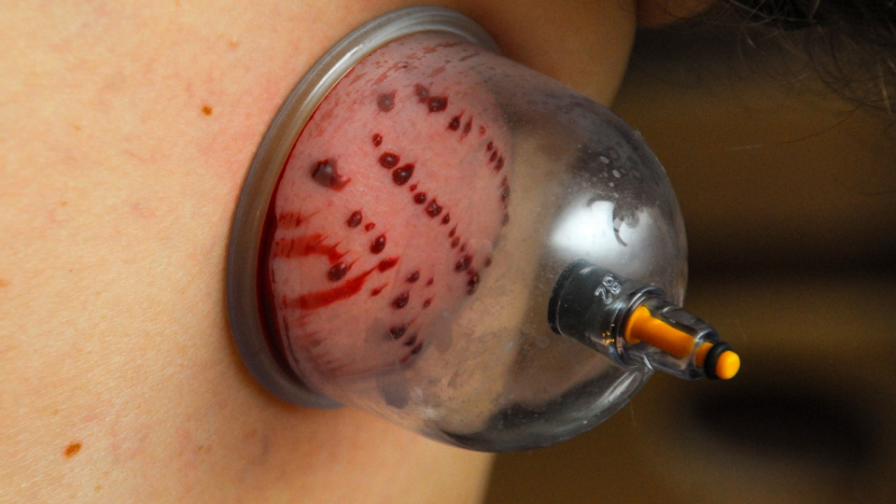
Hijama involves making superficial cuts on the skin and then applying cups to create a vacuum, drawing out a small amount of blood. Proponents believe this process removes "toxic" or "stagnant" blood, thereby stimulating the immune system and promoting overall health.
However, there is a lack of scientifically validated methods for hijama therapy globally. Kazakhstan's Ministry of Health's Committee for Medical and Pharmaceutical Control notes that while some isolated reviews and studies exist in international scientific databases, they are rarely published in reputable journals.
Some research has explored hijama's potential in managing rheumatic diseases, migraines, modulating autoimmune activity in Hashimoto's thyroiditis, treating oral and dental issues, and alleviating non-specific lower back pain. Nevertheless, these studies indicate a need for more robust evidence to establish hijama as a definitive treatment for these conditions.
As bloodletting falls under the umbrella of folk and alternative medicine, it is not a licensed medical service in Kazakhstan. However, because hijama involves breaking the skin's integrity, it is considered an invasive procedure and should, in principle, only be performed by qualified medical professionals.
Scientific Evidence for Hijama's Benefits?
Family physician Irina Shinkarenko emphasizes that research on hijama remains inconclusive. While some small-scale studies suggest potential benefits in specific cases, others highlight its harmful effects. She cautions that the quality of these studies is often low, and their findings are frequently contradictory, making them unreliable.
Despite its ancient origins, the procedure has seen a surge in interest. However, Shinkarenko points out the scarcity of scientific research to validate its efficacy.
"A Procedure with Unpredictable Consequences": A Transfusiologist's View
Medical professionals and scientists warn that hijama poses considerable health risks. Transfusiologist Aigerim Sagambaeva states that ensuring the safety of hijama is challenging, as it heavily depends on where it is performed and the practitioner's qualifications.
"While risks are reduced in medical centers with strict sterile conditions, they are not eliminated. The main issue is that this procedure is often performed at home or in dubious salons by individuals without medical training," Sagambaeva explains.
She identifies infection as the most significant risk. The breach of skin integrity creates a direct pathway for pathogens. If instruments are not sterile or the environment is unhygienic, bacteria can enter the bloodstream, leading to complications like abscesses, phlegmon, or sepsis (blood poisoning).
Furthermore, the risk of transmitting blood-borne infections such as Hepatitis B and C, and HIV is high if instruments are contaminated with previous patients' blood. This is why, at transfusion centers, doctors consider a donor's hijama history, excluding individuals for 120 days post-procedure.
Sagambaeva notes that, in most cases (99%), patients do not undergo pre-hijama blood tests or other screenings. Practitioners often rely solely on the client's word regarding their health status, without verifying conditions like hepatitis or checking hemoglobin levels.
Post-Hijama Complications: From Bruises to Anemia and Fainting
According to Sagambaeva, patients can experience both local and general complications after hijama. Local issues include slow-healing wounds, scarring, hematomas, and skin hyperpigmentation. General complications can involve severe dizziness, fainting, and sudden drops in blood pressure.
The expert highlights anemia as a particularly dangerous consequence. Frequent hijama sessions can lead to blood and iron loss, resulting in anemia, where tissues do not receive adequate oxygen.
For individuals with high blood pressure, hijama can cause a sudden drop (collapse) or a dangerous spike in pressure. The procedure is strictly contraindicated for those with second or third-degree hypertension and high cardiovascular risk, due to the increased danger of stroke or heart attack.
Contraindications for Hijama and Risk of Death: Who Should Avoid It?
Sagambaeva lists numerous contraindications for hijama. The procedure is strongly discouraged for individuals with:
Individuals with these conditions face a life-threatening risk if they undergo hijama. There are documented cases of sepsis leading to death following unsanitary procedures. Rare instances of intracranial hemorrhage after hijama have also been reported.
What Precautions Can Be Taken?
Sagambaeva advises that if someone decides to proceed with hijama despite the risks, minimizing potential consequences is crucial. She recommends seeking services at medical facilities rather than from untrained individuals. Patients should ensure disposable scalpels and cups are opened in front of them, and that sterile techniques, skin preparation, and glove use are observed.
Before the procedure, at least a general blood test should be performed to check hemoglobin levels and rule out anemia.
The expert refutes the notion of hijama "cleansing" the blood from a proven medical standpoint. Modern physiology does not recognize concepts of "dirty," "stagnant," or "bad" blood. Blood is continuously circulated and purified by the lungs, liver, and kidneys.
The fluid drawn during hijama is a mixture of capillary blood and interstitial fluid, containing no unique toxins. For those seeking the benefits of blood "renewal," the scientifically proven method is blood donation. When a person donates blood, the bone marrow signals the production of new blood cells, a natural, safe, and beneficial process.
Why Do People Still Choose Hijama?
Family physician Irina Shinkarenko attributes the interest in hijama to a search for a universal remedy for all illnesses, coupled with fear and distrust of conventional medicine. Many are drawn to the possibility of improving health without resorting to chemical drugs or making significant lifestyle changes.
"For some, it's easier to make cuts and draw blood than to adhere to a diet, exercise, or change their lifestyle. Of course, finding some 'magic' procedure is much easier. People have always looked for some miracle cure, and it's the same today," she notes.
She also observes a growing segment of the population, similar to anti-vaccination proponents, who advocate for alternative medicine, viewing it as more natural, safe, and sometimes more effective.
"Typically, those who use alternative therapies are promised complete cures for a variety of ailments where conventional medicine has proven ineffective," Shinkarenko explains. This promise draws people to these practices, despite the lack of scientific validation.
"Here, indications, contraindications, and potential risks are unknown. However, the latter certainly exist. Any procedure involving blood and the disruption of skin integrity always carries them," Shinkarenko clarifies.
She adds that patients are usually required to sign an informed consent form acknowledging potential consequences before such procedures. However, in the case of hijama, the field is largely unregulated and unsupervised. This leaves uncertainty about who performs the procedure, their qualifications, and who bears responsibility.
Given the insufficient evidence, supporting hijama is not advisable. Individuals opting for this method are essentially acting on their own risk, without guarantees or proof. Unlike conventional medicine, which relies on scientific data, statistics, and clear indicators of outcomes, hijama is often a blind choice.
However, Shinkarenko does not rule out the possibility that future research might validate hijama as an effective, natural healing method. For now, she compares its scientific basis to folk remedies of the past century, such as applying plantain leaves to wounds.
Бұл туралы Infohub.kz ақпарат агенттігі хабарлайды.
-
Қазақстанда танымал болып келе жатқан хиджама процедурасының денсаулыққа зияны мен қауіптері туралы медицина мамандарының пікірін біліңіз.
-
Масштабная операция против коррупции в сфере здравоохранения: задержаны главные врачи и директора поликлиник.