
static.tengrinews.kz
Kazakh Women Opt for New Names, Shedding Traditional 'Boy-Wishes'
In Kazakhstan, a tradition of naming daughters with the hope of having a son, such as 'Ulbolsyn' (meaning 'May a boy be born'), is deeply rooted. However, for some women, these names have become a source of lifelong regret and feelings of inadequacy. This article explores the experiences of two women who have changed their names and the insights of experts on this cultural phenomenon.
Layana's Story: 'I Haven't Responded to My Name Since School'
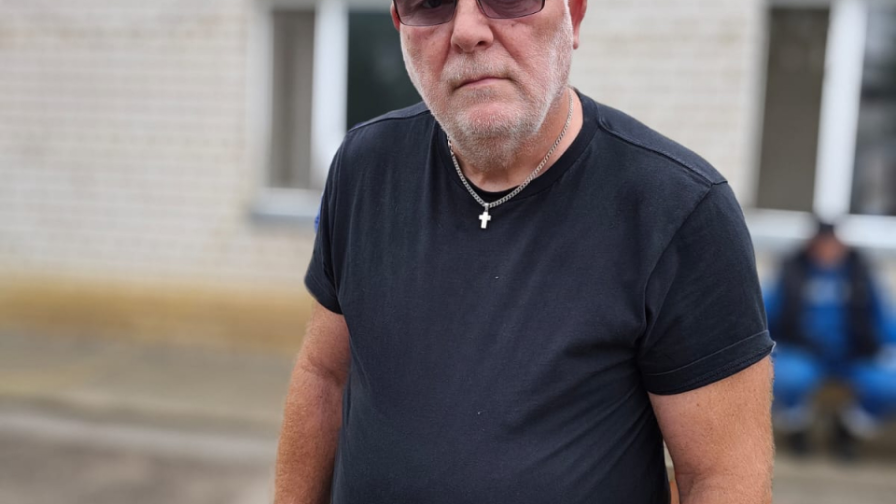
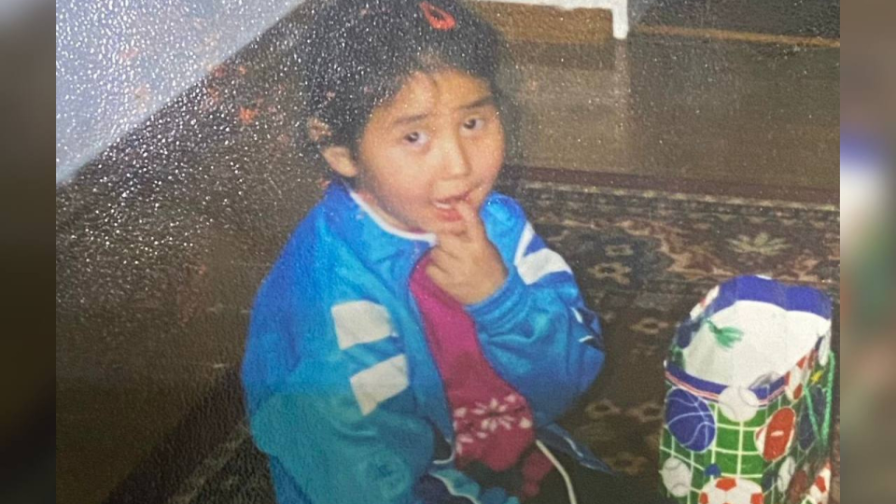
Layana, a 28-year-old resident of Almaty, has been using her chosen name, Layana, for the past two years. Previously, her official name was Ulbolsyn, a name given by her late father in honor of her mother. For Layana, however, the name became a constant source of discomfort.
"Since childhood, I felt my name was alien to me. In primary school, I wouldn't respond to Ulbolsyn. I felt ashamed when meeting new people. I felt inferior," Layana Aiqaziyeva shared. "At school, they called me 'Ulya,' so I tried to introduce myself that way."
Each new acquaintance led to intrusive questions: "Was a son born after you?" or jokes like "Ul-bolsyn" (meaning 'let there be a son').
"I was afraid to say my name on dates because I knew what the first question would be. I didn't feel feminine; I felt like there was something masculine about me. This affects people much more than they think," Layana explained.
Although Layana first considered changing her name at 13, she only made the decision at 26. After much deliberation, she chose the name Layana, a less common and fitting choice.
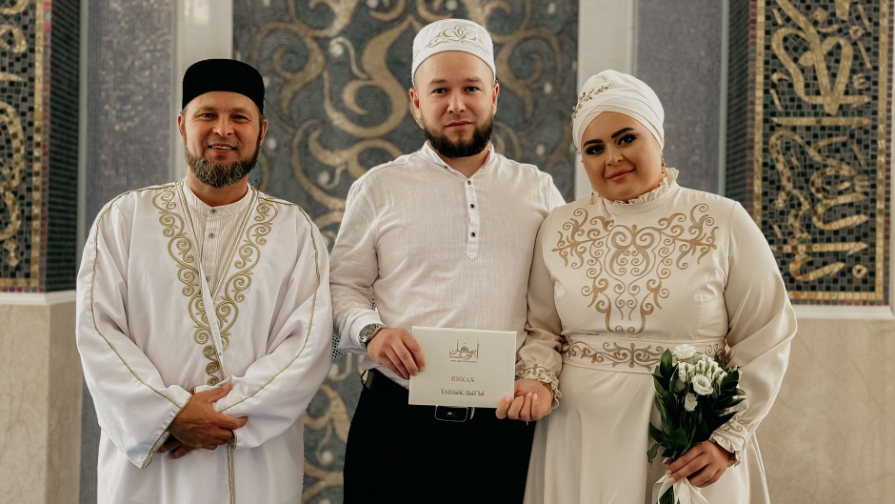
The legal process of changing her name was straightforward. More significant for her was a ceremony at the mosque. "They whispered my new name in my ear and wrote it in a journal. Only then did I realize how important this step was," she recalled.
Reactions from those around her varied. Some were supportive, while others openly dismissed it as a waste of time. "They told me, 'Pay off your loans. Do you think changing your name will make you a different person? Your face says 'Ulbolsyn','" she recounted.
Layana's relatives gradually adapted to her new name, though some still use her old one. "I try to correct them patiently. But when they say, 'For us, you will never be Layana,' I feel uncomfortable," she said.
She hasn't informed her late father's relatives about the name change, fearing it might bring up memories of her father and grandmother. Sometimes, she feels guilty, as her father named her after her mother. "My father probably wanted a son too. I am his only child. Perhaps I'm just comforting myself, believing my name isn't tied to the wish for a son. But I believe my father would have supported me," Layana mused.
Her mother, however, reacted positively. Initially, she changed Layana's name in her phone contacts but struggled to remember it. "My mother couldn't reach me for several days – she kept forgetting my name. Then she asked me to write it down," Layana laughed.
Over time, her loved ones adjusted, and new acquaintances are often surprised to learn her previous name, remarking that it never suited her.
For Layana, the name Ulbolsyn symbolizes expectations imposed on her from birth. "Either a son must be born after us, or we ourselves must be like men. Perhaps we can stop this practice, and parents will stop 'experimenting' on their daughters. We have the right to choose, and that includes our name," she stated.
Layana believes such names are directly linked to the discrimination against women. In cultures that traditionally place a higher value on sons, the name itself can carry this inequality. "When naming a child, you look for meaning. What meaning do names starting with 'Ul' have? Sacrificing your daughter to wish for a son? Openly saying, 'We didn't expect you; we wanted a son' – and making the child feel this throughout their life?" she questioned indignantly.
She advises those considering a name change not to be afraid, believing it will simplify their lives and boost self-confidence. "No one considered you when choosing your name. I know many are afraid of what people will think or say. But they don't care; they'll talk and forget. This is your business and your decision," she concluded.
Dana's Story: 'My Parents Might Not Have Chosen Me, But I Choose Myself'
For Dana, the transition from Uldana to Dana represents a journey of self-discovery. Initial thoughts of changing her name emerged during her teenage years, but she fully committed to the decision at 22. This choice became a way to express her independence from the expectations of others.
"Dana is the adult version I created for myself, while Uldana often belongs to childhood. Changing my name gave me a sense of control over my life," said Dana Manas.
She recalls first contemplating her name's meaning at 16, after a remark from her sister: "If I had known you would grow up so beautiful, your father would have proposed to you." Dana perceived these words as a sign that she wasn't what was expected.
The young woman admits that teenage maximalism turned this feeling into a silent protest. For years, she strived to be exceptional to avoid her parents regretting not having a son. "I tried to be good, studied constantly, didn't refuse household chores, so as not to remind my parents of the need for a son in the family. When I changed my name, there was a feeling of: 'My parents might not have chosen me, but I choose myself,'" Dana shared.
Today, she views the situation with equanimity, understanding she owes no one any explanations.
Formally changing her documents was easy. Her mother supported the decision immediately, while her father learned of the new name later. "He simply said: 'Your life is your name,'" she recalled.
Dana is confident that such names are gradually becoming a thing of the past. Society increasingly views girls not just as accidental children born to fulfill the desire for a long-awaited heir, but as independent individuals. "Life is only one – change your name if you want. There are plenty of problems in life, so why not reduce one? Respecting tradition should not be above your comfort," Dana advised.
'I Wasn't Expected': A Psychologist's Perspective
Psychologist Asem Yerzhankyzy explains that a child forms their initial understanding of themselves through their name. If a name carries the meaning of "we waited for a son," the girl may subconsciously internalize the message: "I was not expected."
"A feeling of inadequacy can arise from a young age. Over time, if reinforced by experience, beliefs like 'I am not valuable enough' can form. This affects the stability of self-esteem. A child might subconsciously perceive being born in the 'wrong gender' as failing to meet expectations, which can lead to feelings of guilt," the expert stated.
According to Yerzhankyzy, this can sometimes lead to hidden competition within the family – with a "fictional son" or actual male relatives. "This could be maternal uncles, sons of parents' friends, or even a 'fictional son.' A desire to prove one's importance and right to be accepted emerges," she explained.
In such cases, changing one's name can be a form of separation, a step away from an imposed role. However, it's crucial for this to be a conscious decision. "If the name is changed merely to prove something to parents or to escape a burden, while the inner feeling of 'I am insufficient' remains, the effect might be short-term. The form changes, but the inner feeling about oneself does not," the psychologist noted.
She added that the name itself doesn't always cause trauma; the emotional climate within the family plays a decisive role. "If a daughter is loved unconditionally and her 'secondary status' is not emphasized, the name might not become a source of internal conflict," she concluded.
Advice for Parents: Avoiding Harm to Children
The psychologist advises parents to honestly acknowledge any expectations within the family but also to consistently show their daughter that she is needed and valued.
"It's important for love towards a daughter to be demonstrated not only in words but also in actions: equal attention (especially if a son is born later), love, and warmth, otherwise, she will feel less valued," she recommended.
Even if relatives suggest a name, the responsibility for the family's emotional climate rests with the parents. "Parents create an atmosphere where the meaning of a child's name is understood. Most importantly, be prepared to handle any of your daughter's feelings – her questions, grievances, and anger. Expressing feelings, striving to understand her place in herself and the family, is not her responsibility," the expert concluded.
Will the Practice of Giving 'Masculine' Names to Girls Disappear?
Sociologist Aiman Zhusupova views this phenomenon as a sign of outdated notions about gender roles. She notes that the re-evaluation of names with the component 'Ul' today reflects the demand for gender equality.
"This is a manifestation of past social norms where the male lineage dominated in tribal and family structures. These names were not created with discriminatory intent but solidified the cultural norms of their time. Today, this is becoming an object of critical reflection," Zhusupova stated.
Zhusupova also points out that the current interest in genealogy and traditions is accompanied by a re-evaluation of women's roles in the lineage structure. Genealogies along the female line, previously unfamiliar, are now being explored.
The sociologist believes such names will become increasingly rare over time, especially in urban environments. "It's too early to speak of their complete disappearance: for some families, they retain cultural, familial, or symbolic value. Thus, we are not abandoning tradition but adapting it to the new value orientations of society," said Aiman Zhusupova.
Another sociologist, Asem Kusmanova, highlights an important nuance: "Masculine" names were given to girls for various reasons. In some families, a son was genuinely desired, while in others, the child was seen as a protector or defense. According to her, the motive can only be definitively known from the person who chose the name.
Kusmanova also believes such names will become less common but not disappear entirely. "Symbolic meanings can change: if a woman named Ulzhan becomes a successful individual, the name might start being chosen as an association with success rather than the wish for a son," she suggested.
What Does the Statistics Say?
The extent of this ancient tradition in Kazakhstan is well illustrated by data from the Ministry of Justice of the Republic of Kazakhstan. As of 2026, over 118,000 women in the country bear names with the root 'Ul' or 'Uly.' If we exclude names that are not traditionally associated with the wish for a son but merely share letter combinations, there are still over 106,000 women with such names in the country.
The most common names in this category include:
Note: It's important to understand that the actual number might be higher – this count excludes names with similar meanings to the traditional wish for a son, such as Toidyq ('we had enough'), Zhyngyl or Zhyngylsyn ('you erred' or 'confused'), Ümit ('hope'), and others.
A Downward Trend
Data from the Bureau of National Statistics confirms the sociologists' view that the tradition is gradually fading. Since 2024, the number of girls born with names starting with 'Ul/Uly' has approximately halved.
Turkistan region remains the absolute guardian of the tradition: in 2024, 127 such names were registered there (93 in villages), and in 2025, 76 (15 in cities and 61 in villages). In megacities, this practice is gradually being abandoned: in 2025, nine newborns in Astana, seven in Almaty, and 26 in Shymkent received such names. For comparison, in 2024, 19 such names were registered in Astana, 18 in Almaty, and 53 in Shymkent.
Data from January 2026 shows a continuing decline: since the beginning of the year, only nine girls nationwide have been registered with such names: two in Almaty, two in Shymkent, two in the Mangystau region, and one in the Karaganda region.
Бұл туралы Infohub.kz ақпарат агенттігі хабарлайды.


-
Қазақстанда қыздарға «ұл тусын» деген тілекпен қойылған есімдердің тарихы тереңде жатыр. Алайда, бұл есімдер кейбір әйелдер үшін өмір бойы өкініш пен кемсітушілік сезімін тудырады. Есімдерін өзгерткен екі әйелдің оқиғасы және сарапшылардың пікірі.
-
Казахстанцы сталкиваются с ростом цен на молоко и снижением его качества. Разбираемся в причинах и последствиях.