
tengrinews.kz
Scientists Track Saiga Antelopes in Western Kazakhstan Using GPS Collars
Scientists are embarking on a crucial study in western Kazakhstan to understand the migration routes of saiga antelopes. By fitting newly born calves with special GPS-equipped collars, researchers aim to gather vital information about the lives of these iconic steppe animals.
Innovative Tracking for Saiga Calves
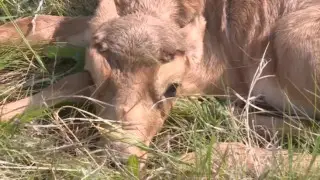
The breeding season for saiga antelopes is currently underway in the steppes of the Aktobe region. Biologists are meticulously measuring the weight and length of newborn calves, collecting blood samples, and attaching identification tags. A key feature of this research is the deployment of collars equipped with GPS sensors on female calves. These solar-powered devices are designed to monitor the animals' migration paths for up to three years.
Advanced Sensor Technology
The lightweight collars weigh just 32 grams and transmit location data four times a day. "We observed a calf fitted with a collar three days ago showing activity 7 kilometers away from where we found it this morning," stated Aibat Muzbay, Director of the Association of Regional Non-Governmental Organizations of West Kazakhstan. "This indicates that the saiga calves are getting stronger daily and are actively following their mothers."
Scope of the Research
Employees from the Institute of Zoology are conducting their fieldwork in the border areas of the Mugalzhar, Bayganin, and Shalkar districts, which are home to the Ustyurt population of saiga. During the breeding period, specialists from "Okhotzooprom" are responsible for monitoring and implementing protective measures for the animals.
"The Ustyurt saiga inhabit the territories of the Aktobe and Mangystau regions. Previously, there were instances of saiga migrating into Uzbekistan, but such cases are rare now. Conditions here are likely more favorable for the animals," explained Shokhan Akylbekov, a senior inspector at "Okhotzooprom." "According to our estimates, approximately 60-70 percent of the animals have successfully reproduced."
Saiga Population Status
Recent data indicates that the Ustyurt saiga population exceeds 78,000 individuals. The region is also home to the Bogetkol and smaller groups of Ural saiga. This research is vital for accurately assessing saiga numbers and ensuring their continued protection.
This study is being conducted by scientists from the Institute of Zoology and supported by "Okhotzooprom" specialists. The findings will contribute significantly to the conservation efforts for these vulnerable animals.
This information was reported by Infohub.kz.


-
Ақтөбе облысында жаңа туған киік лақтарына GPS-датчигі бар жапсырмалар тағылып, олардың миграция жолдары зерттелуде.
-
Ведущая солистка балета Жанель Тукеева откровенно рассказала о трудностях профессии, зарплатах и жизни после сцены.