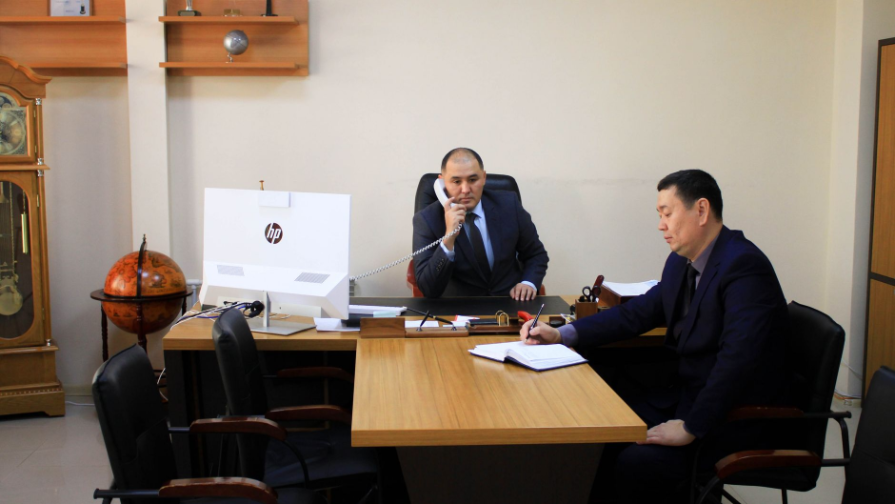


Photo: Anastasiya Gepp (https://www.pexels.com/@anastasiya-gepp-654466) / Pexels
Kazakhstan Entrepreneurs Given Deadline for Tax Regime Choice
Kazakhstan is setting a clear deadline for its entrepreneurs to decide on their tax status. By March 1، 2026، business owners must either transition to one of the newly established tax regimes or opt to stay with existing ones. Failure to submit the necessary notification will result in an automatic shift to the general tax regime.
New Tax Code and Regimes Take Effect
As of January 1، 2026، Kazakhstan's tax landscape is undergoing significant changes with the introduction of a new Tax Code. Seven previously existing special tax regimes، including those based on patents، mobile applications، simplified declarations، fixed deductions، retail tax، and specific agricultural producer regimes، have been replaced. Moving forward، only three special tax regimes will remain: one for self-employed individuals، a simplified declaration regime، and a regime for peasant (farm) households.
Simplified Regime for the Self-Employed
This new regime is available to citizens of Kazakhstan and ethnic Kazakhs (kandastars) who are not registered as individual entrepreneurs، do not employ staff، and engage in permitted activities. Their monthly income must not exceed 300 MCI (Monthly Calculated Index)، which is approximately 1.3 million tenge in 2026. This system eliminates the need for formal يپ (individual entrepreneur) registration and tax reporting. While the personal income tax (PIT) is set at 0%، individuals must pay social contributions amounting to 4% of their income. In Almaty، this rate is reduced to 3%.
According to Nurlibek Uspanov، head of a department at the State Revenue Committee for Almaty، the city has over 180،000 registered entrepreneurs. Of these، more than 24،000 fall under the self-employed category، with 2،300 being former individual entrepreneurs.
"The new regime for the self-employed is maximally simplified and aimed at individuals with small، unstable incomes. The only obligation is to pay social contributions at 4% of income. This provides access to pension، medical، and social insurance. It's a significant step in legalizing self-employment and protecting citizens' rights،" stated Uspanov.
All transactions under this regime are managed through a dedicated mobile application، which handles receipt generation، income tracking، and automatic calculation of social payments.
Simplified Declaration for Small and Medium Businesses
This regime is designed for small and medium-sized businesses with an annual income not exceeding 600،000 MCI، approximately 2.6 billion tenge. Under this system، the PIT or corporate income tax (CIT) is set at 4%. Businesses are exempt from VAT and social tax، and they are required to submit declarations twice a year.
Baktygul Seitova، head of the public services department at the State Revenue Committee for Almaty، highlighted that this regime supports business development. The ability to account for payroll as an expense encourages formal salary payments and employment legalization.
Regime for Peasant (Farm) Households
Changes to the regime for peasant households are minimal. Following the abolition of the unified land tax، these households will continue to pay PIT at 0.5% of their income. They are also exempt from property tax، transport tax، VAT، and social tax. Reporting is required annually، with tax payments due twice a year.
Transition to the General Regime
Entrepreneurs whose activities do not align with the special regimes will be automatically moved to the general tax regime starting January 1، 2026. This regime imposes a 10% income tax for individual entrepreneurs and 20% for legal entities. Some businesses، particularly those previously using the simplified declaration، have raised questions about this transition. In response، financial specialists have been offering consultations to entrepreneurs nationwide since January 5 as part of the "People's Accountant" initiative.
Businesses are reminded that they must submit their chosen tax regime notification by March 1، 2026، through the "Taxpayer's Cabinet،" the E-Salyq Business app، a banking application، or in paper form. If no notification is filed، taxpayers will be automatically switched to the general regime. Those who previously operated under a patent or mobile application regime will be deregistered as individual entrepreneurs unless they select another option. For peasant households، the transition will be automatic.
These reforms aim to simplify and clarify Kazakhstan's tax system for businesses.
Source: inbusiness.kz


-
2026 جىلدىڭ 1 ناۋرىزىنا دەيىن كاسىپكەرلەر جاڭا سالىق رەجيمدەرىنە اۋىسۋى نەمەسە ەسكى رەجيمدەردە قالۋى كەرەك. ايتپەسە، ولار اۆتوماتتى تۇردە جالپى رەجيمگە اۋىستىرىلادى.
-
يزۆەستنايا پيەۆيسا التىناي جورابايەۆا سووبششيلا و پرەدستوياششەي سۆادبە دوچەري اينارى، پوجەلاۆ مولودىم سچاستيا.