
© Tengrinews.kz / Aleksandr Grıgoráns_
Kazakhstan's Territorial Defense: Focus Shifts to Emergency Preparedness
Kazakhstan is establishing a new territorial defense system following the adoption of a dedicated law. While the legal framework is in place, the recruitment of volunteers for this defense structure has been halted during peacetime. Instead, local authorities are prioritizing readiness for emergencies and natural disasters.
Local Leaders Take Charge
Under the new system, regional governors (akimats) play a crucial role. They are responsible for organizing, planning, and ensuring the territorial defense within their respective areas. The Ministry of Defense and the General Staff provide overall management and coordination. Although the concept of "self-defense units" and "volunteers" has been introduced by law, participation is currently restricted to periods of war or declared emergencies.
Emergency Preparedness Over Active Defense
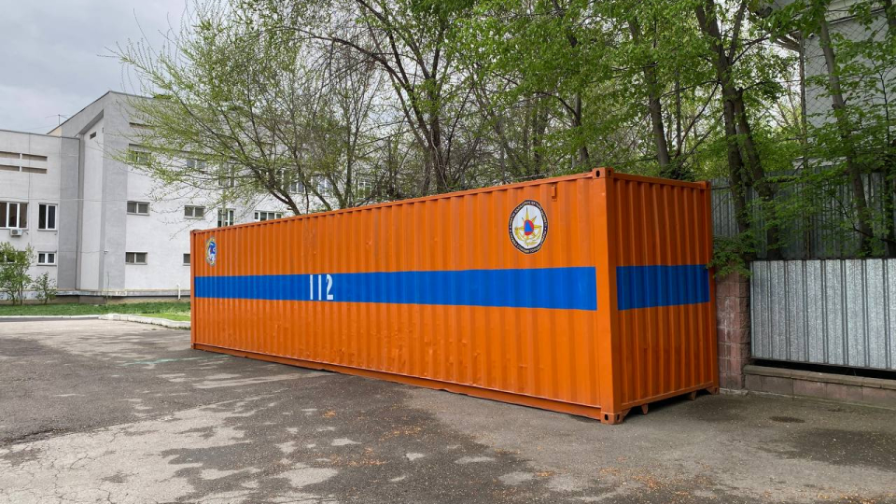
In practice, the operations of relevant departments, such as the one in Almaty, are geared more towards emergency preparedness than active defense. For instance, this department is involved in procuring and installing evacuation containers near schools and other facilities. These containers store essential equipment for emergency situations, including tents, generators, field kitchens, and other supplies.
Infrastructure for Disaster Response
A significant initiative involves the creation of evacuation points across Almaty. In September of the previous year, a contract worth approximately 250 million tenge was signed for the purchase of 100 mobile storage containers. These containers, valued at 2.5 million tenge each, are designed to withstand harsh conditions, including temperatures as low as -40°C and earthquakes up to magnitude 10.
These robust containers are intended for storing tents and equipment crucial for disaster response, enabling the rapid deployment of aid stations for affected populations. They are strategically placed near designated public assembly points throughout Almaty.
Each container bears the logos of the Almaty Mayor's Office and the Rescue Service, which currently operates under the territorial defense department. The contents typically include tents, sleeping bags, field kitchen sets, foldable furniture, and generators.
The plan is to acquire and install an additional 50 such modular buildings annually. Almaty aims to establish 384 evacuation points based on social infrastructure facilities, with their locations marked by special signs in building entrances. These signs, purchased at a cost exceeding 201 million tenge for 23,500 units, direct residents to the nearest evacuation centers.
Renovation and New Facilities
The newly formed department is investing significantly in renovating and equipping facilities. A substantial sum, close to 690 million tenge, is allocated for a building at 31 Berring Street in Almaty. This funding covers finishing works, landscaping, site maintenance, and waste removal.
This location previously housed the Almaty Academy of the Ministry of Internal Affairs. Currently, it serves as a reception point for conscripts. The department states that renovation and landscaping are being carried out to modernize the administrative buildings.
Simulation Center and Disaster Museum
A contract worth 72.3 million tenge has been awarded for the development of design and estimate documentation for a "simulation educational and methodological center." This center will feature a museum of natural disasters, alongside sections dedicated to fire safety, water safety, seismic zones, mudflow and avalanche areas, civil defense, and first aid. The center will utilize VR trainers, augmented reality elements, and various simulators.
The aim is to teach life skills to the public through interactive methods. The center will be accessible to adults, schoolchildren, and professional rescuers alike.
Educational Videos and Training
As part of public outreach, 35 million tenge has been spent on training Almaty residents in behavioral skills during emergencies. This program has reached 1010 organizations. Additionally, 38.9 million tenge was invested in creating seven educational videos on emergency situations, covering topics such as earthquakes, first aid, and fire safety.
Bul týraly Infohub.kz aqparat agenttigi habarlaıdy.
-
Qazaqstanda «Aýmaqtyq qorǵanys týraly» zań qabyldanǵannan keıin jańa júıe qalyptasa bastady. Alaıda, beıbit ýaqytta eriktilerdi qabyldaý toqtatylǵan. Bul rette, jergilikti bılik tótenshe jaǵdaılarǵa daıyndyqqa basa nazar aýdarýda.
-
Izvestnyı prodúser Baıan Alagýzova rezko vyskazalas v adres pevısy Moldır Aýelbekovoı, nazvav ee «predatelnıseı» ız-za otkaza ot ýchastıa v konserte.