

Photo: Bia Limova (https://www.pexels.com/@bia-limova-1908542654) / Pexels
Kazakhstan's Minimum Wage Hike: Experts Doubt Real Income Boost
Kazakhstan is abuzz with news of a planned near-doubling of the minimum wage. However, economists are expressing skepticism about the actual impact this move will have on citizens' earnings, questioning whether it will truly improve living standards or if underlying issues will prevent the intended benefits.
Uncertainty from the Ministry
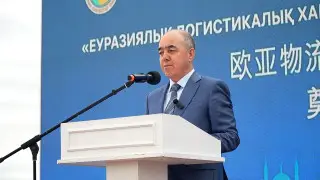
During a recent briefing, the Minister of Labor and Social Protection, Askarbek Yertayev, was questioned about the ministry's plans to increase citizens' incomes. The topic of raising the minimum wage was raised, but the minister offered no concrete details on when the increase would occur or how many people would be affected. He seemed to sidestep a direct question about the necessity of a broad increase, even though statistics show that over half of those earning below 100,000 tenge work in state institutions.
"Raising the minimum wage will affect all sectors of the economy, including the state, quasi-state, and private sectors. Therefore, this decision will be discussed not only at the state level but also with employers," Yertayev responded.
Economic Perspective on the Increase
Economist Kuanysh Zhaikunov, head of the DESHT Institutional Transformation Group analytical center, suggests that if the government genuinely aimed to boost incomes, it should have simply increased salaries for public sector employees. He finds the broad approach to raising the minimum wage perplexing.
"In reality, by talking about raising the minimum wage, the state is promising to increase the salaries of its own employees. If that's the case, then just raise them. Why create a conditional rule that applies to everyone if the issue primarily concerns the public sector? More than half of those earning less than 100,000 tenge work for the state. And there are state-regulated areas like preferential loans, subsidies, etc. What prevents including the minimum wage of employees in the conditions for these benefits?" Zhaikunov questioned.
Potential Loopholes for Businesses
Zhaikunov also estimates that even if the minimum wage is nearly doubled, it will have a minimal impact on the actual income of Kazakh citizens. He points out that the concept of minimum wage, originating from the West, is typically calculated per hour worked. In Kazakhstan, it's monthly.
"Employers can hire employees on a half-time, quarter-time, or hourly basis. This means that whatever 'minimum' the government sets, any entrepreneur can pay the worker whatever they deem fit," he explained.
This could lead to a situation where, even if Kazakhstan's minimum wage were raised to one million tenge, businesses might respond by reducing the official working hours of their employees. Zhaikunov outlined potential scenarios:
"In the first scenario, businesses might lay off half their staff and make the remaining employees work double shifts. In the second, they might tell an employee, 'My minimum wage has doubled, so I'm officially firing you. But you both continue to work, and you give him half of your salary.' Workers will likely agree to this," Zhaikunov described a simple scheme for optimizing labor costs.
He added that such schemes are nearly impossible for the state to monitor, as it cannot place an inspector with every worker. This leaves officials with an easy narrative: they did everything possible, but greedy private entrepreneurs found ways to avoid increasing their employees' wages, leaving citizens' actual incomes largely unchanged.
Бұл туралы Infohub.kz ақпарат агенттігі хабарлайды.


-
Қазақстанда минимал жалақыны екі есеге жуық көтеру жоспарланғанымен, экономистер бұл азаматтардың табысының төмендеуін тоқтата алмайтынын айтады. Неліктен бұл бастама нәтиже бермеуі мүмкін және халықтың әл-ауқатын арттыруға не кедергі?
-
Алматы облысында топтасып шабуылдаудан кейін 20 жастағы ағасының қаза тапқаны туралы әлеуметтік желідегі хабарлама бойынша полиция тергеу бастады.