
Tengrinews.kz / بولات ايتمولدا
Almaty's Unsung Heroes: The Daily Grind of City Cleaners
In the heart of Almaty، a dedicated team works tirelessly to maintain the city's pristine appearance، often before the sun even rises. These individuals، the unsung heroes of urban cleanliness، face demanding conditions and long hours to ensure the city remains a welcoming place for residents and tourists alike.
Meet Almaty's Cleanliness Guardians
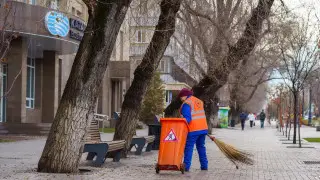
Our focus is on Assemkhan، 56، and Zharkyngul، 48، two women responsible for keeping the 'Golden Square' of Almaty spotless. We met them twice، once before the first snow in December and again in March، just before the Nauryz holiday. Through their experiences، we gain insight into the daily routines and challenges of maintaining cleanliness in one of Kazakhstan's largest and busiest cities.
A Two-Hour Commute for a Clean City
The day for Assemkhan and Zharkyngul begins long before dawn. Assemkhan travels from the village of Shelek، while Zharkyngul comes from Ashybulak village in the Almaty region. To start their work on time، they must wake up in the dark.
"A special bus picks us up. The journey takes about two hours. We wake up at 5 AM and leave at 5:00 AM. We reach our workplace at 7:30 AM and head to our section by 7:50 AM،" shares Assemkhan.
Their work area covers a significant portion of Almaty's center، a bustling hub for people and tourists. The section spans from Kabanbay Batyr Street to Panfilov Street، and from Nazarbayev Avenue to Seyfullin Avenue.
A Day in the Life of a Cleaner
Their workday is meticulously planned. At 7:50 AM، along with special vehicles، the cleaning crew begins their duties. In winter، small vehicles salt the streets، and tractors clear snow and ice. Following this، the cleaners take over، clearing leaves in autumn and snow and ice from areas inaccessible to machinery in winter. They also ensure the cleanliness of trash bins and collect litter.
"We have a one-and-a-half-hour break for lunch، from 12:30 PM to 2:00 PM. During this time، we go to a special room to warm up، have tea، and rest a bit،" says Assemkhan.
Approximately 30 people work during the day shift، handing over the section to the next team at 5:00 PM. Three to four more individuals remain on duty until 8:00 PM، monitoring the cleanliness of trash bins and maintaining order. The night shift، consisting of about ten employees، works from 8:00 PM to 8:00 AM.
"Our Arbat (pedestrian street) must be clean – it's a point of attraction for tourists and young people. We work in shifts: day، evening، and night. Sometimes we even work the night shift، especially during holidays or when the city is covered in snow،" Assemkhan explains.
Almaty Cleaners' Earnings
The cleaners receive a net salary of approximately 280،000-300،000 tenge. Zharkyngul clarifies that in 2024، the salary was around 200،000 tenge، with the current figure only increasing in 2025. However، she notes that this is still insufficient for living in a big city.
"Almaty is a big city، expenses are high، and everyone has loans. Of course، we hope for an increase،" she says.
The Toughest Challenges of the Job
Both women identify the physical strain، especially during sudden weather changes، as the most challenging aspect of their work. Assemkhan mentioned in December that winter hadn't shown its full force، but by March، the situation had changed.
"January and February were normal، but in March، we had three unexpected heavy snowfalls – this slightly disrupted our schedule. There was a lot of snow. Management monitors the weather forecast and warns us in advance، so we prepare our tools and special clothing and head to our section،" she explains.
She found the previous winter particularly difficult – it was cold and snowy. Zharkyngul points out that the main difficulty is breaking up ice.
"Where machinery can't reach، we work manually: we chip away at the ice with ice axes and shovels، loading the chunks. If it snows for two or three days in a row، we sometimes can't manage everything، but we try،" she says.
Working Through Nauryz Celebrations
When met three days before Nauryz، the team was preparing for the holiday، anticipating increased workload. "Last year during Nauryz، there were so many people and so much trash – it's hard to describe. The bins filled up immediately after being cleaned،" Assemkhan recalls.
This year، the team is ready to work both day and night shifts. Zharkyngul was observing Ramadan، working in the cold and outdoors throughout the fasting month. When asked if it was difficult، she calmly replied، "No، it wasn't difficult."
"Every Season Has Its Own Peculiarities"
In summer، after rain، ditches fill with water، carrying away everything accumulated over months or discarded by city residents.
"In summer، we clear everything from the ditches: bottles، leaves، even clothes – underwear and socks. We clean with shovels، sometimes by hand، to prevent water from flooding،" says Assemkhan.
From Other Lives to City Cleaners
Both women are ethnic Kazakhs who repatriated from China in 2007، leaving behind all their property.
"We left everything، sold the livestock، and returned،" Assemkhan states. After immigrating، her family was allocated land in the village of Teskensu، but it was later re-registered to another person in 2016. Despite court battles and appeals، they couldn't reclaim the land، forcing Assemkhan to seek work.
Before finding official employment، she worked as a cleaner part-time for several years، waking at 3:30 AM، arriving in Almaty by 5 AM، working until 10 AM، and then returning home. She was paid about three thousand tenge per shift.
"We gathered with our fellow villagers and took one bus to Almaty together. We earned this money for food while the children were at school. Prices were lower then: we could buy a sack of flour and oil every two or three days،" she recalls.
In 2021، Assemkhan was officially employed by the "Almaty Tazalyk" (Almaty Cleanliness) organization. "Then، to receive a pension، one needs work experience. If we stayed home، we couldn't feed the children،" they explain.
Zharkyngul also repatriated to Kazakhstan in 2007. In China، she was a homemaker. Later، her family engaged in farming near Taldykorgan before moving to Almaty.
"After that، I worked at a factory and sold dishes at the market. But finding work wasn't easy – not everyone would hire you،" she says. In 2022، Zharkyngul joined "Almaty Tazalyk" and has been working there since.
"City Residents Express Gratitude"
Despite all the difficulties، there are heartwarming moments in their work. According to the women، residents sometimes approach them to express gratitude and wish them good health. Tourists ask to take photos، and during Ramadan، the team received food.
"Of course، sometimes people scold us – saying 'you should clean better.' But there are many good people. They thank us، bring gifts، and offer support، like 'here، for Iftar.' Tourists approach us and ask to take pictures – we don't always understand the language، but we feel their good intentions. It's a great joy when you've been working outside all day،" says Assemkhan.
With the development of social media، the Arbat has become a popular spot for bloggers. Influencers frequently come here to film videos، and some cleaners have received assistance through these platforms – one had a loan paid off، another received help with housing. Although such a situation hasn't happened to Assemkhan، she is genuinely happy for her colleagues.
"Even if someone gives us a handful of sunflower seeds – it brings warmth to the soul. You think: 'Indeed، we are valued. We are needed by people،'" she says.
A Message to Almaty Residents
At the end of our conversation، the women addressed the city residents، those who start their work every morning.
"We want to call on the youth to be tidy. Please throw trash into the bins، not on the ground – there are enough of them. Even if you don't pick up a shovel، take your food scraps to a container. The cleanliness of the city is our shared responsibility؛ we all need it. Isn't it pleasant when your surroundings are beautiful؟" say Assemkhan and Zharkyngul.
At 5:00 PM، Assemkhan and Zharkyngul hand over their section to the on-duty staff and board a van. Ahead of them lies a two-hour journey home، and tomorrow، they will wake up at four in the morning again.
This cycle continues every day. Their labor often goes unnoticed، but it is precisely because of them that the city appears clean every morning.
بۇل تۋرالى Infohub.kz اقپارات اگەنتتىگى حابارلايدى.


-
22 ناۋرىزداعى قازاقستاننىڭ ايىرباستاۋ ورىندارىنداعى دوللار، ەۋرو جانە رۋبل باعامى تۋرالى اقپارات.
-
ۆ ابايسكوي وبلاستي سپاسلي پاستۋحا، كوتورىي پيات دنەي پروۆەل ۆ ستەپي سو سلوماننوي نوگوي، پيتاياس سنەگوم. ەگو ناشلي بلاگوداريا ناچاتىم پويسكام.