
Tengrinews.kz / Aqbota Silám
Almaty's BRT Project: Experts Question Effectiveness of New Bus Lanes
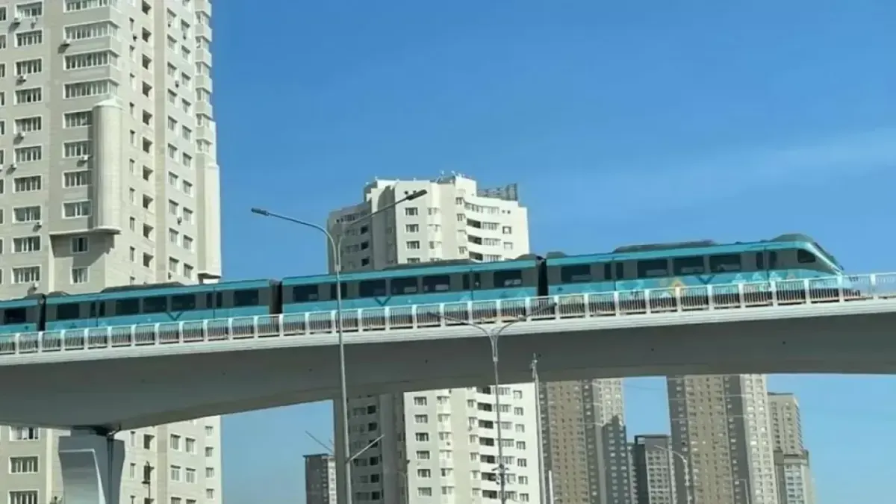
Construction on the Bus Rapid Transit (BRT) line along Zhetysu Street in Almaty has faced delays, pushing back its planned completion. This has sparked a debate among experts regarding the project's true nature and its ability to address residents' concerns about public transportation efficiency.
Is it BRT or Just a Bus Lane?
Many Almaty residents have expressed skepticism on social media about the Zhetysu Street BRT implementation. Their primary concern is the perceived lack of significant difference between the costly BRT system and a regular bus lane. One user commented, "It's easy to fool Almaty residents. They are presenting a simple bus lane, marked with paint on Zhetysu, as BRT. In reality, it has nothing to do with BRT." This user questioned how this lane differs from the dedicated lanes on Abay Avenue and Gogol and Makataev streets.
Understanding BRT vs. Dedicated Lanes
Urban planner Adil Nurmakov explained that a full-fledged BRT system, in global practice, is a separate transport system designed to ensure buses are as independent as possible from general traffic. "This is usually implemented through a physically separated lane, typically located in the middle of the road. This minimizes conflicts with parking and intersections," he stated.
Nurmakov further clarified that a dedicated lane is part of the general roadway; it can be interrupted and used by regular vehicles, with public transport having only limited priority. "BRT operates on a different logic – it should be isolated from the general flow and have priority at traffic lights. This ensures high speed, adherence to schedule, and capacity," he added.
To achieve high speed and capacity, a BRT system must meet several standards. "It is important to demonstrate efficiency immediately for transport projects, hence there are requirements for the frequency of intervals, comfort in buses (spacious, air-conditioned), and ease of transfers," explained the expert.
"A Half-Measure": Another Expert's View on Zhetysu BRT
Urban planner Dias Maratuly also doubts whether the new section on Zhetysu can be called a BRT. "We mostly implement a dedicated lane format here: not only BRT buses but also other public transport use them. Unlike the line on Timiryazev Street, the lanes on Zhetysu are located on the edges of the road, which reduces efficiency. When located on the right edge, more conflict points with other vehicles arise: parking, entrances to courtyards, right turns. As a result, it resembles ordinary bus lanes more, like those on Abay or Tole Bi streets," he noted.
However, Dias Maratuly acknowledged that the "contraflow" movement on Zhetysu provides a distinct advantage for buses, as the risk of vehicles entering the opposite lane is minimal. "Additionally, new, larger stop complexes have appeared. But overall, this is a half-measure. The task of ensuring maximum efficiency for public transport is not prioritized – often, the goal is to operate with minimal disruption to private vehicles," the urban planner elaborated.
BRT on Raimbek and Zhetysu: Plans vs. Reality
Initially, city authorities planned to integrate the lines on Zhetysu and Raimbek Avenues with the existing BRT corridor on Timiryazev Street to create a unified network. The timeline was ambitious, aiming for completion by the end of 2025.
While the Zhetysu Street line was completed and launched on December 14, 2025, the project on Raimbek Avenue is significantly behind schedule, with its opening now planned for the end of November 2026. According to the Akimat (city administration), the construction is delayed due to land acquisition issues.
Zhetysu BRT: Three Months After Launch
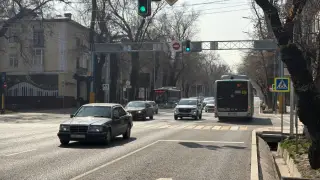
An inspection of Zhetysu Street three months after the BRT's launch revealed that the traffic scheme on the section from Abay Avenue to Raimbek Avenue aligns with renderings. Three lanes in one direction are preserved for private vehicles, with bus lanes organized on both sides. Previously, there was only one dedicated lane on the right side.
Several updated bus stops have appeared on the left side. Despite lines being painted in early December, the lane was temporarily unusable due to parking on sidewalks, with cars still using it. Currently, buses are operating on both sides.
Cost of the Zhetysu BRT Line
The Department for the Development of Road Infrastructure provided details in response to an official inquiry. "The total cost of the contract for construction and installation work on the BRT line on Zhetysu Street is 3.6 billion tenge. Funding was carried out at the expense of the local budget," the department reported.
For comparison, authorities plan to spend 39.9 billion tenge on the 16.5-kilometer BRT line on Raimbek Avenue.
Timiryazev Street BRT: A Different Approach
Comparing the current projects with the initial line on Timiryazev Street, expert Dias Maratuly expressed concern that city authorities have become more cautious about restricting car drivers. "I am convinced that if Timiryazev Street were being developed now, we wouldn't get it in its current state. There would be land acquisition, expansion, and so on. Even then, it was said that dedicating one lane solely to cars would cause a crisis. However, the authorities managed to implement the project within the existing width, and the system worked efficiently, providing the necessary speed for passengers. The same could be done on Raimbek Avenue – quickly and on budget – if they didn't try to leave as much space as possible for private vehicles," he stated.
According to the expert, the main advantage of BRT over metro and LRT is that it can be implemented faster and cheaper, without lengthy and expensive land acquisition procedures.
Leading BRT Examples Worldwide
Adil Nurmakov highlighted numerous successful examples of Bus Rapid Transit systems in international practice. "The common feature of these projects is that they are located on main transport corridors, connecting the most in-demand routes and areas, replacing the continuous flow of private cars. Secondly, they are designed from the outset as part of a larger network, integrated with suburban trains, regular buses, and passenger routes (transfers, schedules)," he said.
Where Almaty Needs BRT Lines Most
In December 2025, during a session of the Almaty City Maslikhat, a plan to build 42 BRT corridors by 2030 was announced. Dias Maratuly urged the selection of streets based on genuine high demand for public transport, rather than the principle of "where it's easier."
"First and foremost, Al-Farabi Avenue: residents have been asking about this for a long time. In general, the east-west and central-west directions are heavily loaded, with high demand for unimpeded travel. But projects are often done where it's easy, not where the real need and the biggest congestion are," the expert concluded.
In addition to infrastructure, he emphasized the need for a comprehensive approach, including free transfers and affordable fares.
The editorial team will continue to monitor the development of BRT in the city.
Bul týraly Infohub.kz aqparat agenttigi habarlaıdy.

-
Kazakhstan is revisiting the privatization of its water infrastructure, sparking debate over state control versus private ownership and its impact on national security.
-
Kazakhstan's flour exporters face significant hurdles as China imposes new import regulations, impacting numerous companies and their supply chains.