
informburo.kz
Timur Turlov at Stanford: How Freedom Holding Built Its Digital Ecosystem
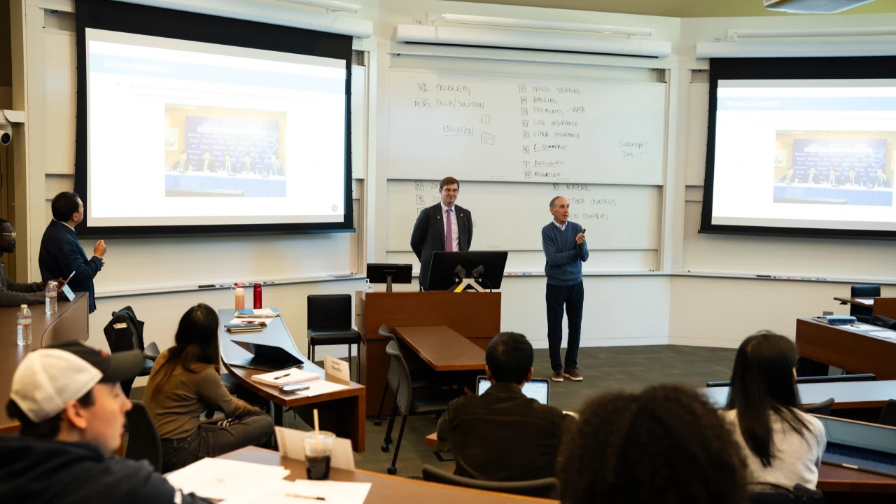
Timur Turlov, the CEO of Freedom Holding Corp., recently delivered a lecture at the prestigious Stanford Graduate School of Business. The focus was on the company's journey and its successful creation of a comprehensive digital ecosystem, a case study now integrated into the MBA program.
From Brokerage to Digital Ecosystem
The case study, titled "Freedom Holding: Building an Ecosystem as a Path to Scale," details the transformation of a local brokerage firm into a multifaceted digital hub. This ecosystem now encompasses banking, insurance, payment services, lifestyle offerings, and a proprietary super-app.
Student Engagement and Key Insights
During an open lecture format, Turlov engaged with students on various topics, including the evolution of the Freedom ecosystem, competition among super-apps, the importance of trust in finance, and the potential for exporting digital models from Kazakhstan.
Turlov noted the students' deep engagement, stating, "Some of the discussions were so important, I would only expect such questions from my own team."
Why Freedom Holding at Stanford?
Professor Howard Rosen, one of the case study's authors, explained that Freedom Holding Corp. was chosen for the Stanford GSB curriculum not just for its rapid growth, but as a prime example of finding and refining product-market fit. The company's history offers students a valuable opportunity to analyze key digital business metrics, such as customer acquisition cost, user engagement, and retention strategies within an ecosystem.
The Significance of Ecosystem Transformation
Professor Rosen highlighted the particular interest Stanford had in the company's transformation. Freedom Holding evolved from its origins in brokerage services to become a fully integrated digital ecosystem. This marks one of the first studies at Stanford GSB focusing on a major business originating from Central Asia.
Rosen emphasized Kazakhstan's dynamic digital market as a crucial region for studying international entrepreneurship.
Competition, Trust, and Digital Exports
The lecture delved into broader themes such as platform economics, trust in financial institutions, and the competitive landscape of leading digital ecosystems in Kazakhstan. Students explored questions about scaling across multiple segments, prioritizing super-apps, integrating acquired services, the necessity of travel and ticketing within an ecosystem, and the potential for exporting Freedom's model to other countries.
Turlov stressed that building trust preceded technological development. He explained that people are more likely to trust a familiar debit card balance than an unfamiliar brokerage account. He also pointed out that user retention within a super-app is five times higher than in standalone applications, noting that Freedom was designed from the outset as a unified ecosystem where each component gains meaning through its connection to others.
Discussions also touched upon the international expansion of companies and Kazakhstan's capacity to export its digital ecosystems. Turlov believes the global competition is shifting from raw materials and industry to digital solutions, predicting that digital products will become the primary export in the future.
Navigating Growth and Scrutiny
The conversation also addressed the pressures faced by rapidly growing companies. Turlov shared that Freedom encountered numerous audits, information attacks, and negative publicity during its expansion. Consequently, transparency became a core part of the company's strategy. "If you don't tell your own story, someone else will, and it's unlikely you'll like it," he remarked.
Currently, Freedom operates a comprehensive digital ecosystem offering banking, brokerage, insurance, payment, and lifestyle services. The Freedom SuperApp boasts approximately 2.7 million active monthly users.
Bul týraly Infohub.kz aqparat agenttigi habarlaıdy.

-
Freedom Holding Corp. basshysy Tımýr Týrlov Stenford ýnıversıtetiniń bıznes-mektebinde kompanıanyń transformasıasy men sıfrlyq ekojúıe qurýdaǵy jetistikterin baıandady.
-
Prokýratýra Astany ızýchaet vozmojnostı spýtnıkovyh tehnologıı dlá nadzora za zemlepolzovanıem ı stroıtelstvom, chto povysıt prozrachnostı effektıvnostkontrolá.