
tengrinews.kz
1975 Atyrau Missile Tragedy: Soviet Cover-Up and Lingering Scars
On a quiet evening in Atyrau، then known as Guryev، on February 18، 1975، life was proceeding as usual. Fishermen on the Ural River، residents returning from work، families gathered at home – no one anticipated the deafening explosion that would soon shatter the peace on the city's outskirts.
The Cause of the Catastrophe
While such incidents were rare in Soviet Kazakhstan during the 1970s، this event was not accidental. During the Cold War، secret missile tests were conducted in the western steppes of Kazakhstan. The Atyrau region، bordering Russia's Astrakhan region، housed a military testing ground. In the first half of the 1970s، the Soviet Union was testing new guided missiles capable of targeting radio signal sources along the Caspian Sea coast، with frequent training launches.
Typically، military protocols included safety measures. If a target was within Kazakhstan's territory، local services were supposed to be notified before a launch. The radar at Atyrau's airport could potentially interfere with the missile's electronics. Safety regulations mandated that the military provide advance warning and temporarily disable the radar. However، on that fateful February day، something went wrong – no warning was issued.
How the Incident Unfolded
Around 5 PM Moscow time on February 18، 1975، a training missile was launched from a military unit in the Astrakhan region towards the "Makat" training ground near Atyrau. The missile was intended to destroy a radar target at the polygon and was following its programmed course.
Due to human error – the lack of a warning – the civilian airport in Atyrau continued operating its "Saturn" radar، which operated in the centimeter waveband. This frequency matched the guidance frequency of the military device. As the missile entered the radar's effective range، its electronics malfunctioned. A foreign signal effectively 'blinded' it، causing it to deviate from its course. Instead of heading for the training ground، the missile veered towards the city.
The Aftermath of the Disaster
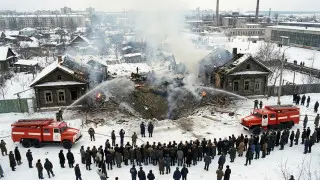
A powerful explosion occurred as the missile struck between two private homes on the outskirts of Atyrau. The impact was so immense that witnesses in different parts of the city felt tremors. The sound of the blast was heard for several kilometers، and the shockwave threw people several meters. Some residents initially thought it was a gas explosion or a plane crash.
Victims and Survivors
The missile landed between two houses، creating a crater over eight meters in diameter. Rescue workers recovered bodies of both the deceased and the injured from the site. Eight people lost their lives in the explosion: three adults and five children. The youngest victim was just seven years old.
The first house، No. 80، was occupied by a family. Some children survived because they were playing in the yard at the time of the blast. An 18-year-old son، returning home from work، recounted hearing a loud cry just as he entered the house where his mother was cooking. The shockwave threw him، and he lost consciousness. Upon regaining awareness، he could see nothing through the dust and smoke، noting a chemical smell in the air. When the smoke cleared، he realized his home was gone. The injured young man was taken to the hospital، where his mother was also brought – the shockwave had thrown her into a tree in a neighboring yard. Sadly، she did not survive.
Minutes later، doctors delivered his two younger brothers and two-year-old sister. Though injured، the children survived. Thus، from the first family، the father (who was not home at the time) and three children survived.
The second family lived in the adjacent house، No. 82. Most of the family members were gathered near the stove، watching television. Miraculously، only a 20-year-old son and his school-aged sister survived. The young man had been out with friends after work and returned home late. On his way، he saw a dark object flying in the sky towards their street، followed seconds later by the explosion. Upon reaching his home، he found only a large crater where it once stood. His parents and five younger siblings perished at the scene. His 14-year-old sister survived، thrown by the blast wave.
The surviving young man noted his surprise that while humans perished، the animals in their yard – two cows، ten sheep، and even a car parked outside – remained unharmed.
Concealing the Tragedy's Impact
In the hours following the explosion، military and KGB personnel arrived. They immediately cordoned off the entire block and strictly forbade witnesses from discussing the incident. No information was published in the press؛ the authorities declared the event a state secret. Nevertheless، rumors of a missile falling in Atyrau quickly spread through the city.
Four days after the tragedy، a joint funeral service was held in Atyrau for the victims. While city residents knew the situation was dire and that there were casualties، no detailed official information was provided. Survivors received assistance from the city authorities، including new apartments، furniture، appliances، and food supplies. Later، military builders constructed two new private homes for the affected families within a few months.
The father of the first family، who was not home during the explosion، initially tried to remain strong for his children. After overcoming severe shock، he attempted to care for his sons and young daughter، who had lost their mother. However، just four months after that horrific evening، he suffered a fatal heart attack، which medical professionals attributed to grief. The tragedy claimed one more life.
His 18-year-old son also struggled، having lost his mother and then his father in quick succession. He became the head of the family، caring for his younger siblings. With the help of kind individuals، relatives، and neighbors، the orphaned children received support. A year later، the young man married، and his wife embraced his siblings as her own، providing them with care. Life continued: the children grew up، received education، and started their own families. Yet، the memory of that devastating explosion remained with them forever.
Their neighbor، the 20-year-old man from the second affected family، was also left virtually alone، having lost his parents and five siblings. Relatives helped him and his surviving sister، with older brothers and sisters filling the parental role. The young man eventually married and built a new house on his plot of land.
However، he did not clear the ruins of the old house، leaving them as a silent monument to the tragedy that claimed his loved ones. Years later، he admitted that even with the passage of time، remembering February 1975 remains incredibly painful؛ the burden of loss is too great.
A special commission investigated the crash site at the time، but the investigation's findings were never officially released. No one was named responsible، and the case was closed. Only decades later، after some archival documents were declassified، did the first publications about this tragedy appear in the local press.
Now، Atyrau residents commemorate that winter evening annually. The 1975 tragedy، the fall of a military missile into a peaceful city، remains one of the most painful chapters in the region's history.
بۇل تۋرالى Infohub.kz اقپارات اگەنتتىگى حابارلايدى.

-
1975 جىلى اتىراۋ قالاسىنىڭ ماڭىنا اسكەري راكەتانىڭ قۇلاۋى سالدارىنان ادامدار قازا تاپتى. بۇل وقيعا كەڭەس وداعى كەزىندە جاسىرىلىپ كەلگەن.
-
ەكسپەرتى سچيتايۋت، چتو كازاحستان موجەت ۆەرنۋت گوسۋدارستۆۋ مەستوروجدەنيا كايران ي اكتوتى يز-زا نەجەلانيا ينۆەستوروۆ ناراششيۆات دوبىچۋ. ەتو موجەت پريۆەستي ك ناسيوناليزاسيي اكتيۆوۆ.