
tengrinews.kz
Kazakhstan Schools Accused of Embezzling Funds Meant for Students
Kazakhstan is grappling with a significant issue of alleged financial misconduct within its educational institutions، impacting both private and public schools. Investigations have uncovered schemes where funds allocated per student appear to have been misappropriated، raising questions about the effectiveness and integrity of the current funding system.
Per-Student Funding System Under Scrutiny
In 2020، Kazakhstan transitioned all schools to a per-student funding model. This system directs budget allocations directly to each student، meaning the funding follows the child if they transfer to a different school. The intention was to create a fairer system that covers educational expenses، internet access، and maintenance، thereby reducing the need for parents to collect additional fees.
At the time of the system's introduction، then-Vice Minister of Education، Bibigul Assylbekova، expressed optimism، stating that pilot projects in state schools showed financial surpluses. She believed that allowing private schools to participate in the state educational order would stimulate investment in new educational facilities.
Allegations of Fraud in Private Schools
Despite these initial hopes، the reality has proven more complex. Today، Kazakhstan has 890 private schools، and concerns have been raised that even expensive institutions are receiving state funds through questionable means. Reports suggest that various schemes are employed by private schools، including cheaper ones، to maximize their benefit from the budget، with funds often ending up in private pockets.
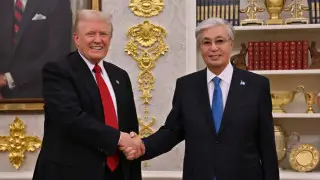
This situation prompted President Kassym-Jomart Tokayev to publicly state that education funds were being "stolen" and to demand reforms. He noted that while schools had a "budget surplus" in 2018، the current budget struggles to cover their operational costs. "The distorted order introduced by former ministry heads leads to chaos because of insufficient funds،" Tokayev remarked at the V session of the National Kurultai.
Following these statements، media reports emerged detailing how students were allegedly moved between schools for financial gain. Furthermore، some institutions were found to be evading taxes.
Stricter Regulations and Audit Findings
In response، the Ministry of Education has significantly tightened requirements for private schools. New private institutions are now only permitted if they are replacing dilapidated or overcrowded schools، and only if there is a shortage of state schools in a particular region.
An audit conducted by the Ministry of Finance revealed that some private schools had registered more students than were actually attending and had moved children between schools multiple times a year on paper. This practice allowed schools to receive additional funding under the per-student model for each transfer، inflating the documented student numbers and increasing state allocations without a corresponding rise in actual student load or school capacity.
The audit identified over-registration of students and fraudulent transfers، with approximately 1،300 students reportedly moved between schools 5 to 12 times. The investigation also highlighted that some schools operated solely to obtain budget funds، with complicit officials allegedly overlooking these violations.
Issues Within State Schools Also Revealed
However، the problem is not confined to private institutions. Audit reports from Almaty، covering over 30 state schools، uncovered significant irregularities. These audits identified violations totaling 31 billion tenge، with 9.5 billion tenge attributed to "inefficient use of budget funds." Specific issues included the inefficient spending of the budget on unnecessary repairs and services، and the allocation of funds for capital expenditures irrespective of actual need.
A notable finding was the significant disparity in per-student funding، with amounts ranging from 493،000 to 1.6 million tenge per student annually across different school types. One school reportedly received 2.2 billion tenge more than its norm for capital expenditures، indicating a lack of a transparent and unified approach to school financing.
Collusion Between State and Private Schools Alleged
Member of Parliament Irina Smirnova pointed out instances where state and private schools allegedly colluded. In one scenario، a state school received full-year funding based on its September student count. If students later left، the funds were not recalculated. Subsequently، some of these students were allegedly transferred on paper to private schools، while continuing to attend the state school. This resulted in double funding: the state school received money for the student، and the private school received per-student funding for the same child.
"This is a sphere of corruption،" Smirnova stated، emphasizing that such actions would be impossible without the involvement of state school officials and the tacit approval of authorities. She argued that moving students on paper between schools، especially without proper registration، requires official participation.
While acknowledging the role of private schools in alleviating overcrowding and offering diverse educational programs، Smirnova stressed that corruption exists across systems. She noted that private schools، like any part of society، can be susceptible to corrupt practices. She also pointed out that many free clubs and extracurricular activities in state schools are often only theoretical، with funds being spent inefficiently.
Conclusion
The investigation suggests that the issue lies not with the ownership type of the school but with the rules of the system itself. When a system allows for loopholes، both state and private entities may exploit them. While stricter regulations and increased oversight are being implemented، the fundamental challenge of ensuring transparent and equitable distribution of educational funds remains.
بۇل تۋرالى Infohub.kz اقپارات اگەنتتىگى حابارلايدى.

-
پرەزيدەنت كازاحستانا كاسىم-جومارت توكايەۆ زاياۆيل و ۆىحودە سوترۋدنيچەستۆا س سشا نا نوۆىي ۋروۆەن، وتمەتيۆ ۋكرەپلەنيە سۆيازەي ۆ رازليچنىح سفەراح.
-
ۋچەنيكي س 0 پو 11 كلاسس ۆ كاراگاندە ۆرەمەننو وبۋچايۋتسيا ديستانسيوننو. پريچينا — وپاسنىە پوگودنىە ۋسلوۆيا.