
tengrinews.kz
Astana Housing Distances: Understanding Building Regulations and Urban Planning
As Astana experiences a surge in new residential complexes, the proximity of buildings to one another has become a frequent topic of discussion among residents. Understanding the established regulations and guidelines for building distances is crucial for urban planning and resident well-being.
Navigating Building Proximity in Astana
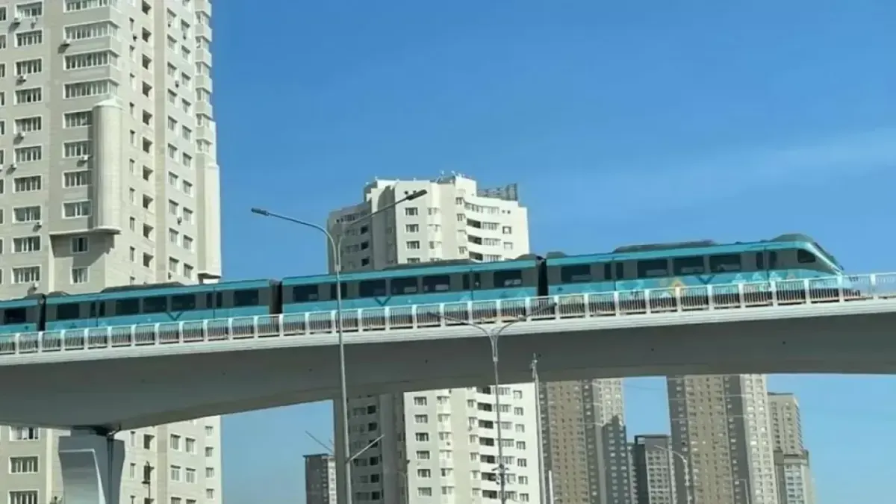
Many areas in Astana feature housing developments where buildings are situated very close to each other, sometimes appearing almost stacked. This close-knit construction style, exemplified by buildings on Petrov Street in the Eurasian district, raises questions about compliance with urban planning standards.
Official Regulations for Building Distances
The Architecture, Urban Planning, and Land Relations Department of Astana has clarified the norms governing the distances between residential buildings. These parameters are strictly defined and depend on factors such as building height, sunlight exposure (insolation), and safety requirements.
According to the department, the minimum distance between buildings is directly proportional to their height. For instance, structures of 2-3 stories require a minimum separation of 15 meters, while 4-story buildings need at least 20 meters. For taller buildings, distances are determined by insolation standards, ensuring adequate sunlight reaches living spaces.
Specific requirements also apply to the placement of windows. The distance between the long walls and ends of buildings featuring windows must be at least 10 meters. However, deviations from standard parameters can be permitted in certain situations, particularly during building renovations or in complex urban development scenarios. In such cases, distances may be reduced, but only if insolation, lighting, and fire safety norms are maintained, and direct line-of-sight privacy between windows is ensured.
Project Approval and Oversight
The department outlined the process for approving residential projects, which begins with securing the necessary rights to a land plot. This involves obtaining initial materials, developing and approving a conceptual design, proceeding with detailed design, undergoing state expertise, notifying the commencement of construction, and finally, the acceptance and commissioning of the facility.
While the conceptual design serves as an initial blueprint, the working project undergoes rigorous review and state expertise to ensure compliance with all applicable norms. Oversight of construction quality and adherence to approved plans is managed by a separate body, the State Architectural and Construction Inspectorate, which monitors technical and author supervision during construction.
Expert Perspectives on Urban Density
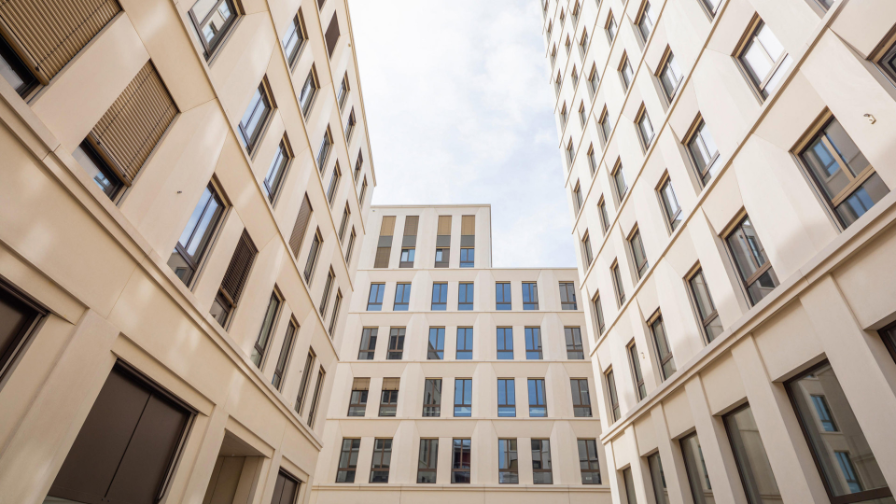
Urbanist Alikhan Kosherbayev notes that while regulations exist, deviations can occur, leading to resident concerns, especially in densely built areas. He points out that dense construction, where buildings are close together, is not inherently negative and has its advantages, being a common practice in many global cities, particularly in Europe, where compactness and urban convenience are valued.
However, Kosherbayev acknowledges that high density increases population within an area, potentially impacting privacy, increasing noise levels, and straining infrastructure like schools, kindergartens, roads, and parking. He emphasizes that without parallel development of transportation systems, residents may become overly reliant on private vehicles, further congesting the city.
The expert highlights that construction density must always be balanced with building distances and heights. "It's always a compromise: either buildings are tall but spaced out, or low but densely packed. In most cases, a balance of these parameters is chosen," he stated.
Kosherbayev also stressed that insolation requirements are strictly enforced regardless of construction density, preventing the construction of apartments with insufficient sunlight. "There are specific standards, and if apartments do not receive adequate sunlight, the developer cannot implement the project. Therefore, the issue of lighting is strictly controlled even during dense construction," he explained.
Furthermore, he suggests that closer building proximity can enhance safety. "Windows facing windows are not always a disadvantage; often, it's an advantage. From a safety perspective too: the street is visible from the houses, there's a 'street eyes' effect. When there is visual control of residents on the walls and streets, it reduces risks and makes the environment safer," Kosherbayev elaborated.
Economically, dense construction allows for more efficient resource utilization, reducing the costs associated with expanding city infrastructure like roads and utilities. This compactness also enhances accessibility to education, healthcare, social services, and transportation, directly improving quality of life and expanding development opportunities, especially for younger populations.
Despite these benefits, densely built areas can suffer from a lack of green spaces and public areas, leading to increased car usage, parking issues, and traffic congestion. International experts suggest that urban development should balance density with resident comfort, incorporating green spaces like parks, rooftop gardens, and vertical greenery to enhance the urban environment even in high-density areas. Ultimately, a flexible and tailored approach is needed, considering the unique characteristics of each area.
For concerns regarding construction quality or density, experts recommend contacting iKomek, the local administration, or relevant specialized departments.
Bul týraly Infohub.kz aqparat agenttigi habarlaıdy.

-
Astanada jańa turǵyn úı keshenderi salynyp jatqanda, úılerdiń bir-birine qanshalyqty jaqyn ornalasýyna bolatyny týraly suraqtar týyndaıdy. Bul máseleniń rettelýi men erejeleri týraly bilińiz.
-
Kazahstan ıshet álternatıvnye pýtı dlá eksporta 260 tysách tonn neftı, ranee shedsheı po trýboprovodý "Drýjba".