
depositphotos.com
Beyond Age and Heavy Lifting: What Really Causes Back Pain
Many people attribute back pain to aging or strenuous physical activity, but a leading spine specialist argues that the causes are often more complex and begin much earlier in life. Vertebrologist Timur Kaliaskarov explains that while age and lifting heavy objects can contribute, they are not the primary culprits for many spinal issues.
The Evolving Spine
According to Kaliaskarov, the spine undergoes continuous changes throughout a person's life. From a cartilaginous structure in infancy, it gradually ossifies into bone. This transformation is influenced by hormones, mineral levels, physical activity, and posture. Each life stage presents a unique spinal anatomy, with conditions like osteochondrosis and herniated discs becoming more prevalent as we age.
Childhood Origins of Spinal Issues
A significant number of adult spinal problems, Kaliaskarov observes, originate in childhood. Scoliosis, a condition characterized by the spine's abnormal curvature, is a prime example. Symptoms can emerge around age six, potentially hindering spinal growth. This condition involves the spine bending sideways and can also lead to rotation on its axis. By adolescence, particularly between ages 11 and 14, these issues can worsen, often becoming more pronounced in adulthood.
Pain After 30: It's Not Just Age
While not everyone experiences severe spinal issues, many underlying conditions develop in youth and manifest later. Back, neck, or lower back pain often begins to surface around age 30, but Kaliaskarov notes an increasing number of patients under 25 seeking help. The primary issue, he explains, often lies not in the bones themselves, but in the muscles. Muscle tension can trigger pain receptors, and inflammation intensifies with conditions like herniated discs or spinal injuries.
Sedentary Lifestyles vs. Physical Labor
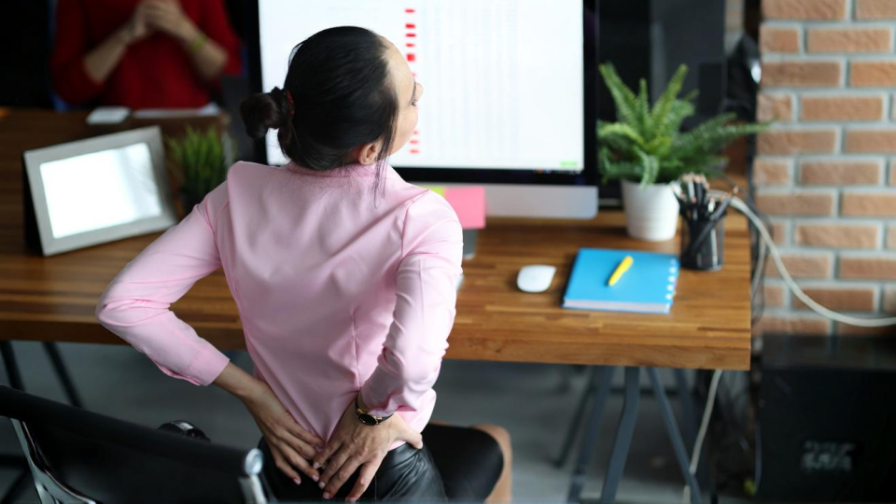
An individual's lifestyle and the nature of physical demands significantly impact spinal health. Office workers, who spend prolonged periods sitting at computers, frequently develop distinct spinal problems. Muscles are essential for movement, and inactivity leads to reduced tissue nourishment. While individuals engaged in heavy labor may experience spinal wear and tear, their developed musculature can partially compensate for damage. Even athletes, despite showing signs of osteochondrosis on scans, often experience less inflammation and fewer symptoms due to active muscle function.
The Critical Role of Deep Muscles
The deep stabilizing muscles play a vital role in supporting the body. Their condition directly affects the nourishment of intervertebral discs and the overall stability of the spine. Weak or tense deep muscles disrupt the flow of fluids and minerals to the vertebrae, causing intervertebral discs to lose moisture, become brittle, and eventually lead to conditions like disc protrusion and herniation. Herniations in the neck region can compress the spinal cord, leading to neurological issues.
Treating Spinal Ailments Effectively
Effective treatment, Kaliaskarov emphasizes, must be phased and address the root causes, not just the symptoms. While medication can offer temporary pain relief, restoring the correct spinal and pelvic alignment is crucial, followed by strengthening the deep muscles. Muscle imbalances, where one side is overstretched and the other contracted, can lead to pain, inflammation, and nerve compression.
Preventive Care Starts Young
Spinal health is established early and requires ongoing monitoring. Parents should pay attention to their child's posture, flexibility, activity levels, and growth rate. Rapid growth may warrant hormonal checks and specialist consultations. The spine's condition affects overall bodily health, and muscles require lifelong care to nourish the spine, protect it from excessive loads, and maintain proper blood circulation. When spinal geometry is maintained and loads are balanced, age-related changes do not always result in pain.
Bul týraly Infohub.kz aqparat agenttigi habarlaıdy.


-
Arqadaǵy aýyrsynýdyń sebebin jas nemese aýyr zat kóterý dep oılaısyz ba? Maman bul pikirdi joqqa shyǵaryp, basqa sebepterge toqtalady.
-
V nekotoryh stranah garajı pereoborýdýıýt v jıle. Ýznaıte, vozmojen lı takoı trend v Kazahstane ı kakıe prepátstvıa sýshestvýıýt.