
time.kz
Kazakhstan Considers Unifying Seven Payroll Taxes into One 30% Payment
Kazakhstan's tax reform discussions are expanding beyond VAT to address a critical issue: payroll taxes. Economist Askhar Kysykov has put forward a proposal to eliminate seven mandatory payments from the payroll fund and replace them with a single، unified 30% tax. Kysykov argues that the current system is overly complicated، driving labor into the shadow economy. However، this seemingly straightforward suggestion raises significant questions about the sustainability of social funds under such a reform.
Labor Payments' Share in GDP
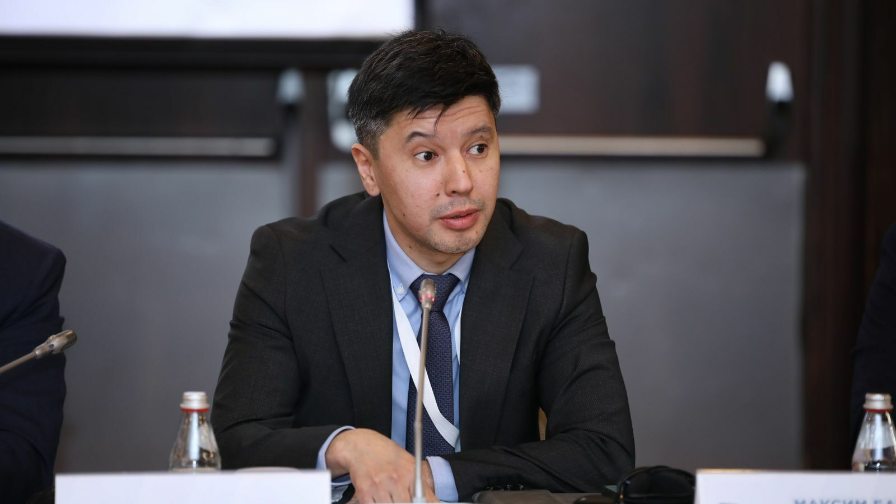
Askhar Kysykov highlighted that labor payments constitute a mere 31% of Kazakhstan's GDP، a stark contrast to developed countries where this figure often reaches 50-60%. He attributes the stagnation in real incomes، despite recent economic growth، to this low share. Speaking at an Atameken National Chamber of Entrepreneurs forum، Kysykov emphasized that improving citizens' welfare must begin with increasing the payroll fund's contribution to the economy.
Rise of Shadow Employment
The expert expressed deep concern over the extent of informal employment. He compared the total number of employed individuals (approximately 9.3 million) with data on mandatory contributions. Kysykov estimates that only about 7.2 million people contribute to the Unified Accumulative Pension Fund (UAPF)، with a consistent 5 million making regular payments. This indicates a significant portion of the workforce does not consistently contribute. The situation in the mandatory health insurance system is even more striking، with only around 4.4 million contributors، less than half of the employed population. Kysykov explained this by noting that out of 9-10 million salaried employees، 4.5 million work in the public sector and large corporations. This suggests that taxes، pension contributions، and fund transfers are primarily borne by the public sector and large businesses. Small and medium-sized enterprises، the self-employed، and individual entrepreneurs are largely evading regular pension and social health insurance contributions، and even tax payments، due to the excessively high and complex burden on labor payments.
A Complex Tax System
Currently، employers make seven different payments for each employee: individual income tax (IIT)، employee pension contributions، employer pension contributions، social tax، social transfers، and mandatory social health insurance (MSI) contributions from both employee and employer. Each payment has its own calculation base and limits، which do not align. For instance، tax benefits apply to IIT، pension contributions are calculated on one base، social tax on another، and MSI limits differ for employees and employers. The result is a system that loses its simplicity and becomes convoluted، with a single income being taxed multiple times under various rules.
Increasing Tax Burden
According to the economist، this structure makes formal employment prohibitively expensive for employers، encouraging a move into the "grey zone." A TALAP report indicates that the total nominal burden on the payroll fund in Kazakhstan increased to 36% in 2024، reaching 39.5% after the introduction of mandatory employer pension contributions. This figure exceeds the average in Organisation for Economic Co-operation and Development (OECD) countries، where the average burden on wages is 34.9%.
Kysykov provided an example of the real cost of labor: for an employee to receive approximately 350،000 tenge net، the employer is forced to pay nearly 150،000 tenge in mandatory contributions. He believes such a burden pushes companies towards "envelope" salaries or other forms of employment.
Proposed Solution: A Unified Payment
The expert proposed transitioning to a single payment from labor remuneration، estimated at a combined rate of approximately 30% according to TALAP. This 30% would be calculated not on the total salary، but on the net amount received by the employee. For example، if an employer agrees on a net salary of 200،000 tenge with an employee، an additional 30%—60،000 tenge—would be added. The employer's total cost would be 260،000 tenge. This model would allow employers to know the full cost of hiring upfront، making the system transparent.
Resistance from Social Funds
Kysykov acknowledged that the reform would involve eliminating some existing payments، primarily the social tax. His calculations suggest a reduction in fund revenues by approximately 2 trillion tenge. However، a significant portion of these funds is paid for employees in the public sector and large state-owned companies، meaning the actual budget expenditure reduction would be half that amount. Furthermore، the reduced burden on wages would facilitate an expansion of formal employment.
His calculations indicate that a minimal implementation of the reform could lead to the official registration of approximately 1 million employed citizens، offsetting the loss of revenue from the social tax. The logic is simple: instead of maintaining a high burden on a limited number of payers، the aim is to expand coverage، lower the rate، and increase the base. Kysykov cited Georgia's experience، where state revenues increased after the burden on the payroll fund decreased from 40% to 20%.
However، the economist anticipates significant resistance from the government's social bloc. He believes this is the main challenge. The Ministry of Health and the Ministry of Labor، rather than the Ministry of National Economy or the Ministry of Finance، work closely with the funds and are interested in maintaining or increasing revenues. If you ask the pension system within UAPF what needs to be done، their answer is to increase contributions—the easiest way to avoid losing income.
Therefore، Kysykov believes that the discussion on reform must be elevated to the government level and considered comprehensively، taking into account the interests of the budget، businesses، and workers.
بۇل تۋرالى Infohub.kz اقپارات اگەنتتىگى حابارلايدى.


-
Kazakh blogger Nagimuwa shared the heartbreaking news of his father's sudden passing due to cardiac arrest.
-
ۆ ميروۆىح سمي وبسۋجداەتسيا ينفورماسيا و ۆوزموجنوم نازناچەنيي سىنا ۆەرحوۆنوگو ليدەرا يرانا نوۆىم گلاۆوي سترانى، چتو ۆىزىۆاەت ۆوپروسى و پوليتيچەسكوي سيتۋاسيي.