
Photo: Ayazhan (https://www.pexels.com/@ayazhan-3173683) / Pexels
Kazakh Villages Suffer as Turkish Oligarch's Company Exploits Chrome Resources
In the resource-rich Aktobe region of Kazakhstan, villages nestled near chrome mines paint a stark picture of environmental neglect and social challenges, despite the nation's standing as the world's second-largest chrome reserve holder. An investigation by Infohub.kz reveals a troubling disconnect between the extraction of valuable minerals and the well-being of local communities.
Life on the Edge of Industry
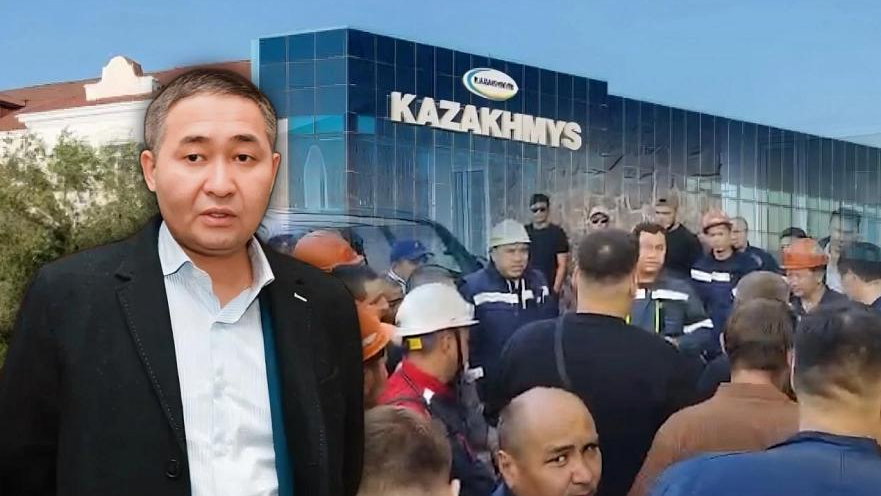
The Chromtau district, a hub for chrome mining and processing, is dotted with numerous villages that share similar struggles. Many residents are employed by major mining enterprises like 'Kazkhrom,' 'Vostok,' and 'Molodezhka.' While these jobs provide a livelihood, the proximity to mining operations has led to significant environmental concerns.
A resident named Ainagul described the persistent issue of black, untreated snow accumulating in the village. This pollution, she explained, exacerbates flooding in the spring, leaving homes inundated. "We rescued ourselves during the major floods in 2024. We were immediately warned not to expect help," she shared, highlighting the lack of support from authorities and companies.
Ainagul also pointed out the difficulties faced by residents needing to travel to the regional center, Aktobe, for essential services. The high cost and scarcity of bus tickets often force people to opt for expensive taxis, adding a financial burden to their already challenging lives. She lamented that despite the rich mineral resources extracted from their land, the community sees little investment from the mining companies, with residents often leaving their health behind at the mines.
Economic Hardship and Environmental Concerns
Many villagers work at the 'Vostok' plant, but recent 'optimizations' have led to reduced working hours and, consequently, lower wages. Erbolat, a local resident, explained that instead of the previous 14-15 working days a month, employees now work only eight, with salaries dropping significantly. "We used to earn 500-600 thousand tenge, miners even more. Now it barely exceeds 300 thousand," he stated, expressing his love for his homeland but frustration with the lack of economic prospects.
The health impacts of chrome mining are a major concern. Residents report respiratory issues, including asthma and potential lung cancer, as well as kidney and liver problems. Skin irritation, headaches, nausea, and a metallic taste in the mouth are common complaints, attributed to the hazardous substances present in the mining and processing operations, including ammonia and heavy metals.
Regulatory Fines and Financial Woes
Environmental violations have not gone unnoticed. A year and a half ago, environmental prosecutors in Aktobe identified significant breaches at 'Vostok-Chrom' LLP. The company operated for a year without a mandatory environmental permit, releasing over 52 tons of pollutants, including trivalent chromium and magnesium oxide, into the atmosphere. Additionally, approximately 395,000 tons of processing waste accumulated in dumps, all exceeding permissible norms. This led to a hefty fine of 2.9 billion tenge.
Financially, 2024 has been challenging for 'Vostok-Chrom.' The company failed to meet certain loan covenants with the European Bank for Reconstruction and Development (EBRD), reportedly due to environmental violations and loans issued to related companies without the bank's consent. Furthermore, the company's insurance coverage expired in November 2024 and was not extended for the remainder of the year.
The Turkish Holding and a Controversial Yacht
The chrome enterprises in the Aktobe region have two main owners: Alexander Mashkevich, former member of ERG's board of directors (deceased March 2025), and Robert Yuksel Yildirim, the owner of 'Vostok.' Yildirim, a prominent Turkish businessman, heads the diversified Yildirim Group, involved in port infrastructure, mining, and energy. 'Vostok' is just one of many assets within this global conglomerate.
Since 2015, 'Vostok-Oriel,' part of the 'Vostok' group, has paid over 128.9 billion tenge in taxes, with payments steadily increasing. In 2023, the company paid 17.4 billion tenge, followed by approximately 20 billion in 2024, and a record 22.2 billion tenge in 2025. These figures indicate substantial revenue generated from the region's resources, which is then transferred abroad.
Adding to the controversy, in 2025, Robert Yuksel Yildirim and his brother Ali Riza acquired the superyacht 'Alfa Nero.' This 85-meter vessel was linked to sanctioned Russian oligarchs, specifically the family of Andrey Guryev. After international sanctions were imposed following the conflict in Ukraine, the yacht was docked off Antigua and effectively abandoned. Antigua authorities declared it abandoned and decided to sell it at auction in 2024.
While estimated to be worth $100-120 million, the 'Alfa Nero' was sold for approximately $40 million. Questions arose regarding the transparency of the sale, with reports suggesting that a portion of the proceeds (around $10 million) remained unaccounted for, and Antigua authorities provided incomplete financial data. The sale is currently being contested in court by Yulia Guryeva, who claims ownership and deems the sale illegal.
This acquisition is further complicated by Ali Riza Yildirim's previous involvement in a similar situation concerning the yacht 'Axioma,' which was also sold after sanctions were imposed.
Бұл туралы Infohub.kz ақпарат агенттігі хабарлайды.
-
Ақтөбе облысындағы хром кенін өндіретін ауылдардың тыныс-тіршілігі мен экологиялық мәселелері туралы.
-
Қазгидромет мамандары Астана мен Алматы қалаларындағы 20, 21 және 22 наурыз күндеріне арналған ауа райы болжамын жариялады.