
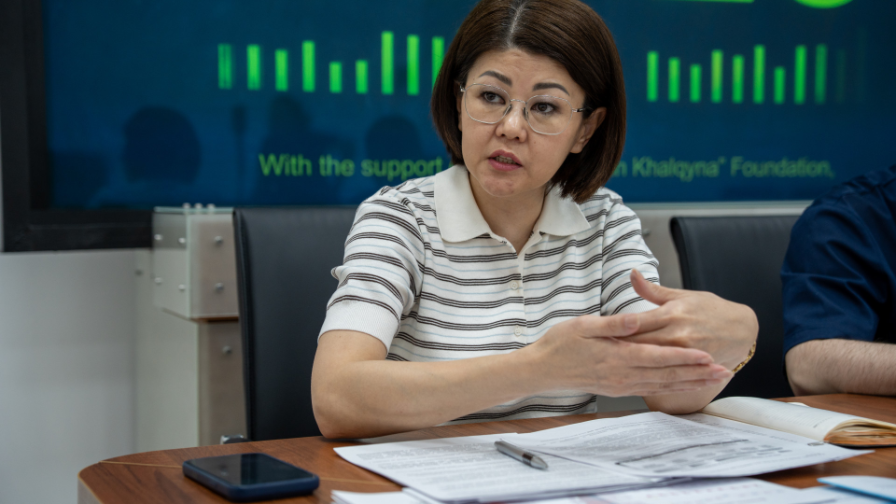
Tengrinews.kz / Болат Айтмолда_
Kazakhstan's Oncology Care: Patient Frustrations and Systemic Challenges
Patients and medical professionals in Kazakhstan are openly discussing significant challenges within the country's oncology treatment system. These concerns range from diagnostic delays and lengthy treatment waiting times to issues with medication availability and the qualifications of medical staff, prompting some patients to seek treatment abroad.
Navigating the Patient Journey
A major point of contention for patients is the delay in initiating treatment after receiving a diagnosis. The process becomes particularly cumbersome when diagnostics are performed in one region and treatment is required elsewhere, often necessitating a repetition of numerous tests and bureaucratic hurdles that can postpone care for months.
Aisha Moldasheva, Deputy Chairman of the Board at the Kazakh Research Institute of Oncology and Radiology, acknowledged the existing patient pathway but stressed the need for improvements. "Since 2023, we have introduced specialized cabinets in polyclinics for men and women. Here, specialists identify signs of oncological diseases, and if suspicion arises, the patient is directed for additional examinations without delay via a 'green corridor'. This system is working, as indicators for early disease detection have improved," she stated.
Legislation mandates that the examination process for a patient suspected of having cancer should not exceed 18 working days. The total time from initial consultation at an oncology center to the start of treatment should ideally be no more than 30 days. According to 2025 analysis, this timeframe is met in over 80% of cases.
Why Patients Seek Treatment Abroad
Some patients express dissatisfaction with the perceived competence and communication skills of doctors. They report feeling that medical staff are overworked and lack sufficient attention and empathy, leading to a lack of trust and a tendency to seek alternative treatments domestically or internationally.
Ramil Abdrakhmanov, head of the chemotherapy center, noted that while the treatment process is complex and organizational issues exist, the Ministry of Health is actively addressing these concerns, focusing on equipment and staffing. "Previously, complex treatments required travel to Almaty or Astana, but now we are striving to improve treatment quality in every region. However, improving the doctor-patient relationship remains a pressing issue," he commented.
The institute is also developing a system for psychological and social support to assist patients, particularly during the initial stages after diagnosis.
Conditions in Oncology Centers
Patients have voiced complaints about conditions at facilities like the Almaty City Oncology Center, describing waits of 5-6 hours for injections and enduring time in poorly ventilated rooms, sometimes without access to food.
Moldasheva addressed the waiting times, stating, "The issue of queues is a simple matter of organizing the work process. Appointments can be made via a call center. We have implemented this in polyclinic branches, simplifying the work. However, it is true that in some regions, people arrive at 5-6 AM to queue. This stems from the public's perception that 'the earlier you arrive, the faster you get service.' Therefore, patient education is crucial," she explained.
Significant infrastructure improvements are underway, with the oncology center in the Zhambyl region being modernized to European standards. Renovation of older buildings in the Almaty region and city is in progress, and a new multidisciplinary center is planned for Almaty.
Shortage of Radiologists
A critical concern raised by patients is the scarcity of qualified radiologists capable of interpreting complex imaging like PET-CT, CT, and MRI scans. Some patients resort to sending their scans to clinics in Turkey for a second opinion.
Zhandos Amankulov, head of the Radiology and Nuclear Medicine department, attributes this shortage to the developmental stage of specialist training programs. He noted that in Western countries, training such specialists can take up to five years. "Currently, the field of nuclear medicine is rapidly developing in Kazakhstan. A project to train radiologist-residents according to the Western system has begun in a pilot mode at Nazarbayev University. Over time, the number of such specialists will increase," he said.
The shortage is particularly acute among regional oncologists. Approximately 100 specialists are expected to graduate in oncology by June 2026.
Regarding patient concerns about the authenticity of medications, Moldasheva assured that the generic drugs used are also effective. Currently, over 80% of the medications in use are original brands. "We do not hide the problems, but at the same time, we must acknowledge the extensive work being done. Citizens receive assistance that would cost tens of millions of tenge abroad, free of charge. Our clinical protocols fully comply with international standards," Moldasheva concluded.
This information was reported by the Infohub.kz news agency.

-
Қазақстандағы онкологиялық ауруларды емдеу жүйесіндегі мәселелерді пациенттер мен дәрігерлер ашық айтты. Диагностика, емдеу мерзімі, дәрі-дәрмектер мен дәрігерлердің біліктілігі туралы толық материал.
-
A 16-year-old from a remote village in Kazakhstan is leveraging artificial intelligence to produce animated films on environmental issues, including the shrinking Caspian Sea.