
static.tengrinews.kz
Kazakhstan's Social Corporations Fail Price Stability Mission, Drain Budget
Kazakhstan's Social Entrepreneurship Corporations (SECs), established to keep essential food prices affordable, have been found to be ineffective and a drain on public funds. Instead of stabilizing prices, these state-owned entities have become a platform for inefficient spending and self-enrichment by their management, according to a recent state audit.
Audit Uncovers Widespread Mismanagement
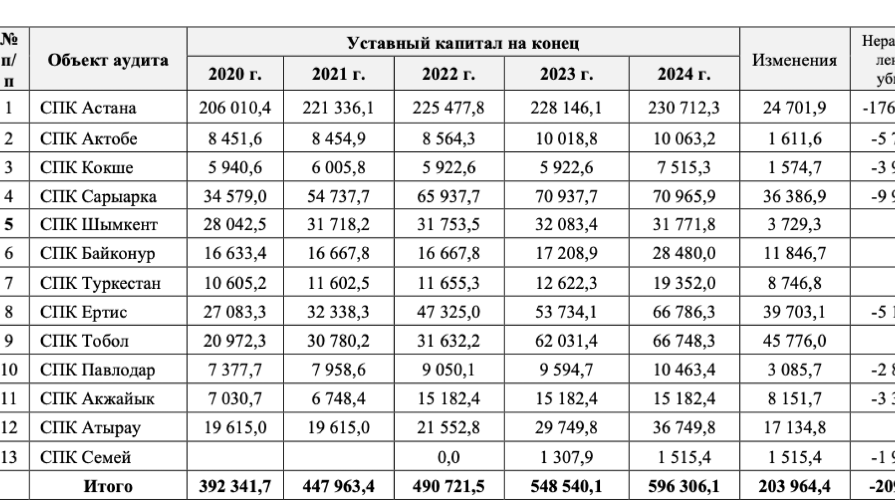
A comprehensive audit by the Supreme Audit Chamber has exposed significant shortcomings in the operations of 13 SECs across the country. The 40-page report details numerous violations, highlighting that the effectiveness of 61 billion tenge allocated for price stabilization has been extremely low.
The Core Mission vs. Reality
SECs are state-owned entities established in each region with the primary goal of maintaining accessible prices for socially significant goods like pasta, meat, and vegetables. Their mandate includes purchasing food in advance for resale at lower prices, supporting farmers financially, or releasing stored goods to the market when prices rise to act as a price buffer.
Unused Funds and Stagnant Prices
The audit, conducted in late 2025, revealed that many SECs failed to utilize allocated funds effectively. For instance, 'Akzhayik' SEC had 2 billion tenge unused, 'Pavlodar' SEC had 1.2 billion tenge, and 'Kokshetau' SEC had 2.5 billion tenge remaining unspent by the end of 2024. This mismanagement occurred while price stabilization efforts proved ineffective in several regions.
Rising Costs and Product Shortages
Despite the intended price controls, some regions experienced significant price increases. In the Kostanay region, the price of kefir rose by 11% in 2024, continuing a three-year upward trend. Tvorog prices also increased by 9% to 18%. The cost of potatoes surged by 27% in 2024, and onions saw a 31% price hike since 2022. Furthermore, warehouses were found to be holding products worth 2.1 billion tenge, including excess sugar and expired rice and oil, leading to losses of 7.5 million tenge.
Deficiencies in Social Stores
The audit also identified a lack of essential food supplies, such as beef, chicken, milk, kefir, and tvorog, in social stores. Some outlets even lacked basic vegetables.
Misappropriation of Funds
Instances of funds being used for non-designated purposes were also recorded. The 'Aktobe' SEC reportedly spent 110 million tenge on unrelated activities. A baseless loan of 544 million tenge was given to 'Martok Sut' company with no repayment to date. 'Akzhayik' SEC sold its stabilization fund assets worth 387 million tenge to individuals. In Astana, 2 billion tenge was loaned to private businesses without the akimat's (local government) approval.
Bonuses Amidst Losses
Shockingly, some SECs continued to pay bonuses and additional compensation to their management despite operating at a loss. 'Akzhayik' SEC, despite a 38 million tenge loss in 2023, paid its board members bonuses equivalent to 11 months' salary, which increased to 14 months' salary in 2024. 'Atyrau' SEC also paid 14.6 million tenge in bonuses to its board members.
Gas Consumption for 'Mining Hotels'
In Aktobe, a company named 'Digital Solutions & Co' established a facility for cryptocurrency clients, consuming over 30% of the industrial zone's gas capacity. Despite minimal economic impact, this project heavily utilized gas resources, raising concerns about future shortages expected from 2026.
State Asset Transformed into Luxury Housing
In Astana, a 380 million tenge plot of land and an unfinished building intended for the International Organizations Center were transferred to a joint project with a private company, 'Viyol'. The result was the construction of a luxury residential complex and business center instead of the intended public facility. Materials related to this case have been forwarded to law enforcement agencies.
Officials as 'Independent Directors'
The audit also found state employees, including regional governors, serving as 'independent directors' on SEC boards, a violation of regulations prohibiting civil servants from participating in commercial company management. Some of these 'independent directors' held paid positions in multiple companies simultaneously.
Majority of Corporations Operating at a Loss
The audit concluded that as of early 2025, the accumulated losses for 8 SECs reached 209 billion tenge, a sevenfold increase since 2020. In 2024, the total revenue of these corporations decreased by 30% to 76.8 billion tenge.
Profiting from Deposits
SECs were found to be depositing budget funds into bank accounts to earn interest. 'Aktobe' SEC earned 1.7 billion tenge from deposits over four years, while 'Atyrau' SEC earned 94 million tenge. This practice violates agreements on the targeted use of funds. Some SECs deposited money at extremely low interest rates (0.01-0.1%), resulting in potential losses of hundreds of millions of tenge.
In conclusion, auditors have issued numerous recommendations, urging SECs and state bodies to take necessary measures to rectify the situation. Several cases have been handed over to law enforcement agencies.
Бұл туралы Infohub.kz ақпарат агенттігі хабарлайды.


-
Мемлекеттік аудит әлеуметтік маңызы бар азық-түлік бағасын тұрақтандыруға тиіс корпорациялардың жұмысындағы жүйелі кемшіліктерді әшкереледі. Жоспарланған мақсаттарға қол жеткізілмегенімен, басшылыққа үстемеақылар мен сыйақылар төленген.
-
Новые предприниматели в Казахстане сталкиваются с навязчивыми звонками от банков. Разбираемся, откуда берутся их номера и законны ли такие действия.