

static.tengrinews.kz
Decoding 5W-40: What Engine Oil Markings Really Mean for Your Car
Engine oil is often seen as a simple consumable, changed periodically. However, this vital fluid plays a critical role in determining your engine's lifespan, its smooth operation, and its performance under stress.
The Multifaceted Role of Engine Oil
While its primary function is to reduce friction between engine parts, protecting them from wear and corrosion, modern engine oil does much more. It helps cool engine components, cleans the engine of combustion byproducts, shields internal surfaces from corrosion and deposits, and neutralizes harmful chemical reactions. Essentially, engine oil acts as a lubricant, coolant, and protective medium all in one.
Understanding Viscosity: The Key to Protection
Engine oil forms a protective film between moving parts, preventing metal-on-metal contact that would lead to overheating and rapid wear. When the engine starts, the crankshaft circulates oil, creating this crucial lubricating layer.
Viscosity is paramount here. Oil that is too thick, especially in cold weather, struggles to circulate quickly. Conversely, oil that is too thin may not provide an adequate protective film under high temperatures and loads. The ideal oil maintains a balance across various operating conditions.
Decoding the 5W-40 Label
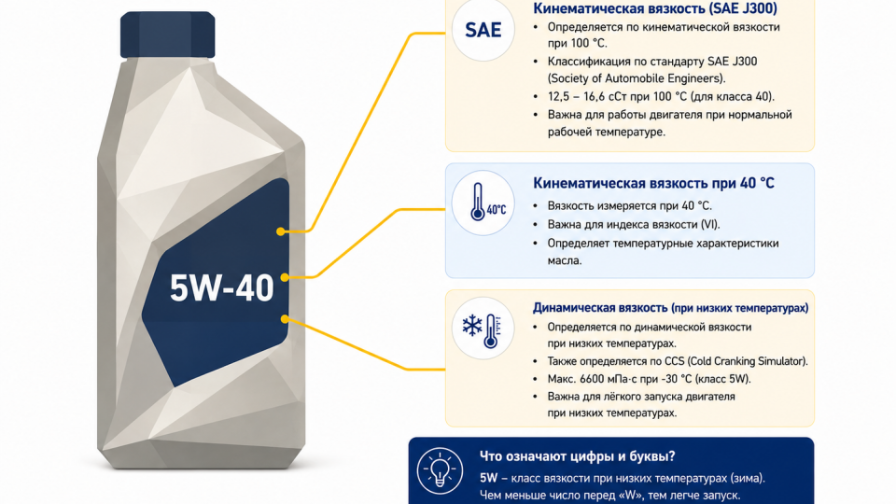
The marking on engine oil, such as 5W-40, provides essential information about its performance at different temperatures. The '5W' indicates how easily the oil flows in cold weather, crucial for engine startup. A lower number means easier cold starts.
The '40' refers to the oil's viscosity at approximately 100 degrees Celsius (212 degrees Fahrenheit), representing the engine's normal operating temperature. This standard is globally recognized and set by the Society of Automotive Engineers (SAE).
An important related parameter is the viscosity index, which measures how much the oil's viscosity changes with temperature. Good oil should remain relatively stable, offering consistent protection whether the engine is cold or hot. A higher viscosity index means the oil thins out less at high temperatures, providing more reliable protection.
Viscosity in Practice: Matching Oil to Conditions
For the 5W-40 label, the second number, '40', is particularly critical. It dictates the oil's behavior in a hot engine, under load, at high speeds. This viscosity determines the thickness of the protective oil film safeguarding engine components from wear.
The first number (0W, 5W, or 10W) relates to cold-weather performance. 0W is suitable for temperatures down to approximately -35°C (-31°F), 5W down to -30°C (-22°F), and 10W down to about -25°C (-13°F). Climate plays a significant role; in warmer regions, a 10W might suffice if 5W is recommended, while 0W is often chosen in extremely cold climates to ease starting.
The Importance of Oil Approvals
Beyond viscosity, engine oil often carries specific approvals like BMW Longlife, Mercedes-Benz MB, or Volkswagen VW. These are official confirmations that the oil meets the stringent requirements of a particular engine and its systems.
Automobile manufacturers rigorously test oils for compatibility with engine components, fuel systems, catalytic converters, and filters. Using an incorrect oil can lead to premature catalytic converter fouling, deposit formation, or inadequate engine protection under load.
Obtaining these approvals involves costly laboratory tests and real-world engine trials. Manufacturers must regularly re-certify their products. Therefore, when selecting oil, prioritize the approvals listed in your vehicle's owner's manual over brand name or price alone.
What's Inside Engine Oil?
Modern engine oil is a complex blend, not just refined crude oil. Its composition includes several components, each with a specific function:
Types of Base Oils
Base oils are categorized into several groups:
Premium formulations may use less thickener and higher quality synthetic components, allowing for extended drain intervals.
Why Oil Loses Its Properties Over Time
Maintaining stability under engine operating conditions is a key challenge. High temperatures and loads gradually degrade oil components. The polymer molecules, likened to 'spaghetti strands,' can break down under stress, causing the oil to lose viscosity and protective qualities.
The Role of Additives
Additives are essential for modern engine oil performance. They are responsible for cleaning the engine, slowing oil oxidation, reducing friction, protecting parts from wear, preventing foam, and inhibiting corrosion. The specific blend of additives dictates how the oil performs in various conditions, from traffic jams to highway driving.
The Manufacturing Process
Producing modern engine oil is a precise technological process. Base oils, polymers, and additives are combined in specific sequences and proportions in stainless steel vessels. The mixture is then heated and thoroughly blended.
The oil undergoes rigorous quality control, including checks for viscosity, density, composition, and appearance, often using infrared spectroscopy and viscometers. Large-scale production facilities utilize automated systems for continuous monitoring.
Does Oil Color Indicate Quality?
The color of engine oil does not reliably indicate its quality. Oils can range from light yellow to dark brown or even green, depending on the base oil, additives, and manufacturing process. Relying solely on appearance or even shelf life (for properly sealed synthetic oils) is not advisable. Proper storage, avoiding extreme temperature fluctuations and direct sunlight, is key.
Testing New Technologies
Many technologies found in everyday engine oils are first tested in motorsports. Racing engines operate under far more extreme conditions than typical road vehicles, allowing engineers to push oils to their limits. This testing reveals how stable viscosity remains, how quickly properties degrade, and how effectively the engine is protected from wear under extreme stress.
Conclusion
From an engineering perspective, the ideal oil is one that is most stable and has the fewest components prone to degradation over time. However, modern engines require a complex balance between base oils, polymers, and additives. Engine oil is no longer just a petroleum product; it's a high-tech formulation demanding careful selection and timely replacement.
Бұл туралы Infohub.kz ақпарат агенттігі хабарлайды.


-
Қозғалтқыш майының құпиялары ашылды: 5W-40 таңбасы нені білдіреді және неге майды дұрыс таңдау маңызды?
-
В связи с вспышкой вируса Эбола в Африке, Министерство здравоохранения Казахстана выпустило важные рекомендации для граждан, планирующих поездки за рубеж.