
www.newtimes.kz
Kazakhstan Tightens Residency Rules: Almaty and Astana Restrict Migrants
Kazakhstan has introduced new regulations for obtaining residency permits, which will restrict the influx of migrants and ethnic Kazakhs into major cities like Almaty and Astana. These updated requirements aim to reshape the country's migration landscape.
Shifting Migration Trends
In recent years, Kazakhstan has transitioned from being a country of emigration to one of immigration. Official statistics reveal a shift, with the international migration balance turning positive in 2023 for the first time after years of negative figures. In 2023, the balance was +9,293 people, and projections for 2024 and 2025 show continued positive trends, reaching 16,550 and 16,153 respectively. The majority of newcomers, approximately 81.8%, originate from Commonwealth of Independent States (CIS) countries.
Concurrently, the number of foreign nationals overstaying their permitted duration in Kazakhstan has also increased. In 2025, while 15,956,571 foreigners entered the country, 15,893,091 departed, leaving a surplus of 63,480 individuals remaining. This represents a nearly 60% increase compared to 2024. Administrative penalties for migration law violations have also risen, with 113,961 foreigners facing charges and 18,872 being deported in 2025.
Changes to Residency Permit Application Process
Early April saw rumors circulating among Russian citizens regarding stricter Kazakh language proficiency requirements for residency permits. Reports suggested a shift from the A1 level to B2 level, causing concern due to the lack of official confirmation.
On April 10, 2026, a joint order from the Ministry of Labor and Social Protection, the Ministry of Internal Affairs, and the Ministry of Digital Development, Innovations, and Aerospace Industry was published. This decree introduced amendments to the rules governing a pilot project for granting permanent residency permits and 'kandas' (ethnic Kazakh) status.
Key Regulatory Updates
The new amendments focus on three main areas: testing and interviewing immigrants, granting 'kandas' status, and issuing permanent residency permits. These changes revise the fundamental conditions for all applicants.
Revised Kazakh Language Proficiency Test
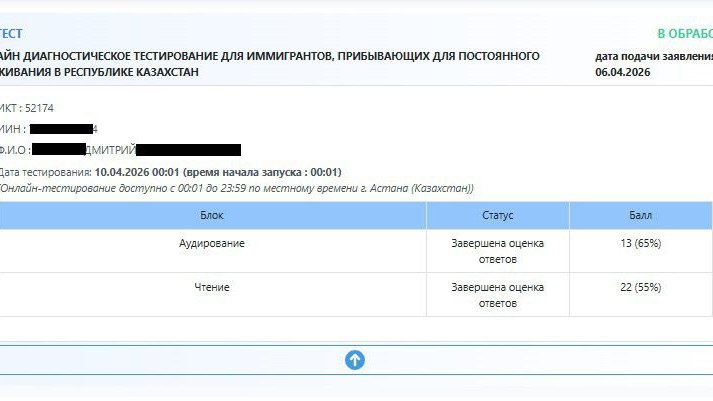
A significant change affects the KAZTEST system. Previously, achieving 30-100% correct answers in listening and reading sections was sufficient. Now, applicants must score between 70-100% in each section. Failure to meet this standard will result in a certificate of participation rather than a passing grade, rendering it unusable for migration processes. However, applicants can retake the exam twice within 30 days if they fail one or two sections.
Immigration Potential Assessment System
The minimum passing score for the immigration potential assessment system (point-based model) has been raised from 400 to 600 points. The overall score is calculated based on demographic factors, education level, language proficiency, work and study experience in Kazakhstan and abroad, health status, and professional competencies.
Education Document Verification
A new requirement mandates the verification of educational documents. Points are now awarded only upon confirmation of the diploma's authenticity or apostille, making notarized copies insufficient.
Regional Restrictions for Permanent Residency
Previously, there were no regional limitations for applying for permanent residency. Now, applications can only be submitted in specific regions: Akmola (excluding Kosshy city, Arshaly and Tselinograd districts), East Kazakhstan, Kostanay, Pavlodar, North Kazakhstan regions, as well as Abai and Ulytau regions. Applicants must reside legally in one of these designated regions for at least one year before submitting their application.
Financial Status Confirmation
The requirement to have 1320 Monthly Calculation Index (MCI) in a bank account remains. However, applicants must now annually re-confirm their financial status for five years after obtaining permanent residency.
Grounds for Refusal or Revocation of Permits
The grounds for refusing or revoking a permit have expanded from 17 to 31. New reasons include not working continuously for a year, insufficient income relative to family size, residing in designated regions for less than five years, systematic traffic violations, and public order disturbances.
Exemptions from New Requirements
Certain categories of applicants are exempt from some of these new rules. This includes individuals with in-demand professions, investors, those making significant economic contributions, and individuals with special competencies. They are exempt from the point-based assessment, the 1320 MCI financial confirmation, and the requirement for consent from their country of citizenship.
Additionally, leniencies are provided for stateless individuals without documentation, those holding USSR passports, spouses of Kazakhstani citizens (if married for at least one year), and residents of Baikonur.
For individuals over 60, former compatriots, or those joining relatives in Kazakhstan, regional restrictions, point-based assessments, and continuous work experience requirements have been waived.
Official Response and Public Reaction
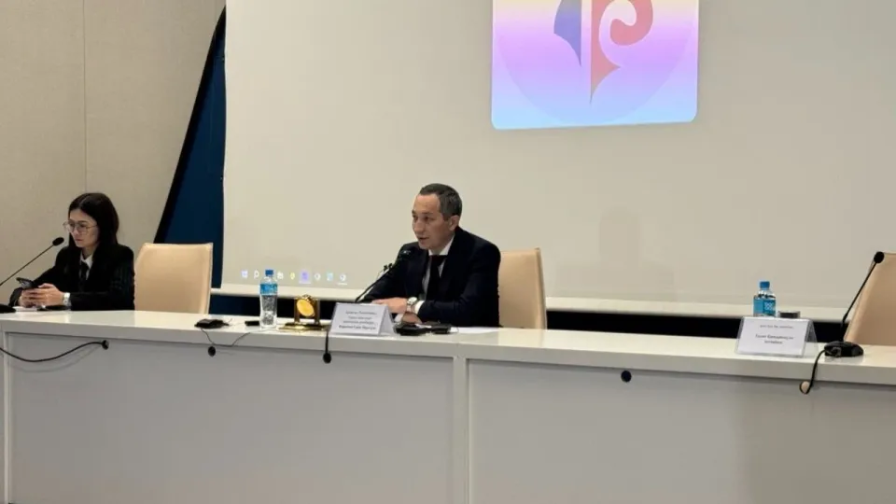
When approached for comment, the regulatory body provided general statements rather than specific answers, declining to release detailed statistical data. Responsibility for practical questions was deferred to the Migration Service Committee of the Ministry of Internal Affairs.
The lack of public outreach and explanation regarding these significant changes is notable. Open briefings and methodological guidelines have been insufficient, considering the impact on thousands of foreign nationals.
Migrant and Kandas Perspectives
For many migrants and 'kandas', the primary challenge lies in the new regional restrictions, as they often prefer to settle in major hubs like Almaty and Astana. Alexander, a Russian citizen, had planned to move to Almaty but found it impossible under the new rules, even considering relocation to Serbia.
Asiya, an ethnic Kazakh who relocated from Russia to Astana, finds it difficult to obtain residency under the current regulations. She believes there are misconceptions within society regarding ethnic Kazakhs arriving from Russia.
Why Kazakhstan is Restricting Foreigners
According to political analyst Gaziz Abishev, these measures align with a global trend. Many countries are shifting towards policies that limit the influx of low-skilled labor while attracting highly qualified professionals. Kazakhstan is adopting this model, aiming to attract specialized experts, engineers, IT professionals, and scientists. These measures are currently implemented as a pilot project until the end of 2026, after which their future will be determined.
Бұл туралы Infohub.kz ақпарат агенттігі хабарлайды.

-
A young doctor couple shares their experiences moving from Almaty to a village, discussing rural life, salaries, and the realities of working in Kazakhstan's healthcare system.
-
Новый город Алатау строится по уникальному закону, призванному привлечь инвестиции и технологии. Узнайте о его особенностях и целях.